Uruguay: legal cannabis sales now outstrip the black market

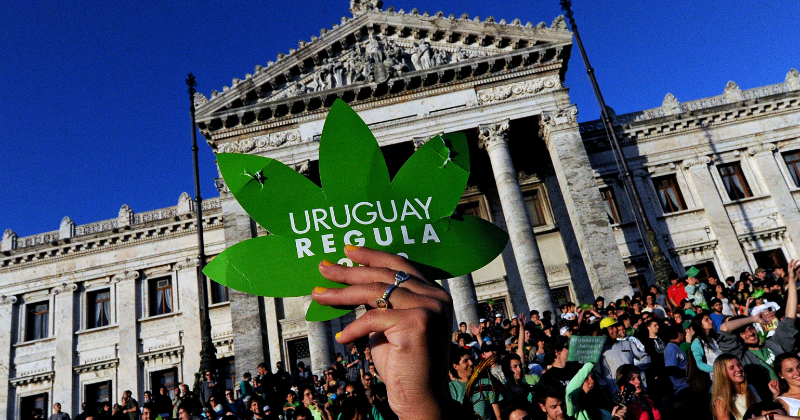
In 2013, Uruguay became the first country in the world to legalize the recreational use of cannabis nationwide. This measure, intended to weaken a particularly widespread and influential black market in South America, was implemented without public support. Today, the authorities are enthusiastically noting the success of this decision.
The IRCCA Report
The Institute for Cannabis Regulation and Control has just published a report on the cannabis situation in Uruguay. According to the report, 55% of cannabis was consumed would now come through legal channels. The legal market is therefore now larger than the black market, which was the government’s primary goal in legalizing cannabis.
The main explanation given is the sale of cannabis in pharmacies, which launched just last year after several delays and issues related to production and safety. The launch of sales in pharmacies, originally scheduled for 2016, was not given the green light until July 2017. Three months later, the authorities confirmed the initiative's success: the number of registrants had tripled since July, and two months later, the number of buyers had reached 16 000.
Despite production and security issues, the number of people registered now stands at 24,324, according to IRCCA figures. With some 8,583 people growing cannabis for personal use and some 2,339 members of the 91 social clubs, the number of legal cannabis users stands at 35,246, representing 55% of Uruguay’s estimated cannabis users. What’s more, these figures are steadily rising: barely a month after the study concluded, nearly a thousand more people had joined the pharmacy-based cannabis program.
Cannabis Statistics in Uruguay
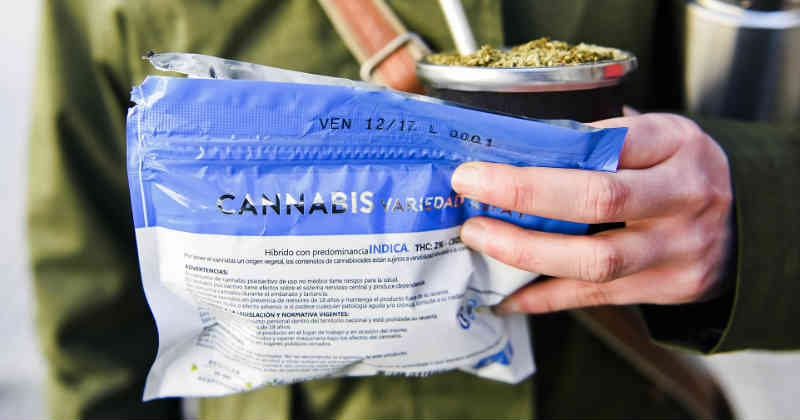
Unlike most other places where cannabis has been legalized, Uruguay has specifically targeted the black market and has therefore decided to make standardized cannabis available at a price of 1$ per gram (an advertised price that was ultimately raised to 1.30$), which is significantly lower than the black-market price. Citizens who buy legal cannabis at pharmacies have few choices among varieties that are relatively low in THC, and can purchase a maximum of 10 grams per week.
The amount of cannabis sold in this way is estimated to have reached one metric ton in 2017, with 192,000 transactions involving 5-gram packages. 56.2% of these sales took place in pharmacies in the capital, as the rest of the country has few pharmacies. In departments with a pharmacy selling cannabis, 12.44 out of every 1,000 people purchase legal cannabis; this figure is three times lower in departments without authorized pharmacies.
Cannabis buyers are generally quite young: 49.1% are in the 18–29 age group, 33.5% are between 30 and 44, while the rest of the consumers are over 45. Finally, it appears that men are more interested in cannabis, with 70.2% of the people listed in pharmacy records being men.









Germany: Pharmacists Propose a Pilot Program to Sell Recreational Cannabis in Pharmacies

France Is More Reluctant to Legalize Cannabis Than the EU Average, According to a New EUDA Survey

Scientists Create Cannabinoid-Free Hemp

MediPharm is preparing to launch its cannabis inhaler in Europe

Sensi Seeds and High Times are teaming up to launch five new cannabis strains

Brains Bioceutical is aiming for the Nasdaq with a valuation of $750 million

CBD in French Polynesia: Sublingual Oils Soon to Be Available Over the Counter

Cannabis legalization in Mexico returns to the Senate after five years of political deadlock

Massachusetts Gives the Green Light to Drive-Thru Cannabis Sales

Finland Wants to Legalize Cannabis Based on the German Model
-
 Cannabis in Quebec4 weeks ago
Cannabis: What France Could Learn from Quebec, Eight Years After Legalization
-
Cannabis in New Zealand4 weeks ago
Chronic Pain: New Zealand Is Testing Cannabis to Improve Sleep
-
Cannabis in France4 weeks ago
Dr. Pascal Douek, a tireless advocate for medical cannabis in France, has died
-
Cannabis in France4 weeks ago
Medical cannabis: The Greens introduce two amendments to accelerate its widespread adoption
-
Cannabis in Canada4 weeks ago
A Canadian study reveals the pleasant psychotropic effects of high-dose CBD
-
Studies on cannabis4 weeks ago
More THC, barely any additional effects: A new study challenges common assumptions about the potency of cannabis
-
Cannabis in Argentina4 weeks ago
The Argentine province of Chubut is creating its own framework for medical cannabis
-
Cannabis in France3 weeks ago
Medical Cannabis: Patients Issue a Formal Notice to the Government to Break the Deadlock
















You must be logged in to post a comment Login