Will New York State legalize the recreational use of cannabis?

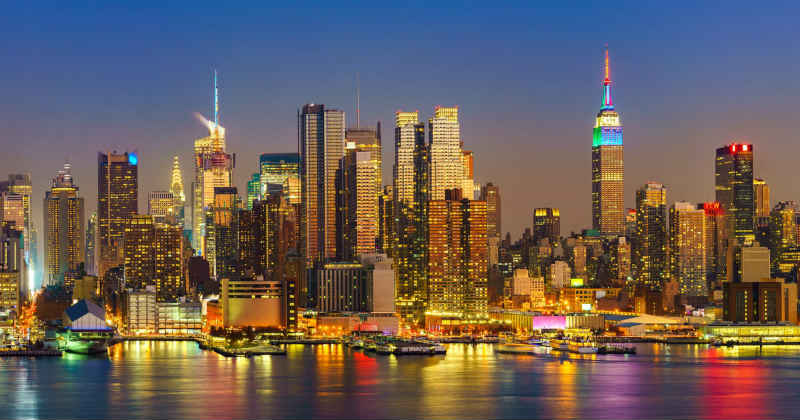
Last January, Governor Andrew M. Cuomo commissioned a Department of Health study to weigh up the pros and cons of legalizing cannabis. The results of this report are now available, and are clearly in favor of legalization and state regulation of the market.
Socio-economic arguments
One of the arguments put forward in favour of legalization is the combating discrimination and criminalization of ethnic minorities. In early 2018, 89% of those arrested for cannabis possession in New York State were black or Hispanic despite equal rates of consumption among the white population. In Manhattan, discrimination is even more pervasive, as blacks are around 15 times more likely to be arrested for the same reasons.
This criminalization has a detrimental effect on these minorities' access to housing and education. Cannabis tax money could help to redress these inequalities by investing in the socio-economic development of ethnic minorities. The report estimates that annual revenues from state-controlled cannabis sales could reach between $1.7 and $3.5 billion.
From an economic point of view, legalization would also create jobs and save resources in the war on drugs, by reducing police numbers, judicial and administrative costs, and prison upkeep. Regulation, meanwhile, would enable the Ministry of Health to minimize the risks associated with cannabis consumption by controlling authorized quantities, product quality and the number of sales outlets, while investing tax money in youth prevention and consumer education.
Given New York State's position on the border with the states of Vermont, from Massachusetts and the Canada, In the United States, where cannabis has been legalized for recreational use, consumers are likely to travel to neighboring states to purchase legal cannabis. In this respect, there has been an upsurge in arrests at the state border in 2018. With them, it's the potential profits from cannabis taxation that benefit neighbors.
Public safety arguments
In the United States, an opioid and heroin overdose epidemic is in full swing, and New York City is one of the hardest hit, with 1,000 overdoses in 2017. Statewide, there were 8,444 hospitalizations following opioid overdoses in 2016, compared with 2,185 in 2015. This crisis concerns not only opioids in the form of illicit drugs, but also medicines designed by pharmaceutical laboratories. In this regard, several states have taken legal action against pharmaceutical laboratories, and Trump was considering doing the same at federal level.
However, in the 29 states that have legalized the therapeutic use of cannabis, this scourge seems to have been minimized, as overdoses are lower than in prohibitionist states. Although New York legalized medical cannabis in 2014, the law was originally very restrictive, and recreational legalization «could facilitate access to marijuana to treat pain».
Indeed, cannabis has been proven effective against pain, and compared with opioids it reduces the risk of dependence and does not lead to fatal overdose. Its legalization could contribute to a reduction in opioid prescriptions or doses, and thus be decisive in managing this crisis.
Another similar scourge to which the recreational legalization of cannabis could contribute is the upsurge in hospitalizations due to synthetic cannabis. Synthetic cannabis is composed of chemical elements that mimic cannabinoids by binding to cannabinoid receptors, but are not cannabinoids. Its use causes internal bleeding, suicidal tendencies, psychosis, hallucinations and delirium, and can be fatal. In the absence of legal cannabis, synthetic cannabis offers an alternative.
The political aspect of legalization
Despite spearheading the legalization of medical cannabis, decriminalizing small possessions and commissioning the study in question, Governor Andrew M. Cuomo isn't exactly a proponent of full legalization. In 2017, he described gateway drug cannabis. Nevertheless, faced with recent surveys which show that a majority of the state's population supports legalization, and in the face of political pressure from its pro-legalization competitor Cynthia Nixon, it seems that Andrew M. Cuomo has changed his tune.
Among the state's political leaders, he's not alone in seeing cannabis legalization as a scourge that threatens to deteriorate America's youth. New York City Mayor Bill De Blasio shares his position, earning New York the title of «cannabis arrest capital» by the Drug Policy Alliance. The same is true of New York State Sheriffs' Chairman Barry Virts, who testified before the Assembly Health Committee that decriminalization had no place in New York State.
The state Conservative Party is also opposed to legalization, its chairman Michael Long having stated, «we as a party will do everything in our power to prevent such legislation.» The group is affiliated with the Republicans who control the State Senate. However, the Assembly is overwhelmingly Democratic. The final decision will remain in the hands of the governor, who, with the growing popularity of his rival, could legalize recreational use, despite dissenting voices, as part of an electoral strategy.







«Vincy Gold»: Humboldt Seed Company on the Hunt for Saint Vincent Sativas

Cronos Completes the Acquisition of CanAdelaar for 57.5 million euros

Cannabis with a "bloody" twist: Discover Sensi True Blood and Sensi Sangria, the two new strains from Sensi Seeds

Hemp: The Council of the EU Takes a Stand on New Production and Marketing Rules

Missouri's legal cannabis market accounts for 93 % of consumer spending

THC Gummies: How to Read a Certificate of Analysis Before Buying

British patients now have access to THCV-rich cannabis flowers

Spain: Medical Cannabis Is Coming to About 50 Hospitals

JIHE 2026: Japan’s Largest Trade Show Dedicated to Hemp and CBD Returns to Tokyo with More Than 100 Industry Players

New Caledonia: The Courts Clear the Way for the Return of CBD
-
 Business3 weeks ago
The legal cannabis market in New York exceeds 4 billion $ in revenue
-

 Cannabis in France4 weeks ago
Which countries legalized medical cannabis before France?
-
Cannabis in France1 week ago
France already has 3,000 cannabis retail outlets. None of them are legal.
-
Business4 weeks ago
South Korea is preparing to begin local production of medical cannabis to meet rising demand
-
Cannabis in the U.S.1 week ago
A DEA report confirms that there are no fatal cannabis overdoses
-
Cannabis in Thailand4 weeks ago
From the boom in dispensaries to a purely medical approach: Thailand is revising its cannabis policy
-
Cannabis and driving4 weeks ago
Medical Cannabis and Driving: New South Wales Ends Automatic Penalties for THC
-
Cannabis in France3 weeks ago
France’s Drug Policy Chief Defends Cannabis Prohibition... and Runs Into the Facts














You must be logged in to post a comment Login