Study reveals that low doses of THC can reverse brain aging

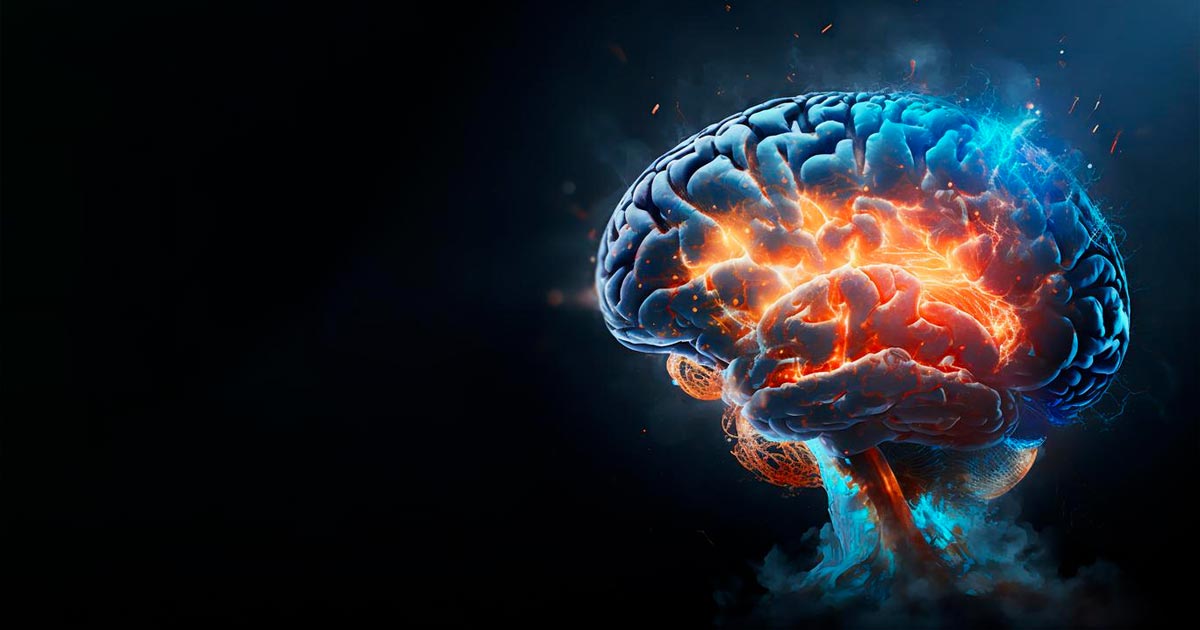
Research published in the journal ACS Pharmacology & Translation Science shows how low doses of THC could play an important important role in reversing cognitive decline generally associated with aging, at least according to experiments carried out on mice.
The role of THC in reversing age-related brain decline
A study conducted in collaboration with’Bonn University Hospital and theHebrew University of Jerusalem explored the effects of administering small daily doses of THC to aged mice. These 18-month-old mice, which are roughly equivalent to 65-year-old humans, were given THC for 28 days using implanted pumps. This long-term treatment led to significant improvements in their learning, memory and cognitive abilities.
The researchers observed a remarkable improvement in the formation of new synaptic connections between neurons, a process generally associated with younger brains. This ability to produce new neuronal connections is essential for maintaining cognitive function, and generally declines with age.
Interestingly, these cognitive improvements were not reproduced when the same treatment was applied to younger mice, suggesting that visit THC's anti-aging benefits could be particularly effective in older subjects.
How does THC affect brain function?
The researchers believe that THC acts by activating a protein switch in the brain called mTOR (Mechanistic Target of Rapamycin). This activation stimulates energy production and promotes the formation of synaptic proteins, which play an essential role in maintaining cognitive functions such as memory and learning.
According to the Dr Andras Bilkei-Gorzo, the’Institute of Molecular Psychiatry the’Bonn University Hospital, a long-term THC treatment first improves cognition by increasing energy and protein production in the brain. This effect is followed by a reduction in’mTOR activity, which helps slow down age-related metabolic processes in other parts of the body, including adipose tissue. This dual action on mTOR and the body's metabolic processes could form the basis of an effective anti-aging therapy.
Dr Bilkei-Gorzo commented: «Our study suggests that a double effect on the’mTOR activity and the metabolome could form the basis of an effective anti-ageing drug and for the’improved cognition ».
One of the most significant aspects of this research is the dual role played by the THC in the brain and body. The mTOR is essential for regulating cell growth, metabolism and protein synthesis. THC's ability to activating this path has far-reaching implications for the cognitive health. By stimulating mTOR activity, the compound promotes brain energy and protein production, which are essential for the formation of new neuronal connections. These new connections in turn contribute to improved cognitive function in elderly subjects.
But the impact of THC doesn't stop there. Over time, the treatment seems to reduce the’mTOR activity, This helps combat the metabolic effects of aging. By influencing both the central nervous system and peripheral metabolism, the THC offers a comprehensive approach to the negative effects of aging on cognition.
THC and cognitive function in humans
Although the study in question was conducted on mice, signs are emerging that THC could offer similar cognitive benefits to humans.
Another study, published in 2024, examined the relationship between the consumption of THC and cognitive functions in adults aged 45 and over. This research revealed that people who consumed THC for recreational purposes were less likely to experience a subjective cognitive decline (SCD) than those who did not consume cannabis.
The cohort of 4,744 adults who participated in the study revealed a striking 96 % reduction in the risk of SCD in people who consumed THC compared to people who have not consumed them. This link between THC and cognitive function suggests that the compound's benefits could extend beyond animal models to human populations. Although further clinical studies are required to fully understand how THC interacts with human aging processes, initial results are promising.
Future research directions
Despite these promising results, other studies are needed to explore how THC could be used as a therapeutic agent for the age-related cognitive decline in humans. Clinical trials on older adults would be the next logical step to confirm the compound's efficacy and determine the appropriate dosages and long-term effects. In addition, researchers need to study whether the THC affects other aspects of aging, such as muscle mass, immune function and general metabolism.
























«Vincy Gold»: Humboldt Seed Company on the Hunt for Saint Vincent Sativas

Cronos Completes the Acquisition of CanAdelaar for 57.5 million euros

Cannabis with a "bloody" twist: Discover Sensi True Blood and Sensi Sangria, the two new strains from Sensi Seeds

Hemp: The Council of the EU Takes a Stand on New Production and Marketing Rules

Missouri's legal cannabis market accounts for 93 % of consumer spending

THC Gummies: How to Read a Certificate of Analysis Before Buying

British patients now have access to THCV-rich cannabis flowers

Spain: Medical Cannabis Is Coming to About 50 Hospitals

JIHE 2026: Japan’s Largest Trade Show Dedicated to Hemp and CBD Returns to Tokyo with More Than 100 Industry Players

New Caledonia: The Courts Clear the Way for the Return of CBD
-
 Business3 weeks ago
The legal cannabis market in New York exceeds 4 billion $ in revenue
-

 Cannabis in France4 weeks ago
Which countries legalized medical cannabis before France?
-
Cannabis in France1 week ago
France already has 3,000 cannabis retail outlets. None of them are legal.
-
Business4 weeks ago
South Korea is preparing to begin local production of medical cannabis to meet rising demand
-
Cannabis in the U.S.1 week ago
A DEA report confirms that there are no fatal cannabis overdoses
-
Cannabis in Thailand4 weeks ago
From the boom in dispensaries to a purely medical approach: Thailand is revising its cannabis policy
-
Cannabis and driving4 weeks ago
Medical Cannabis and Driving: New South Wales Ends Automatic Penalties for THC
-
Cannabis in France3 weeks ago
France’s Drug Policy Chief Defends Cannabis Prohibition... and Runs Into the Facts

















You must be logged in to post a comment Login