California proposes banning hemp products containing THC

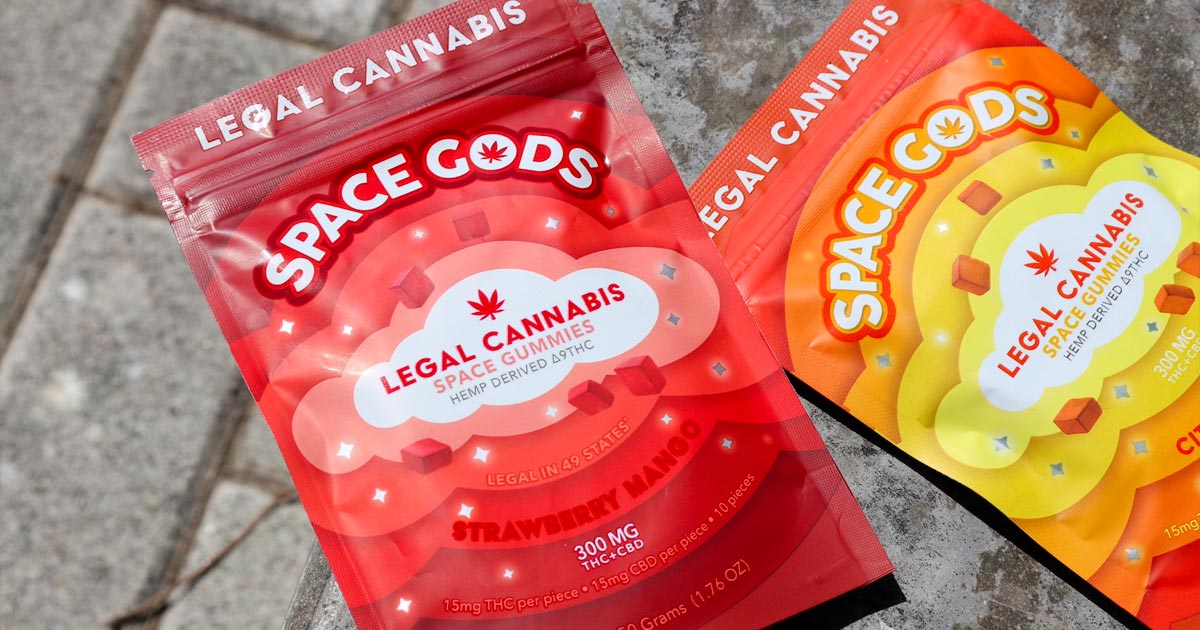
To control the growing availability of cannabinoids intoxicants hemp derivatives, California Governor Gavin Newsom recently unveiled emergency regulations that could dramatically alter the landscape of hemp products in the state.
These regulations apply to products containing detectable levels of THC and introduce restrictions designed to protect public health, particularly that of children and young people. The proposal has attracted both support and controversy, particularly from players in the hemp and cannabis industries.
Mr. Newsom's emergency regulations
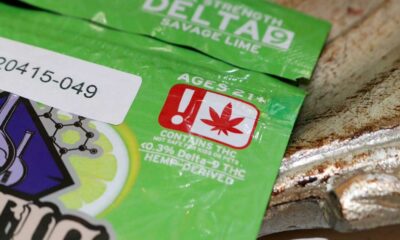
The new regulations announced by Governor Newsom aim to ban products with basis of hemp containing any «detectable quantity» of THC, while limiting products hemp derivatives to five servings per package, and restricting sales to adults over 21. These measures are aimed at combating what Mr. Newsom described as the «proliferation» of hemp-based products that could be harmful to children.
«We will not stand idly by while drug dealers target our children with dangerous, unregulated hemp products containing THC in our retail stores,» said Newsom in a press release.
He also expressed disappointment at the industry's failure to regulate itself adequately, pointing out in particular that intoxicating products are sold in easily accessible places such as gas stations and grocery stores.
Perspectives from industry and public health
Call for stricter controls on hemp products containing THC has received the support of several public health officials, as well as California's cannabis. Tomás Aragón, director of the California Department of Public Health (CDPH), stated that the poisoned products hemp derivatives «These »can cause illness and injury to California consumers".
In addition, the cannabis control department (DCC), represented by its Director Nicole Elliott, welcomed the regulation, noting that it aligns with the original intent of California's cannabis and hemp laws.
The California Cannabis Industry Association (CCIA) echoed these sentiments, Laura Fogelman, a member of the CCIA Board of Directors, calling the regulations a decisive action to protect public health. «These emergency regulations will create a safer, more transparent marketplace, while protecting our youth and preserving the integrity of the public health framework. cannabis legalization in California, as well as the essential tax revenues that flow from it,» she declared.
However, the hemp fears that these regulations may be too strict and inadvertently restrict access to beneficial products, such as CBD-majority whole extracts.
For example, Dale Gieringer, California NORML director, criticized the rules, arguing that they could harm consumers who rely on’extracts with high CBD content to treat diseases such as childhood epilepsy and cancer. Mr. Gieringer also pointed out that even pharmaceutical products FDA-approved CBD-based products, as the’Epidiolex, contain traces of THC, which makes total elimination of this compound from products almost impossible. hemp derivatives.
Impact on the hemp industry
Several players in the sector have expressed their concern about the serious economic consequences of the new rules. Adam Terry, co-founder of Cantrip, a company of THC-infused beverages, suggested that the regulations could lead to a halt to almost all sales of hemp products in California, with the exception of those offered by illicit operators. In a message posted on social networks, Mr. Terry asserted that such bans «do not solve the problems they claim to solve, but exacerbate them».
Likewise, Jonathan Miller, General Counsel of the’U.S. Hemp Roundtable, described the emergency regulations as a «betrayal» of the Californian hemp growers, small businesses and adult consumers. He warned that 90 to 95 % of popular hemp products, including products with base from CBD would be banned under the new rules.
Protecting children and public health
This emergency regulation was largely prompted by growing concern over the potential risks posed by products that hemp derivatives for children and young adults.
Studies have suggested that hemp products intoxicants can have a negative impact on the cognitive development of young people, with an increase in hospitalizations among adolescents linked to such products. Visit CDPH conclusions indicate that even non-intoxicating cannabinoids, as the CBD, These are potentially harmful to young people's developing brains.
In response, emergency regulations set a minimum age of 21 for the purchase of hemp-based products, This ensures that children and young adults do not have access to these products. The Dr Tomás Aragón emphasized the importance of this measure, stating that regulations are essential to prevent «permanent and irreparable negative effects on the health» of young people.
Filling regulatory gaps
One of the key aspects of the new regulations is to close the loopholes that manufacturers have exploited to sell intoxicating cannabinoids. hemp derivatives, such as the delta-8 THC.
The original AB 45 law, signed in 2021, limited the amount of THC products based on hemp to 0.3%, but some manufacturers have found ways to get around these restrictions. By banning all detectable quantities of THC, emergency regulations are designed to prevent these products from slipping through the regulatory cracks.
Nicole Elliott, Director of the DCC, described the emergency rules as «an essential step in ensuring that products on the market comply with the original intent of the law». State officials also stressed the need for stricter enforcement and testing to ensure compliance. For example, manufacturers will be required to provide documentation, such as certificates of analysis independent laboratories to prove that their products comply with the new limits. THC.
Future implications
California's decision to more strictly regulate hemp could set a precedent for other states facing similar problems. Cannabinoids hemp derivatives, derivatives, in particular THC, have been the subject of lively debate at both state and federal levels. The Congress is also considering provisions to ban certain cannabinoids. hemp derivatives, such as the delta-8 THC, as part of the Agricultural Act of 2024.
In the end, if California's new regulations are seen by some as necessary to protect public health and enforce the cannabis, they also raised concerns about the future of the’hemp industry. Balancing the need for regulation and product demand non-intoxicants hemp derivatives, such as CBD, will be a major challenge in the coming months, both in California and elsewhere.






















Medical Cannabis in Germany: THC Prices Vary by a Factor of 12

France already has 3,000 cannabis retail outlets. None of them are legal.

Morocco's exports of legal cannabis have expanded to 15 countries

Aurora Cannabis Doubles Its Production Capacity in Germany

Tilray is accelerating its operations in Europe thanks to a license in Portugal

Boston will host the 10th annual State of the Cannabis Industry Conference on October 26

A DEA report confirms that there are no fatal cannabis overdoses

A British patient is challenging the NHS's refusal to reimburse medical cannabis

October 2026 CBD Highlights: 10 Strains and Hash to Discover from 5 French Producers

CBD in France: Traceability, Retail Stores, THC and Driving… What the New Bill Proposes
-
 Business2 weeks ago
The legal cannabis market in New York exceeds 4 billion $ in revenue
-

 Cannabis in France3 weeks ago
Which countries legalized medical cannabis before France?
-
Business3 weeks ago
South Korea is preparing to begin local production of medical cannabis to meet rising demand
-
Cannabis in Thailand3 weeks ago
From the boom in dispensaries to a purely medical approach: Thailand is revising its cannabis policy
-
Cannabis and driving3 weeks ago
Medical Cannabis and Driving: New South Wales Ends Automatic Penalties for THC
-
Cannabis in Argentina4 weeks ago
Argentina Opens Its Market to Hemp Flowers Containing 1% of THC
-
Autism3 weeks ago
Autism and Cannabis: Results from the First Placebo-Controlled Trial of NTI164
-
Cannabis in France2 weeks ago
France’s Drug Policy Chief Defends Cannabis Prohibition... and Runs Into the Facts

















You must be logged in to post a comment Login