Réunion goes industrial with hemp


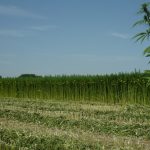
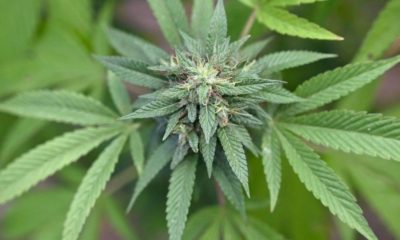
Land of zamal and future land of hemp? While mainland France is Europe's leading hemp producer, Réunion Island has recently been experimenting with the cultivation of industrial hemp with 1% THC, as part of a diversification of the island's agricultural activity.
Local experimentation with industrial zamal
The Association Chanvre de la Réunion (ACR) has been working for over a year to set up this test, which will involve 6 plots. «There will be plots in Saint-Paul, Sainte-Suzanne, Plaine des Cafres, Entre-Deux, Saint-Philippe and Saint-André,» says Benjamin Coudriet, president of the association.
The association has joined forces with Terres Inovia (Institut Technique du Chanvre, a member of the Association de Coordination Technique Agricole) and Armeflhor (Institut Technique Végétal Tropical, also a member of ACTA) to carry out these tests.
The first aim of the experiment is to determine the climate and planting period best suited to the island, based on the following data French catalog varieties supplied by Hemp It (formerly Coopérative Centrale des Producteurs de Semences de Chanvre). Reunion has different soil and climate conditions, and different photoperiods from mainland France. The varieties tested will be Earlina 8fc, Fedora 17, Futura 75, Futura 83, Kompolti and Carmagnola.
National issues
The challenge is also to enhance the value of the plant as a whole: the fibers and seeds, of course, but also the potential for well-being and therapeutic benefits. On this last point, several projects are underway, both a rapprochement with the aromatic, perfumed and medicinal plants (PAPAM) sector and a research on the island's endemic varieties, which is currently being finalized. Reunion's Chamber of Agriculture has also already contacted ACR and Armeflhor to discuss «the design of a technical and professional project relating to a potential therapeutic zamal industry» in Reunion.
The ACR association also wants to promote short circuits, and will give priority to products from the hemp in Réunion Island. She doesn't see hemp as a unique solution for farmers, but rather as an income supplement that can be added to or, to a lesser extent, replace the pesticide-intensive cane crop. Reunion is the biggest user of glyphosate in France.
Given the climate on Reunion Island, the first by-products of the experiment, notably seeds, could be sold as early as the end of 2020, by which time the experiments could be completed and full-scale cultivation launched.














The Brazilian medical cannabis market continues to grow

Morocco: Three Cannabis-Based Medications Approved for the Treatment of Epilepsy

Canopy Growth Receives New EU-GMP Certification to Strengthen Its Presence in Europe

Three years after legalizing medical cannabis, Albania continues to establish regulations for it

The first plant-based medical THC spray arrives in the United Kingdom

Medical Cannabis in Germany: THC Prices Vary by a Factor of 12

France already has 3,000 cannabis retail outlets. None of them are legal.

Morocco's exports of legal cannabis have expanded to 15 countries

Aurora Cannabis Doubles Its Production Capacity in Germany

Tilray is accelerating its operations in Europe thanks to a license in Portugal
-
 Business2 weeks ago
The legal cannabis market in New York exceeds 4 billion $ in revenue
-

 Cannabis in France4 weeks ago
Which countries legalized medical cannabis before France?
-
Business4 weeks ago
South Korea is preparing to begin local production of medical cannabis to meet rising demand
-
Cannabis in France4 days ago
France already has 3,000 cannabis retail outlets. None of them are legal.
-
Cannabis in Thailand4 weeks ago
From the boom in dispensaries to a purely medical approach: Thailand is revising its cannabis policy
-
Cannabis in the U.S.5 days ago
A DEA report confirms that there are no fatal cannabis overdoses
-
Cannabis and driving3 weeks ago
Medical Cannabis and Driving: New South Wales Ends Automatic Penalties for THC
-
Cannabis in France3 weeks ago
France’s Drug Policy Chief Defends Cannabis Prohibition... and Runs Into the Facts















pilila
September 13, 2019 at 9 h 57 min
Knowing that hemp is a depolluting plant that pumps pesticides into its flowers and leaves, and that Réunion is France's biggest glyphosate user. What good can come from eating hemp stuffed with glyphosate?
Make sure you only grow hemp on land that has not been ravaged by the pesticides used on sugar cane.