Trump's reclassification of cannabis is being challenged in court

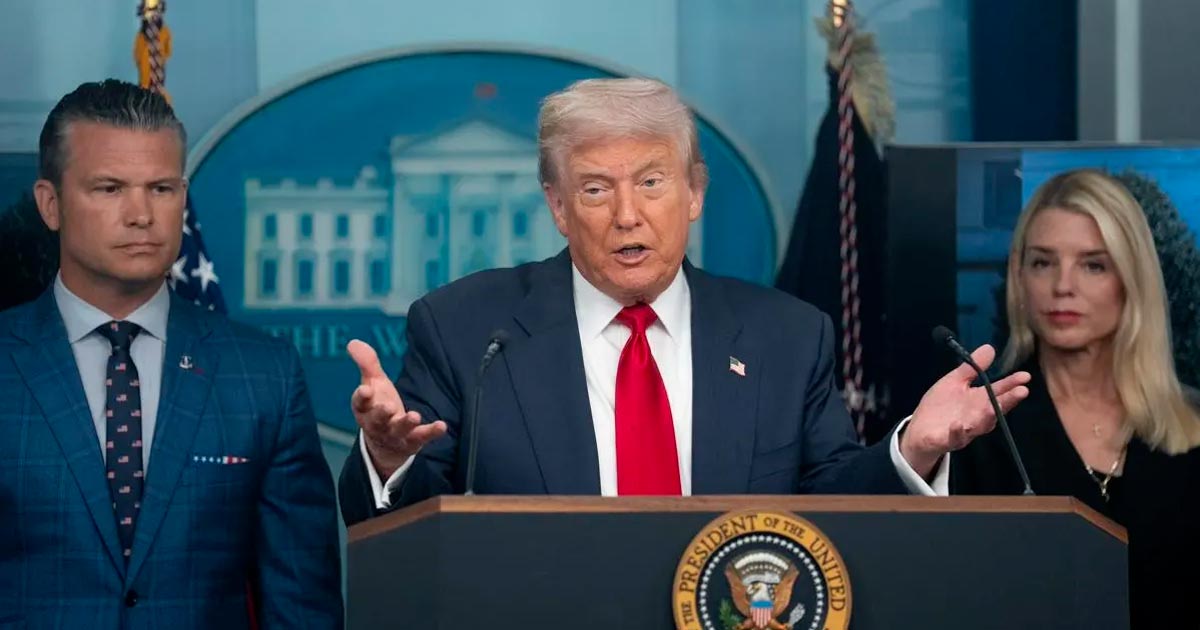
The Trump administration’s cannabis reclassification initiative is facing growing legal opposition, with several lawsuits now seeking to overturn one of the most significant changes in federal cannabis policy in recent years.
Following a lawsuit filed by three Republican attorneys general, a new coalition comprising anti-cannabis organizations, substance abuse treatment professionals, doctors, and a pharmaceutical company specializing in cannabis has filed a separate lawsuit challenging both the policy itself and the manner in which it was implemented.
These cases add a new level of uncertainty to the future of the federal cannabis reform in the United States, despite the administration's efforts to speed up the amendment of its laws.
A major shift in federal cannabis policy
In April 2026, Acting Attorney General Todd Blanche signed an executive order transferring cannabis products regulated under state medical programs, as well as cannabis-derived drugs approved by the Food and Drug Administration (FDA), from Schedule I to Schedule III of the Controlled Substances Act (CSA).
This measure marked a significant departure from decades of federal policy. Schedule I is reserved for substances considered to have no recognized medical use and a high potential for abuse, while Schedule III includes drugs recognized as having medical value and a lower risk profile.
The action taken by the administration has not fully resolved the issue of cannabis’s status under federal law. Rather, it has created a temporary framework that applies specifically to state-authorized medical cannabis products and FDA-approved cannabis-based drugs. A broader administrative review process is still underway and is expected to examine whether recreational cannabis for adults should also be reclassified.
Supporters of the reform have hailed this measure as a pragmatic step toward aligning federal law with the reality of state cannabis programs. Opponents, however, argue that the administration has circumvented established procedures and created a regulatory framework that is legally questionable.
A new lawsuit is directly targeting Trump
The latest legal challenge was filed with the U.S. Court of Appeals for the District of Columbia Circuit by a coalition comprising New Directions Addiction Recovery Services, Cannabis Industry Victims Educating Litigators (CIVEL), MMJ International Holdings, and two physicians.
Unlike some previous cases, this lawsuit directly names President Donald Trump as a defendant alongside the Department of Justice (DOJ), the Drug Enforcement Administration (DEA), Todd Blanche, and DEA Administrator Terrance Cole.
The plaintiffs claim to have suffered, or to be about to suffer, harm as a result of the federal reclassification order and are challenging that decision in court.
According to the complaint, the administration failed to comply with essential legal requirements before issuing the order. The complaint alleges that the DOJ failed to conduct a proper notice-and-comment procedure, did not hold a formal administrative hearing, and did not sufficiently consider the recommendations of the Department of Health and Human Services (HHS) during the decision-making process.
The plaintiffs are asking the court to suspend the reclassification order while the case is being heard and, ultimately, to declare the measure unlawful.
Claims regarding a "hybrid" classification of cannabis
One of the key arguments raised by the coalition concerns what it describes as the creation of a new, unauthorized regulatory category for cannabis.
According to the complaint, the administration has effectively reclassified certain cannabis-based products into Schedule III while continuing to impose restrictions typically associated with Schedule I and II substances. These include quotas, import and export licensing requirements, and enhanced registration obligations, in accordance with international drug control conventions.
The plaintiffs argue that this combination creates a legal structure that has never been authorized by Congress and does not fall within the framework established by the Controlled Substances Act.
The complaint also alleges that federal agencies failed to adequately address evidence regarding the potential risks associated with cannabis use. The complaint cites concerns such as psychosis, bipolar disorder, depression, anxiety, neurodevelopmental disorders in adolescents, risks associated with prenatal exposure, cardiovascular effects, impaired driving, and cannabis-use disorders.
Another criticism concerns the medical framework surrounding this decision. The lawsuit argues that doctors have not received guidance from the FDA regarding indications, dosing guidelines, routes of administration, monitoring requirements, and the risk-benefit assessments necessary to prescribe cannabis-based products appropriately.
Republican attorneys general join the opposition
This latest case follows another lawsuit filed by the attorneys general fromIndiana, from Nebraska and Louisiana.
These three Republican-led states argue that the Department of Justice’s decision to reclassify cannabis violates federal administrative law and exceeds the legal authority granted to the Attorney General under the Controlled Substances Act.
In their petition, they assert that the order was adopted in an irregular manner, that it does not comply with legal requirements, and that it constitutes an arbitrary and capricious administrative action. The states are asking the court to invalidate the reclassification measure in its entirety.
This challenge reflects a broader opposition among some conservative policymakers who believe that major changes to federal cannabis policy should be made through Congress rather than through executive action.
SAM is continuing its legal campaign
The state attorneys general are not alone. Their lawsuit has been joined by another lawsuit filed by Smart Approaches to Marijuana (SAM) and the National Drug and Alcohol Screening Association (NDASA).
SAM has established itself as one of the the last opponents of the reform efforts of the Trump administration’s cannabis policy. The organization argues that the reclassification order violates both the Administrative Procedure Act and the Controlled Substances Act.
Earlier this year, SAM announced that it had retained the services of Torridon Law, a law firm whose members include former U.S. Attorney General William Barr, to challenge the administration’s cannabis policy after Trump signed an executive order directing federal agencies to expedite the reclassification process.
The CEO of SAM, Kevin Sabet, praised the lawsuits filed by Republican attorneys general, calling them an important effort to put an end to what he considers an illegal federal measure.
The organization has also implemented other legal strategies. Another lawsuit filed by SAM to challenge a Trump administration initiative allowing certain Medicare beneficiaries to receive up to $500 worth of hemp-derived products annually was recently dismissed by a federal judge.
Congress and the courts could shape the next phase of the reform
These legal battles are unfolding as political resistance emerges in Congress. Earlier this month, a House committee approved a bill aimed at preventing federal agencies from taking further steps to implement the reclassification of cannabis.
Taken together, the legal actions and congressional opposition highlight the increasingly controversial nature of cannabis policy reform in the United States.
For now, the reclassification order remains in effect, and the administrative review process regarding a broader cannabis reform is ongoing.





















JIHE 2026: Japan’s Largest Trade Show Dedicated to Hemp and CBD Returns to Tokyo with More Than 100 Industry Players

New Caledonia: The Courts Clear the Way for the Return of CBD

The Brazilian medical cannabis market continues to grow

Morocco: Three Cannabis-Based Medications Approved for the Treatment of Epilepsy

Canopy Growth Receives New EU-GMP Certification to Strengthen Its Presence in Europe

Three years after legalizing medical cannabis, Albania continues to establish regulations for it

The first plant-based medical THC spray arrives in the United Kingdom

Medical Cannabis in Germany: THC Prices Vary by a Factor of 12

France already has 3,000 cannabis retail outlets. None of them are legal.

Morocco's exports of legal cannabis have expanded to 15 countries
-
 Business2 weeks ago
The legal cannabis market in New York exceeds 4 billion $ in revenue
-

 Cannabis in France4 weeks ago
Which countries legalized medical cannabis before France?
-
Business4 weeks ago
South Korea is preparing to begin local production of medical cannabis to meet rising demand
-
Cannabis in France4 days ago
France already has 3,000 cannabis retail outlets. None of them are legal.
-
Cannabis in Thailand4 weeks ago
From the boom in dispensaries to a purely medical approach: Thailand is revising its cannabis policy
-
Cannabis in the U.S.5 days ago
A DEA report confirms that there are no fatal cannabis overdoses
-
Cannabis and driving3 weeks ago
Medical Cannabis and Driving: New South Wales Ends Automatic Penalties for THC
-
Cannabis in France3 weeks ago
France’s Drug Policy Chief Defends Cannabis Prohibition... and Runs Into the Facts
















You must be logged in to post a comment Login