Indiana considers non-retail cannabis legalization

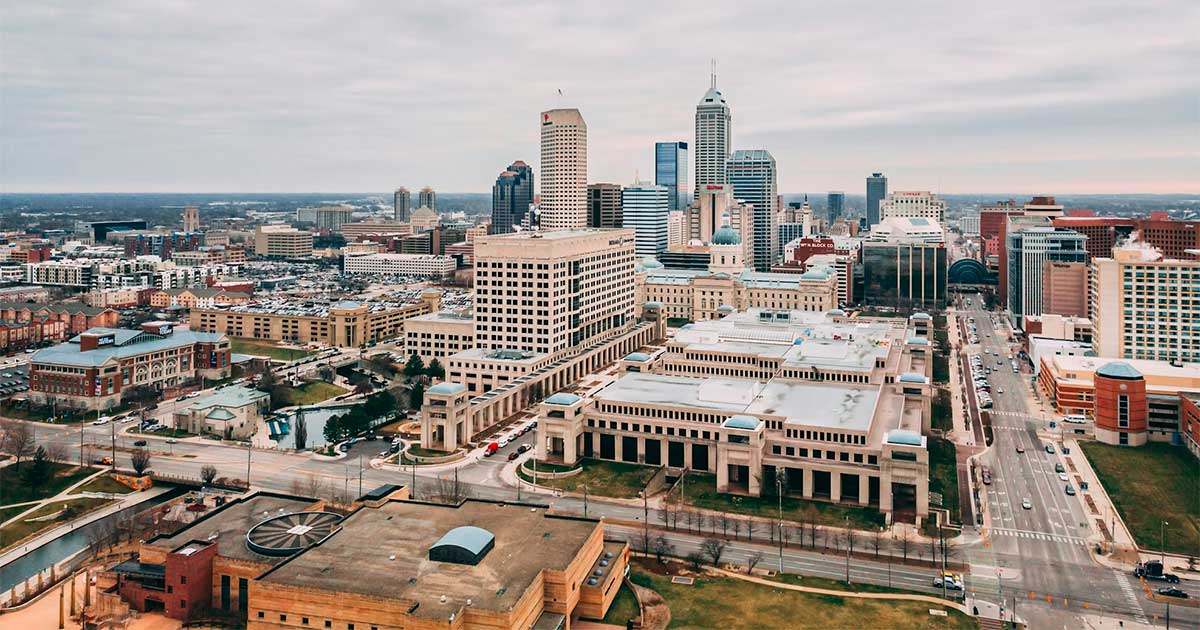
An unexpected proposal has emerged in the’Indiana, one of the most restrictive U.S. states when it comes to cannabis policy. A new bill, in addition to older ones, could remove criminal penalties for possession and small-scale cultivation, without however creating a legal market.
Introduced on January 6 by Democratic Rep. Mitch Gore, This bill would remove all penalties for the possession or cultivation of up to two ounces (56 grams) of cannabis. The proposal does not establish a regulated production or retail system, opting instead for what could be described as a non-commercial form of legalization.
If passed, the bill would amend current state law, which currently classifies any possession or cultivation of cannabis, regardless of quantity, as a Class B misdemeanor. Under the new framework, adults would be allowed to possess or cultivate limited quantities without fear of prosecution, while commercial sales would remain illegal.
The medical cannabis still illegal in Indiana.
Limited scope and clear restrictions
The proposal remains cautious in its scope. Concentrated products such as hashish and concentrates would continue to be totally prohibited. Moreover, while small-scale possession would no longer be penalized, larger quantities would continue to carry criminal consequences.
The amount of cannabis required to trigger a level 6 misdemeanor - punishable by up to 2.5 years in prison and a $10,000 fine - would increase from 30 grams to four ounces (112 grams).
The bill has been referred to the House Courts and Penal Code Committee, where its future remains uncertain. Supporters of reform have always had difficulty gaining traction in the conservative Indiana legislature, where leaders have consistently opposed cannabis reform.
Federal signals and local tensions
Despite resistance within the legislature, the recent developments at federal level could influence the debate. Indiana's Republican governor, Mike Braun, suggested that the federal decision to reclassify cannabis could give a «little boost» to local reform efforts.
Public opinion seems to be one step ahead of legislators. A poll conducted last year found that 87% of Indiana adults support legalization in some form. Braun himself acknowledged that ’it's probably time« to allow therapeutic use for patients.
Nevertheless, resistance from leading Republicans remains strong. Senator Jim Banks, a member of Indiana's congressional delegation, expressed strong opposition to state-level reform, while acknowledging that the issue would continue to be debated.
«President Trump has been honest about this, stating very clearly that marijuana should not be smelled on the streets. From many states have legalized it. This has led to even more crime and problems,» Banks said. «I hope, by the way, that Indiana will never be a state that legalizes marijuana.»



















«Vincy Gold»: Humboldt Seed Company on the Hunt for Saint Vincent Sativas

Cronos Completes the Acquisition of CanAdelaar for 57.5 million euros

Cannabis with a "bloody" twist: Discover Sensi True Blood and Sensi Sangria, the two new strains from Sensi Seeds

Hemp: The Council of the EU Takes a Stand on New Production and Marketing Rules

Missouri's legal cannabis market accounts for 93 % of consumer spending

THC Gummies: How to Read a Certificate of Analysis Before Buying

British patients now have access to THCV-rich cannabis flowers

Spain: Medical Cannabis Is Coming to About 50 Hospitals

JIHE 2026: Japan’s Largest Trade Show Dedicated to Hemp and CBD Returns to Tokyo with More Than 100 Industry Players

New Caledonia: The Courts Clear the Way for the Return of CBD
-
 Business3 weeks ago
The legal cannabis market in New York exceeds 4 billion $ in revenue
-

 Cannabis in France4 weeks ago
Which countries legalized medical cannabis before France?
-
Cannabis in France1 week ago
France already has 3,000 cannabis retail outlets. None of them are legal.
-
Business4 weeks ago
South Korea is preparing to begin local production of medical cannabis to meet rising demand
-
Cannabis in the U.S.1 week ago
A DEA report confirms that there are no fatal cannabis overdoses
-
Cannabis in Thailand4 weeks ago
From the boom in dispensaries to a purely medical approach: Thailand is revising its cannabis policy
-
Cannabis and driving4 weeks ago
Medical Cannabis and Driving: New South Wales Ends Automatic Penalties for THC
-
Cannabis in France3 weeks ago
France’s Drug Policy Chief Defends Cannabis Prohibition... and Runs Into the Facts
















cbdtech
9 January 2026 at 14 h 36 min
It's a fascinating approach that Indiana is proposing with this bill. By authorizing possession and self-cultivation without opening up a commercial market, the state is attempting to respond to a social emergency - the end of criminal prosecution for users - while avoiding the debate on commercialization that still has conservative legislators on edge.
At CBDTech, we see that this ‘non-commercial’ model is often a transitional stage. Allowing adults to grow up to 56 grams means recognizing a right to private use, similar to what we've seen with Cannabis Social Clubs in Spain or more recently in Germany.
Still, the paradox remains striking: allowing consumption but leaving CBD and medical cannabis in a gray area is a complex equation for consumer safety. As Mitch Gore says, it's a first step towards ending an ultra-repressive policy that no longer reflects public opinion (87 % of support!). A case to follow closely, as it could inspire other conservative regions around the world.