
April 13 conference on medical cannabis and CBD: the recap’

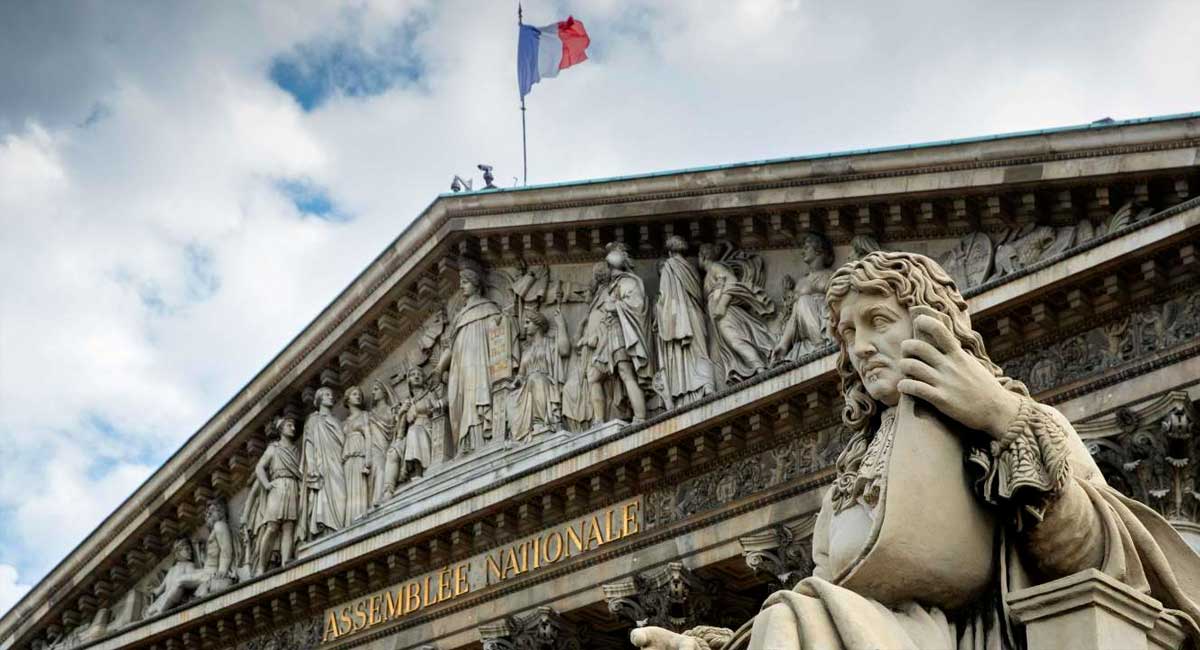
It was amid a mix of joy and disappointment that stakeholders in the medical cannabis and CBD sectors gathered yesterday for a conference held at the National Assembly, organized at the initiative of Representative Ludovic Mendès. Joy because since the first conference 4 years ago, ...progress has been made on the two topics of this conference. However, there is disappointment because there are still many administrative and political obstacles that continue to harm patients, as well as hemp producers and consumers.
In his opening remarks, Robin Reda, former president of the Fact-finding mission on cannabis use, acknowledged that there is still a long way to go on the issue of cannabis in general, a topic that sometimes unites and sometimes divides. While resistance remains very strong, he believes it does not stem from Parliament, which is unanimously in favor of addressing the pain and suffering of patients and their families. Administrative barriers to medical cannabis, however, persist, with little understanding on his part.
Roundtable Discussion on Medical Cannabis
Nicolas Authier looked less than pleased. The chairman of the Temporary Scientific Committee for Monitoring the Medical Cannabis Trial tried in vain to find something positive and new to report on the trial, but came up empty-handed. He nevertheless made a point of noting that the The feedback on the «experience» has been entirely positive and that the issue now went beyond the conditions for accessing medical cannabis or the implementation of a hospital prescription.
He strongly urges an end to the pilot program, which has reached its limits for general practitioners—due to a cumbersome patient enrollment process—and for hospitals, which are unable to meet the demand.
«I don’t see what could prevent us from doing that,» he said. «We need extremely strong support—from patients and policymakers—to convince the Department of Health to give its administration a strong push toward the widespread adoption of medical cannabis.».
«If we don’t hear back by summer, it won’t be able to be included in the 2024 Social Security Financing Bill, and we’ll have to end the pilot program,» he summarized.
Mado Gilanton, president of the Apaiser S&C association and a cannabis user herself, was there to speak on behalf of patients.
«Five years ago, we came here with high hopes. Today, I’m angry.» The lack of interest and the roadblocks put up by the General Directorate of Health, as well as its disastrous management of the supply chain for the pilot program Cannabis-based medications have dampened his usual enthusiasm.
Franz Deschamps, president of Santé France Cannabis, the association of medical cannabis manufacturers, examined what still needs to be done on the regulatory front to enable the production of medical cannabis in France. 2 decrees which will supplement the 2022 decree are currently being drafted and will focus on securing cultivation sites and ensuring the safety and stability of future cannabis-based medicines.
Roundtable Discussions on CBD
Two panel discussions were held on CBD and wellness hemp.
The first session featured Ludovic Rachou, president of the Union of Industrialists for the Valorization of Hemp Extracts (UIVEC), who was there to advocate for a specific approach to CBD, namely the need to classify the cannabidiol molecule as a dietary supplement in order to include it in food products. Beyond making the regulatory framework easier to understand, the benefits would include a 5.51% tax rate on this type of product and the possibility of making health claims.
The UIVEC representative also announced that the organization had advocated to the DGCCRF and the DGAL for CBD limits of 50 mg per day and 201 TP3T per bottle of CBD oil, as well as a THC threshold of 1 microgram per kilogram of body weight for future in-store inspections.
In contrast, the European Industrial Hemp Association (EIHA), the Union of CBD Professionals (UPCBD), the French Association of Cannabinoid Producers (AFPC), and the Professional Hemp Union (SPC) defended a vision during a second roundtable discussion full spectrum hemp, in particular to give a high-quality future French industry every opportunity to succeed.
He started off with a joke: «This is my fourth time speaking on this topic. I’ll soon have made more speeches than some members of Congress during their entire terms»—Jouany Chatoux, representative of the AFPC, painted a picture of French hemp producers, whose numbers are estimated today to be between 600 and 1,000. For most, their hemp production provides a significant source of supplemental income, with 701 members of the association engaged in organic production. Their harvest prioritizes quality and is sold through direct-to-consumer channels.
This scenario would be idyllic, were it not for the looming threat of Novel Food. For the AFPC, the move to classify CBD as a dietary supplement is aimed at destroying the organic sector and the agricultural sector for industrial hemp, even if it means promoting the import of CBD isolate from the United States or Eastern European countries. The production of CBD isolate requires solvents that are not compatible with an organic final product. France will also face significant challenges in remaining competitive against the very low international prices of isolated CBD.
The only way for French-grown industrial hemp to remain competitive is through natural extraction methods and full spectrum, along with the need to increase THC levels in plants for cost-effective, high-quality extractions. A view shared by the’EIHA, which operates at the European level a secure framework for the entire hemp plant.
While Novel Food poses a European threat, another distinctly French threat lies in the increase in THC testing during traffic stops. Far from making the roads safer, this practice has a significant objective, according to Charles Morel, a representative of the UPCBD, of targeting CBD users. As a result, 651,000 roadside drug tests were conducted in 2021, compared to 425,000 in 2019.
Not surprisingly, in 2021, the number of offenses involving driving under the influence of drugs exceeded those involving alcohol, even though Alcohol is the biggest risk factor for accidents. The UPCBD also pointed out that, beyond the punitive nature of these screenings, no risk prevention measures are actually being implemented. It’s all about the numbers.
Conclusion
In closing the symposium, Ludovic Mendès expressed the hope that this would be the last symposium organized on medical cannabis and wellness hemp.
In his view, the obstacles currently facing MILDECA, the Ministry of the Interior, and the Ministry of Health are unwarranted, given that solutions are needed to ensure patients’ access to medical cannabis—even if that means decriminalizing self-medication for patients— and to better regulate road safety with an acceptable THC threshold or appropriate screening/behavioral tests, given the legality of consuming CBD flowers, which may contain up to 0.31% THC.
A bill is expected to be introduced shortly to address these issues.





















One year after the launch of the Dutch cannabis experiment, the first trends are emerging

High Ground: The Crash of a Plane Full of Marijuana That Made History in Yosemite

The United Kingdom Is Moving Closer to a Regulated CBD Market

Mexico's Supreme Court Authorizes Cannabis-Infused Edibles for Personal Use

French medical cannabis remains stalled at the Ministry of Health

Things are heating up between Sherbinski and Doja

Cookies Ordered to Pay $61.5 Million in a Dispute with Its Investors

Frenchfarm is launching its B1G1 clearance sale + free gift

Czech Republic: CBD shops selling synthetic cannabinoids are in the police's crosshairs

Cannabis and CBD: French Drivers Can Now Lose Their License Even Without a Positive Test Result
-
 Cannabis and driving5 days ago
Cannabis and CBD: French Drivers Can Now Lose Their License Even Without a Positive Test Result
-
Cannabis in France1 week ago
Cannabis Legalization: The LFI Bill Has a Major Problem—THC
-
Cannabis in Europe2 weeks ago
Andorra Paves the Way for Medical Cannabis Cultivation
-
Cannabis in France2 weeks ago
Drought: Could Hemp Become the New Hope for French Farmers?
-
Cannabis in France1 day ago
French medical cannabis remains stalled at the Ministry of Health
-
Cannabis in the U.S.2 weeks ago
United States: Congress Rejects Ban on THC Derived from Hemp
-
Cannabinoids1 week ago
What if CBD enhanced the effects of THC? A comprehensive analysis challenges a common misconception
-
Cannabis in Quebec2 weeks ago
Cannabis in Quebec: The 21-Year-Old Age Requirement in the Spotlight













You must be logged in to post a comment Login