
Petition asks Ottawa to allow more powerful edibles

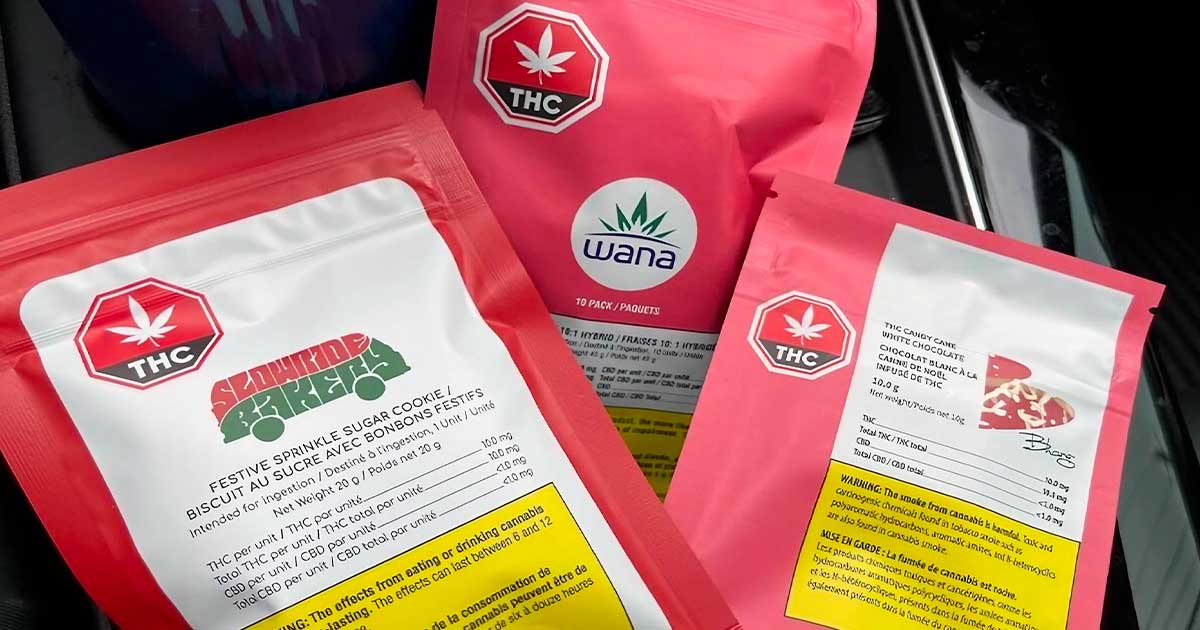
Canadian cannabis advocates, led by NORML Canada, are urging the federal government to reconsider and significantly raise the current limit of 10 milligrams of THC per edible, cannabis-infused edibles.
A petition, supported by the Canadian Competition Bureau and the Ontario Cannabis Store, aims to raise the THC limit to 100 milligrams per package so that cannabis businesses can effectively compete with the illicit market.
The regulatory context of edibles in Canada
Canada's journey toward the The legalization of cannabis began in 2018, with authorization for the retail sale of cannabis extracts and food products in 2019. Strict regulations have been imposed on the power of edibles, capping the THC content at 10 milligrams per package. By comparison, California, one of the major regulated markets in the United States, allows up to 100 milligrams of THC per package. The call to revise these limits stems from concerns that restrictive regulations may drive consumers toward illegal operators.
Jennawae Cavion, executive director of NORML Canada, argues that the current THC limit on edibles creates a significant disadvantage for licensed companies. In an interview with the National Post, Jennawae Cavion points out that, due to the low power of the edibles, it is difficult for legal retailers to compete with illegal operators.
The petition to raise THC limits is gaining credibility thanks to the support of reputable organizations such as the Canadian Competition Bureau and the’Ontario Cannabis Store. These two organizations have urged Health Canada to reconsider the current THC limits. The Competition Bureau specifically notes that it may not be necessary to restrict THC levels to achieve the government’s objectives, emphasizing the need to maintain a competitive business environment.
Divergent opinions
A group of independent experts, established in 2022, has recently published its first report. This report highlights differing opinions on the THC limit, with some having spoken out against large-scale changes shortly after the regulations were implemented. Critics argue that the 10-milligram limit was set to prevent overconsumption by inexperienced users.
Michael DeVillaer, an assistant professor in the Department of Psychiatry and Behavioral Neuroscience at McMaster University, is concerned about the potential public health risks associated with raising THC limits. He urges petitioners to provide market studies demonstrating strong consumer demand for such products.
Patrick Weiler, the Liberal MP sponsoring the petition, emphasizes the need to meet consumer demand for higher THC limits. He believes that raising the THC limit will encourage consumers to choose regulated sources over the illicit market, while by reducing excessive packaging and by ensuring the continued success of cannabis legalization in Canada.
In 2022, Canadian companies had already called on the government to raise the limit to 100 mg of THC per package, but to no avail.




















Newsweed Launches Its Own AI
A new tax of 0.5% could disrupt the hemp industry in Canada

Medical Cannabis and Driving: New South Wales Ends Automatic Penalties for THC

China's Yongji Health Takes Control of Tasmanian Botanics

Autism and Cannabis: Results from the First Placebo-Controlled Trial of NTI164

Which countries legalized medical cannabis before France?

From the boom in dispensaries to a purely medical approach: Thailand is revising its cannabis policy

South Korea is preparing to begin local production of medical cannabis to meet rising demand

In the United States, cannabis use among high school students has reached an all-time low

Medical cannabis use surges by 64 % in Denmark
-
 Cannabis and driving3 weeks ago
Cannabis and CBD: French Drivers Can Now Lose Their License Even Without a Positive Test Result
-

 Cannabis in France3 days ago
Which countries legalized medical cannabis before France?
-
Cannabis in France3 weeks ago
Cannabis Legalization: The LFI Bill Has a Major Problem—THC
-
Cannabis in the Netherlands2 weeks ago
One year after the launch of the Dutch cannabis experiment, the first trends are emerging
-
Business4 days ago
South Korea is preparing to begin local production of medical cannabis to meet rising demand
-
Cannabis in Argentina1 week ago
Argentina Opens Its Market to Hemp Flowers Containing 1% of THC
-
Cannabis in France2 weeks ago
French medical cannabis remains stalled at the Ministry of Health
-
Cannabis in Thailand3 days ago
From the boom in dispensaries to a purely medical approach: Thailand is revising its cannabis policy













You must be logged in to post a comment Login