What's wrong with legalizing recreational cannabis

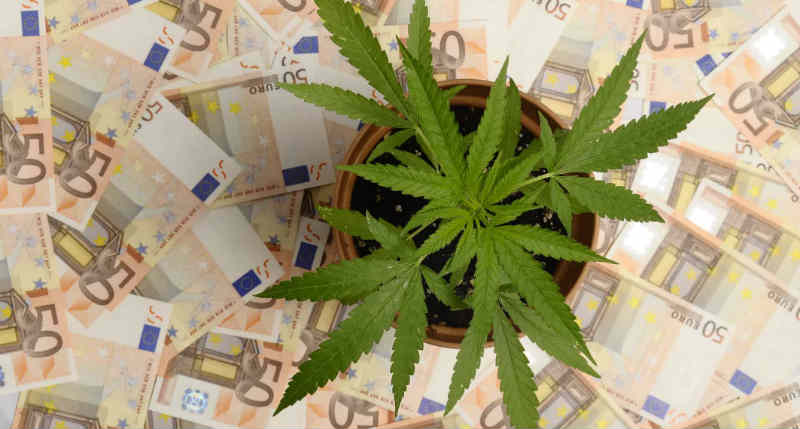
In addition to the logistical challenges (product shortages, laboratory delays, lack of packaging, poor product quality) raised by the legalization of cannabis - particularly in Canada where the black market still captures 70% of demand - there are other promises that have not been kept. It has also created new problems, revived old ones, and led to some disappointments.
Social justice absent from legalization
Prohibition has always disproportionately affected certain communities. In the United States, African-American and Latino minorities have been hardest hit by these policies, with much higher rates of arrest and imprisonment (15 times more in Manhattan) than those of the white community for the same consumption. Most American legalizations were built on the idea that these wrongs needed to be righted, by granting amnesty to individuals arrested for minor offences, and implementing social justice policies that allowed them access to the legal industry.
The banner of social justice has been brandished unreservedly by those involved in legalization, but in practice, social justice has remained a dead letter. A recent study shows that while cannabis legalization has drastically reduced arrests, it has not reduced racial disparities in those arrests. In some states, it has even accentuated them. In Washington, for example, before legalization, African-Americans were 2.5 times more likely to be arrested than whites. Post-legalization, they are 5 times more likely. In Colorado and Oregon, these disparities have not been reduced either post-legalization.
As far as access to industry is concerned, although some states have put in place positive discrimination policies for people of color (low-interest loans, administrative priority, quotas), in practice, theracial disparities are glaringly obvious. Whites represent 81% of cannabis industry entrepreneurs, Hispanics 5.7%, African-Americans 4.3% and Asians 2.4%. It seems that cannabis legalization has failed to produce the promised diversity. Some are quick to say that it has has been confiscated by the white capitalist elite.
Big Marijuana
Apart from the social justice aspects, it seems that the cannabis industry has simply become the new playground for financial capitalism and the indecencies that commonly accompany it: excessive speculation, multi-million dollar bonuses for CEOs, corruption, and other pleasures. Brendan Kennedy, CEO of Canadian cannabis producer Tilray, is the world's second-highest-paid boss with an annual compensation of $256 million in 2018. That's almost 8,712 times the average annual salary in France.
The big cannabis companies now have all the trappings of traditional multinationals: they are listed on the stock exchange, attract tycoons and billionaires, These companies are able to raise hundreds of millions of dollars through fund-raising campaigns and form powerful lobbies. And with good reason, Wall Street analysts estimated at $75 billion a year potential cannabis sales in 2030; this represents an annual industry growth rate of 19%.
For the moment, however, results are not forthcoming, and companies are struggling to meet investor expectations. It seems that Tilray has manipulated some data to attract investors. Brendan Kennedy lied about production capacity by inflating a metric called «financed capacity». US company MedMen also disappointed investors. In financial difficulties for several months, the company continues to spend around $20 million a month, mainly on marketing.
It is precisely these practices that some opponents of legalization are campaigning against. As with Big Tobacco, Big Pharma and other billion-dollar industries worldwide, they denounce an omnipresent logic of profit. «It's not about one person smoking a joint, it's about the greed of big business intruding into our communities and profiting off the addictions that exist in our communities,» explains Abu Edwards of Smart Approaches To Marijuana, an American anti-legalization group.
Poorly controlled health
Public health arguments are often put forward in favor of legalizing cannabis. While the promise of legalization is mainly to ensure the distribution of a healthy, controlled product without trivializing consumption, the risks may lie elsewhere. Post-legalization studies show that consumption on the rise in Canada (+4% between the first quarter of 2018 and the first quarter of 2019), that the impact on road accidents is not always clear, and that the number of children intoxicated by cannabis has for a time risen sharply in both states.
According to national surveys on Canadian legalization, 646,000 people have confessed to using cannabis for the first time after legalization. That said, other studies show that this increase in consumption does not concern young people, but rather senior citizens, and would therefore be less worrying. Moreover, the figures do not distinguish between consumption and problematic consumption, which the public health system must deal with.
With regard to road accidents, some studies show that alarming figures in Colorado and Washington (+37% in Colorado in the first year of legalization), others deny it.
In addition, the number of cannabis-related calls to hospital intoxication departments has soared in states where cannabis is legal. This may be due to an increase in consumption, an increase in the doses consumed (the majority of cases concern edibles) or THC levels, to over-optimistic first experiences, but also to the simple fact that there is no longer any fear of using these services for cannabis.
The more cases of children poisoned by cannabis strongly warns. However, it seems to take place even when cannabis is illegal, since in France it increased by 133% in 11 years despite prohibition. In Colorado, In the two years before and after legalization, it increased by 34% per year. Here too, in the majority of cases, the edibles are involved. In fact, the government has legislated a posteriori on packaging that should be resistant to children's hands (« childproof ») and the THC dose limit in edibles (10mg per portion and no more than 10 portions per pack).
Profitability
Another key argument in favor of legalizing cannabis concerns the substantial tax revenues that its trade would generate. Most of the time, these tax revenues are overestimated. In California, for example, tax revenues for 2018 were estimated at $643 million, but the state only collected $345 million. This is partly due to competition from the black market, particularly vigorous in California.
While some states boast attractive tax revenues - like Colorado, which has collected $740 million since 2014 - most of the time the money collected represents less than 5% of the state's overall tax revenue. «Cannabis legalization hasn't been the economic miracle people thought it was going to be» declared the governor of Colorado adding that neither was it the nightmare some critics had predicted.
What's more, the regulations have to be financed. For example, California's retroactive justice measures alone cost $14 million. A study published last year shows that for every 2.40$ of cannabis sales, the state spends 4.50 to combat public health and safety problems.













The Brazilian medical cannabis market continues to grow

Morocco: Three Cannabis-Based Medications Approved for the Treatment of Epilepsy

Canopy Growth Receives New EU-GMP Certification to Strengthen Its Presence in Europe

Three years after legalizing medical cannabis, Albania continues to establish regulations for it

The first plant-based medical THC spray arrives in the United Kingdom

Medical Cannabis in Germany: THC Prices Vary by a Factor of 12

France already has 3,000 cannabis retail outlets. None of them are legal.

Morocco's exports of legal cannabis have expanded to 15 countries

Aurora Cannabis Doubles Its Production Capacity in Germany

Tilray is accelerating its operations in Europe thanks to a license in Portugal
-
 Business2 weeks ago
The legal cannabis market in New York exceeds 4 billion $ in revenue
-

 Cannabis in France4 weeks ago
Which countries legalized medical cannabis before France?
-
Business4 weeks ago
South Korea is preparing to begin local production of medical cannabis to meet rising demand
-
Cannabis in France4 days ago
France already has 3,000 cannabis retail outlets. None of them are legal.
-
Cannabis in Thailand4 weeks ago
From the boom in dispensaries to a purely medical approach: Thailand is revising its cannabis policy
-
Cannabis in the U.S.5 days ago
A DEA report confirms that there are no fatal cannabis overdoses
-
Cannabis and driving3 weeks ago
Medical Cannabis and Driving: New South Wales Ends Automatic Penalties for THC
-
Cannabis in France3 weeks ago
France’s Drug Policy Chief Defends Cannabis Prohibition... and Runs Into the Facts
















You must be logged in to post a comment Login