Amsterdam mayor calls for legalized cocaine sales

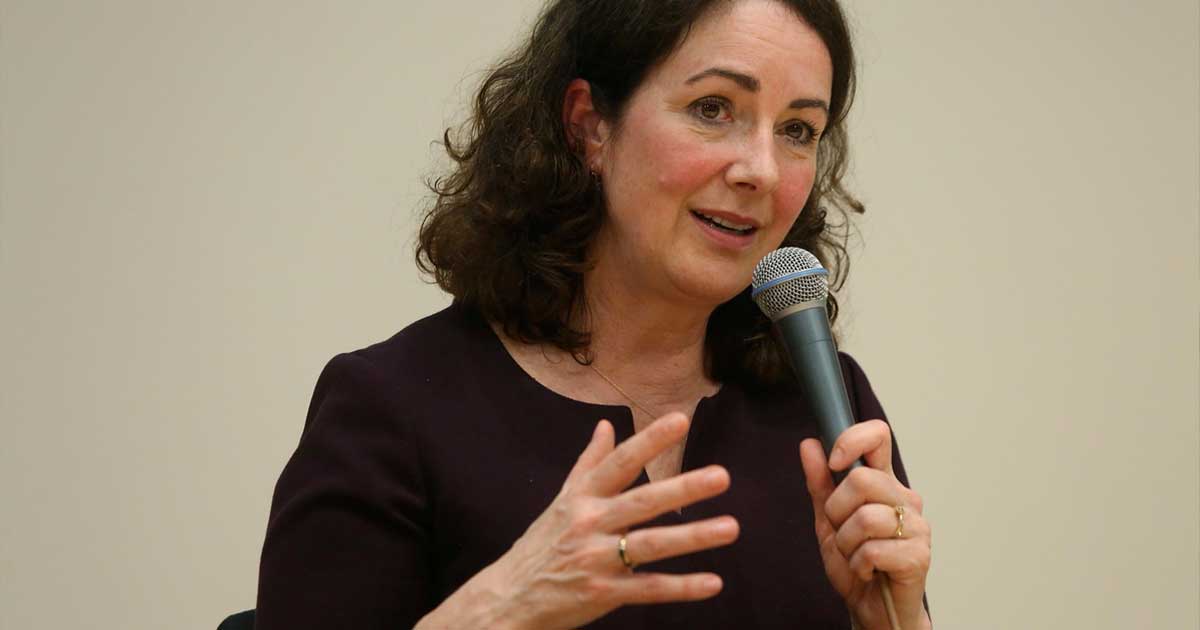
Amsterdam's mayor wants to legalize and regulate the sale, possession and consumption of cocaine.
In an interview with the Dutch newspaper Financieele Dagblad, Amsterdam mayor Femke Halsema has expressed her firm belief that decriminalizing and legalizing the sale of drugs such as cocaine could be an effective way of reducing drug abuse. strategic measure to fight organized crime and enhance public safety in Amsterdam.
The war on drugs: A battle lost in advance
Mayor Halsema pointed out that the current ban on drugs has unwittingly empowered criminal organizations, enabling them to thrive and amass billions of euros in profits.
«We've handed the market over to unscrupulous criminals. They're making billions. And meanwhile, the war on drugs is disrupting entire countries, claiming countless victims and strengthening the criminals» business model." she explains.
This sentiment is in line with a recent report by Dutch customs, which reveals an upsurge in organized crime linked to cocaine trafficking in Europe, with over 60,000 kilograms seized in 2023.
The alarming trend of increasing cocaine seizures in Europe is a cause for concern. Reports indicate that the average price of European cocaine has almost halved, and the United Nations has noted a record high in cocaine production. Mayor Halsema acknowledged that despite centuries of discouragement and repression, demand for stimulants persists, creating a lucrative market for criminals.
The harm reduction perspective
Mayor Halsema's proposal to legalize cocaine may seem surprising, but from a harm reduction point of view, it's in line with in its broader vision for Amsterdam. Drawing parallels with the city's famous red light district, she stressed the need for a common-sense approach to drug policy. In her view, just as the Red Light district provides security for sex workers, legalizing the sale of cocaine could offer similar security for consumers and the general public.
The mayor recognizes the integration of drug use into society and the public health risks associated with it. While acknowledging the serious consequences of drug addiction, she argues that these risks are often exaggerated. In her interview with Financieele Dagblad, Mayor Halsema said: «Drug abuse can have serious consequences. But the risks are often exaggerated. Cocaine, for example, is less harmful than alcohol. People make their own choices.»
A change in tourism strategy
Mayor Halsema's plea to legalize cocaine sales is part of a broader campaign to promote the sale of cocaine. efforts to restore Amsterdam's image. She has already expressed her fear of her city becoming a haven for problematic tourism. This change in strategy aims to balance the city's historic tolerance with responsible policies that prioritize public safety and calm for residents.
Her appeal goes further than the Netherlands, however. In particular, she stresses the need for a global reconsideration of the current approach to the war on drugs. Ms. Halsema argues that international treaties limiting national drug policies need to be re-evaluated.
«Drug prohibition is enshrined in international treaties that limit the room for maneuver of national drug policies, which means we will have to forge new international alliances that prioritize health and safety over punitive measures.».


















Medical Cannabis in Germany: THC Prices Vary by a Factor of 12

France already has 3,000 cannabis retail outlets. None of them are legal.

Morocco's exports of legal cannabis have expanded to 15 countries

Aurora Cannabis Doubles Its Production Capacity in Germany

Tilray is accelerating its operations in Europe thanks to a license in Portugal

Boston will host the 10th annual State of the Cannabis Industry Conference on October 26

A DEA report confirms that there are no fatal cannabis overdoses

A British patient is challenging the NHS's refusal to reimburse medical cannabis

October 2026 CBD Highlights: 10 Strains and Hash to Discover from 5 French Producers

CBD in France: Traceability, Retail Stores, THC and Driving… What the New Bill Proposes
-
 Business2 weeks ago
The legal cannabis market in New York exceeds 4 billion $ in revenue
-

 Cannabis in France3 weeks ago
Which countries legalized medical cannabis before France?
-
Business3 weeks ago
South Korea is preparing to begin local production of medical cannabis to meet rising demand
-
Cannabis in Thailand3 weeks ago
From the boom in dispensaries to a purely medical approach: Thailand is revising its cannabis policy
-
Cannabis and driving3 weeks ago
Medical Cannabis and Driving: New South Wales Ends Automatic Penalties for THC
-
Autism3 weeks ago
Autism and Cannabis: Results from the First Placebo-Controlled Trial of NTI164
-
Cannabis in France2 weeks ago
France’s Drug Policy Chief Defends Cannabis Prohibition... and Runs Into the Facts
-
CBD1 week ago
In Brazil, researchers are developing an innovative CBD eye drop

















David
January 30, 2024 at 1:29 p.m.
Heroin is already distributed under medical supervision in addiction treatment centers, with very good results, and notably an abstinence rate (I don't like that word, too religiously connoted). Yes, when you give people access to a drug, with medical, social and psychological support, they decide to stop taking it, and to treat their addictions. And this is the case in 7 European countries. Addiction is a disease that excludes, and prohibition only makes things worse. Support don't punish!
Anon
January 31, 2024 at 23 h 27 min
Heroin is easily produced, and very dangerous. Cocaine is produced by violent cartels and is less dangerous to health. I'm not sure that declaring free competition to them will go down without a hitch. Legal trade with them? Hm, why not... I have the impression that it's all done just to make money on taxes without paying attention to the rest.
Aurélien BERNARD
1 February 2024 at 10 h 03 min
It remains to be seen how intent will translate into regulation. Free trade in cocaine or only medical use?
David
9 February 2024 at 15 h 39 min
Knowing Dutch pragmatism, particularly in the fight against crime and delinquency, but also in the medical field. And no, cocaine is no less dangerous than heroin, in fact it kills more people than heroin in France. Heroin is an opiate which, if distributed in controlled doses under medical supervision, does not cause an overdose. Cocaine, on the other hand, causes psychosis, brain damage, strokes and heart attacks, in addition to the risk of overdose. Beware of prejudice. For addicts who inject it, it's a veritable hell that sets in, far worse than heroin (an injection every 30 minutes) due to its unbearable craving effect! What I'm wondering about is how to distribute it medically? Are there any sustained-release formulas?
hikuli
8 April 2024 at 2 h 10 min
It's the method of consumption that determines the level of addiction: chewing coca doesn't cause any real addiction or health problems, sniffing a trace of coke isn't a big deal, provided you don't use it every day, of course, but injecting cocaine is very, very good and also very, very dangerous, it's easy to overdose without wanting to (the average purity level of coke in France is close to 89%, so the flash is overpowering), then there are all the risks associated with repeated injections, like 20 fixs a night, followed by the craving that immediately follows, but all you have to do is take a sleeping pill and when you wake up, the craving is gone. And the biggest risk of all is smoking crack or base (you can call it what you like, the effects are the same). Smoking crack makes your head spin so much you don't even know what you're calling yourself - the effect is so dazzling and exhilarating that you want to start up again straight away, and then it quickly becomes hell and ruin (money and health). You're going to do terrible things just to get enough to get a hit - prostitution for the girls, robbery and assault for the guys. You're going to lose all your friends in less than a month by dint of chatting them up and taxing them, and what's more, your company gets everyone drunk because you're obsessed with the rock, and you don't give a damn about the rest.
Time-release cocaine? Well, it's no longer coke. What gets you hard is the fulgurating effect of the stuff, the instant pleasure that invades your body and for which you're going to strip your dear grandmother. After years of hardship, some users who refuse to let go of this unheard-of pleasure manage to put in place strategies designed to prevent them from doing anything stupid. For example, when you go to hook up, you take just enough money for the dose(s) you want to buy, and if you still have a credit card, you don't take it with you, and you don't use it on the spot. You have to set limits and stick to them. When you reach the end of your pebble, you fart your doser, so you don't have to spend your night scratching it and acting like a hen on all fours at home, smoking whatever crap you're going to take for a piece of pebble.
It's not the drug itself that sucks, it's the way you use it. When I was a teenager, I used to see guys smoking bong after bong until they were ripping their lungs out. After all, cannabis craving is mostly in the head, and cocaine craving is mostly psychological. The only product that ravages your body and mind is heroin and other opiates. If you want to know what it's like to be in withdrawal, shitting your pants, puking your guts out, bent double on a mattress in agony, unable to sleep even after 10 days of withdrawal, then this is the drug for you. The real withdrawal comes after at least a month of daily use, and it's going to take you 10 years to quit, if not much longer.and wait until fentanyl arrives in France, in the US it's over 10,000 deaths just by overdose....Pasque we're already seeing it, synthetic drugs are limitless, no need to plant coca or poppy fields, no you can produce enough to get the whole neighborhood stoned in your slum studio. In short, we're going to have to learn to live with drugs, learn to tame them.