Legal cannabis in Lausanne strikes a blow for the black market

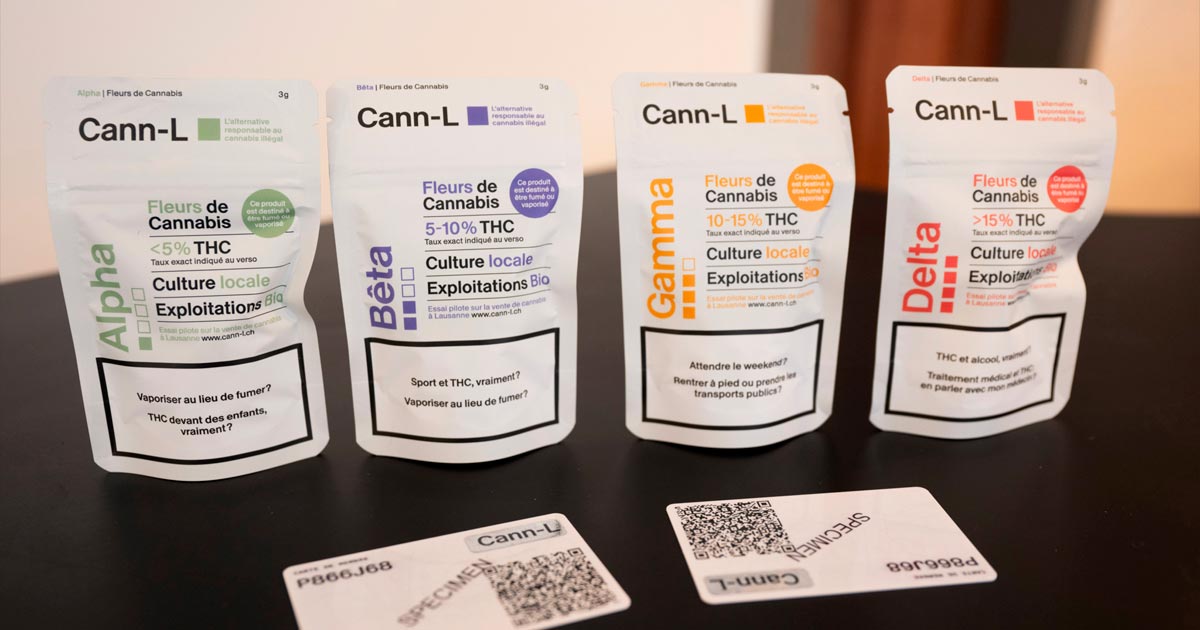
Two years after the launch of its pilot program for the regulated sale of cannabis, the city of Lausanne reports a significant impact on both consumer habits and local illicit trade.
According to an interim report presented this week, the legal point of sale Cann-L helped divert around 2 million Swiss francs from black market, covering approximately 20% of cannabis consumption in the capital of Vaud.
These results have been described as a turning point in the debate on Swiss drug policy, with Lausanne and its partners now calling for the trial to continue until mid-2029.
Cann-L attracts 1,750 participants and reduces dependence on illicit dealers
From opening in December 2023, Cann-L recorded over 1,750 adult participants, all residents of Lausanne and already cannabis users. The program targets a broad population: participants are aged from 18 to 79 years, with an average age of 36 years old. About 75 % are men, while most are employed (68 %) or in education or training (11 %).
Officials explain that a large majority of these participants have reduced or abandoned their purchases from illegal sources. The city estimates that around 70 % of registered consumers have turned away from the black market altogether.
«The results of the Cann-L project are very positive. Not only have we withdrawn 2 million francs from the illegal market and now cover 20 % of consumption in Lausanne, but we are also helping to protect the health of participants,» said Lausanne City Councillor Emilie Moeschler, in a press release.
Low-THC products and signs of declining consumption
Beyond the economic impact, the Lausanne report suggests that regulated access may influence the amount of cannabis consumed. Data collected during the pilot phase show a «statistically significant» drop in consumption levels over time. On average, participants reduced their consumption by around 0.2 grams per month, compared with an initial monthly average of 15.8 grams when they entered the program. The frequency of consumption also decreased.
The city also notes a clear difference in product potency compared to illegal supplies. Cannabis flowers sold via Cann-L contain an average THC content of 12,5 %, against 14,5 % on the illicit market. For resins, the average price of legal products is 17.5 % of THC, against rates exceeding 32 % on the illegal market.
These figures reinforce one of the program's public health objectives: to provide regulated cannabis with a more predictable composition and reduced risks.
Health monitoring and economic benefits for the town
Authorities are also highlighting new health-related behaviors among participants. According to the published results, nearly 100 participants consulted a doctor for the first time about their cannabis use. 131 others bought a vaporizer, This suggests an evolution towards potentially less harmful consumption methods.
From a financial point of view, the pilot project is also generating measurable benefits. Visit 2025, Cann-L reported over CHF 60,000 VAT to the federal authorities, as well as CHF 300,000 surplus, which can be reinvested in local prevention programs or research.
The city also points out that the project has created several jobs directly or indirectly linked to the regulated sales environment.
Lausanne asks Swiss authorities to extend trial until 2029
With the interim report deemed encouraging, Lausanne and Addiction Switzerland have officially asked the’Federal Office of Public Health (FOPH) authorize continuation of the trial until mid-2029.
«In addition to its significant impact on the illegal market, Cann-L allows us to better address cannabis consumption,» said Pierre-Antoine Hildbrand, Lausanne city councillor.
Project leaders say the results should inform national discussions in Berne, as Switzerland prepares its future regulatory framework. Cann-L's not-for-profit model, with its strong public health focus, is said to have helped shape the federal cannabis bill known as the LPCan.
For now, the Lausanne experience reinforces the argument that the legal and regulated sale of cannabis can weaken illegal networks while providing authorities with better tools for prevention, research and consumer protection.
These initial results also echo recent findings by highlighted in an OFDT report, which examines how Switzerland is using local pilot projects such as Cann-L as a step-by-step approach to building a future national framework for cannabis regulation.
























Medical Cannabis in Germany: THC Prices Vary by a Factor of 12

France already has 3,000 cannabis retail outlets. None of them are legal.

Morocco's exports of legal cannabis have expanded to 15 countries

Aurora Cannabis Doubles Its Production Capacity in Germany

Tilray is accelerating its operations in Europe thanks to a license in Portugal

Boston will host the 10th annual State of the Cannabis Industry Conference on October 26

A DEA report confirms that there are no fatal cannabis overdoses

A British patient is challenging the NHS's refusal to reimburse medical cannabis

October 2026 CBD Highlights: 10 Strains and Hash to Discover from 5 French Producers

CBD in France: Traceability, Retail Stores, THC and Driving… What the New Bill Proposes
-
 Business2 weeks ago
The legal cannabis market in New York exceeds 4 billion $ in revenue
-

 Cannabis in France3 weeks ago
Which countries legalized medical cannabis before France?
-
Business3 weeks ago
South Korea is preparing to begin local production of medical cannabis to meet rising demand
-
Cannabis in Thailand3 weeks ago
From the boom in dispensaries to a purely medical approach: Thailand is revising its cannabis policy
-
Cannabis and driving3 weeks ago
Medical Cannabis and Driving: New South Wales Ends Automatic Penalties for THC
-
Cannabis in Argentina4 weeks ago
Argentina Opens Its Market to Hemp Flowers Containing 1% of THC
-
Autism3 weeks ago
Autism and Cannabis: Results from the First Placebo-Controlled Trial of NTI164
-
Cannabis in France2 weeks ago
France’s Drug Policy Chief Defends Cannabis Prohibition... and Runs Into the Facts

















You must be logged in to post a comment Login