November vote: the next US states to legalize cannabis

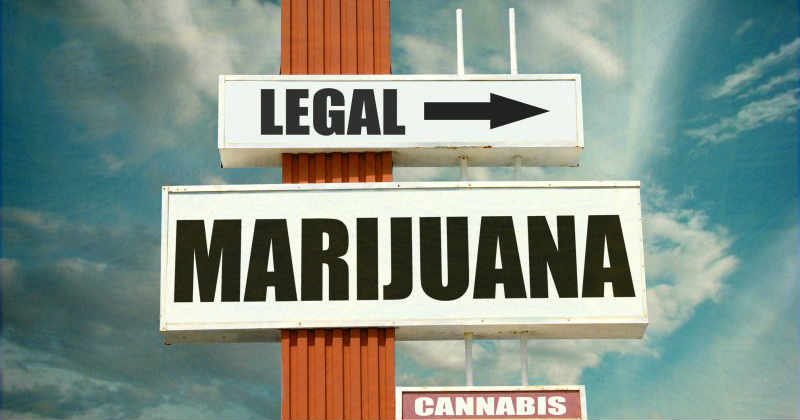
Since 2012, nine US states plus the District of Washington have legalized the recreational use of cannabis, and around 30 the medical use. The Mariana Islands, a territory commonwealth of the United States, have also just legalized a mixture of recreational and medical products. Today, four new states are poised to legalize it in the upcoming November vote.
The American system allows its citizens to propose popular initiatives to create legislation or amend the constitution. To qualify, these initiatives must collect a certain number of signatures, before being put to the vote. Here's a look at the next 4 US states to vote for (or against) cannabis legalization.
Michigan
Proposition 1 would legalize the possession and consumption of cannabis for recreational purposes for those over 21. They would be allowed to possess 71 grams of cannabis in public and 283 grams at home. It would also authorize self-cultivation of up to 12 plants per person, and impose a sales tax of around 10 %. The money raised will cover administration costs. 20 million will then be transferred to the FDA to conduct clinical trials, with the remainder going to municipalities and counties, then to schools and public infrastructure.
The bill would also legalize the cultivation, processing and distribution of industrial hemp. On the other hand, it says nothing about existing criminal records and people currently detained for cannabis-related offenses. A competing bill established a constitutional amendment with retroactive legal action. However, it also prohibited any taxation or regulation of cannabis. It did not qualify for the citizens' vote.
Michigan had already legalized medical cannabis 10 years earlier, by a vote of 63 % to 37 %. didn't set up a legal distribution framework until very late. Consumption and possession of small quantities of cannabis are already decriminalized in a number of municipalities. Numerous initiatives to legalize the recreational use of cannabis were launched in the 2010s, but failed to qualify. That said, this measure has a great chance of success, since according to the latest polls, between 54% and 56% of the population would be in favour.
Missouri
The situation in Missouri is a little unusual in that voters will be asked to vote yes or no on several propositions, with the possibility of formulating several yeses. The proposal receiving the most yes votes will be the one adopted. The three proposals differ based on the amount of tax they impose on the cannabis trade and the destination of the funds raised. The first two would amend the constitution, while the third would create a law.
In brief, Amendment 2 proposes a 4 % tax on retail sales, with proceeds going primarily to veterans and licensing administration. Amendment 3 proposes a 15 % tax on retail sales, coupled with a tax on wholesale sales. Proceeds from these taxes will be earmarked for research into cancer and other diseases. Proposition C proposes a 2 % tax for public services for veterans, drug addicts, kindergarten education and public safety.
These proposals concern medical cannabis only. What they have in common is that they authorize some nine diseases for the prescription of medical cannabis, and then vary on the legal limits for possession and purchase. Amendment 2 is the only one to propose self-cultivation. Each proposal has been the subject of over a million dollars in campaign spending by its supporters.
Another initiative legalizing recreational cannabis tried unsuccessfully to qualify for the same session. It removed cannabis from the list of controlled substances and proposed releasing all prisoners locked up for non-violent cannabis-related crimes.
North Dakota
Medical cannabis has been authorized since 2016 and had passed with 63 % of the vote. This new law would authorize adults over 21 to possess an unlimited quantity of cannabis, as well as to produce and sell it. The law does not (yet) provide for a licensing system or sales tax. It would also remove the criminal records of some 180,000 people. Another competing law failed to qualify for the popular vote; this one provided for a sales tax.
According to the polls, the opposition is leading with 48 % of the vote against 42 %, but the 11 % of undecideds could well change the outcome. Surprisingly, neither partisan nor opposition groups spent large sums of money defending their positions. It seems that the issue of legal cannabis is not really mobilizing in this state.
Utah
Proposition 2 was designed to legalize medical cannabis for certain illnesses and with a doctor's prescription. It establishes a medical card system. Patients will be allowed to possess 57 grams of unprocessed cannabis and a total of derived products not exceeding 10 grams of THC. However, the initiative prohibits cannabis from being smoked. After 2021, individuals will also be able to plant six feet of cannabis if they live more than 160 kilometers from the nearest dispensary.
After discussions with stakeholders, Utah Governor Gary Hebert has called a special legislative session in October to devise a medical cannabis policy in the event that Proposition 2 fails to pass. However, it is unlikely that the proposal will fail to pass, as the share of yes voters is estimated at 70 %. If the bill does pass, the session will continue, with the aim of amending the text. Utah will therefore have its medical cannabis program whatever happens.
An important detail, the legalization of medical cannabis in Utah is now supported by the Mormon Church, which was initially opposed.








Medical Cannabis in Germany: THC Prices Vary by a Factor of 12

France already has 3,000 cannabis retail outlets. None of them are legal.

Morocco's exports of legal cannabis have expanded to 15 countries

Aurora Cannabis Doubles Its Production Capacity in Germany

Tilray is accelerating its operations in Europe thanks to a license in Portugal

Boston will host the 10th annual State of the Cannabis Industry Conference on October 26

A DEA report confirms that there are no fatal cannabis overdoses

A British patient is challenging the NHS's refusal to reimburse medical cannabis

October 2026 CBD Highlights: 10 Strains and Hash to Discover from 5 French Producers

CBD in France: Traceability, Retail Stores, THC and Driving… What the New Bill Proposes
-
 Business2 weeks ago
The legal cannabis market in New York exceeds 4 billion $ in revenue
-

 Cannabis in France3 weeks ago
Which countries legalized medical cannabis before France?
-
Business3 weeks ago
South Korea is preparing to begin local production of medical cannabis to meet rising demand
-
Cannabis in Thailand3 weeks ago
From the boom in dispensaries to a purely medical approach: Thailand is revising its cannabis policy
-
Cannabis and driving3 weeks ago
Medical Cannabis and Driving: New South Wales Ends Automatic Penalties for THC
-
Cannabis in Argentina4 weeks ago
Argentina Opens Its Market to Hemp Flowers Containing 1% of THC
-
Autism3 weeks ago
Autism and Cannabis: Results from the First Placebo-Controlled Trial of NTI164
-
Cannabis in France2 weeks ago
France’s Drug Policy Chief Defends Cannabis Prohibition... and Runs Into the Facts

















You must be logged in to post a comment Login