Japan puts an end to the «grey zone» for CBN products


Japan once again strengthens its regulatory framework on cannabis-derived compounds. This time, the target is cannabinol (CBN), a lesser-known cannabinoid that has gained popularity in recent years thanks to wellness products marketed to promote sleep and relaxation.
On March 19, the Japanese Ministry of Health has announced that it has classified CBN as a «controlled substance». Its manufacture, import, sale and use are prohibited. will be prohibited as of June 1, 2026, except for limited medical purposes.
A booming market for a minor cannabinoid
While the THC is still strictly forbidden in Japan and CBD is authorized in extremely pure forms, compounds such as CBN were operating in a regulatory grey zone. Since they were not clearly mentioned in the existing restrictions, the CBN-based products have become widespread across Japan, both in physical stores and online.
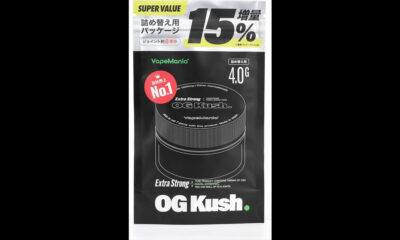
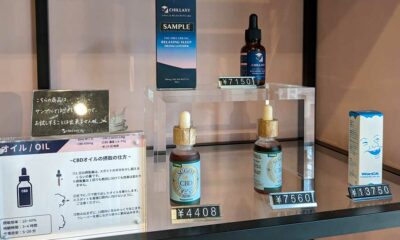
In recent years, consumers have been able to buy CBN in the form of gummies, cookies, tinctures, oils and vaping products. The expansion of the market has followed a global trend in which «minor cannabinoids» such as CBN, the CBG or synthetic alternatives have gained ground in jurisdictions where conventional cannabis products are strictly regulated.
The scale of the market is considerable. Industry groups estimate Japan's domestic CBN sector at around 10 billion yen ($62.6 million) per year, supported in large part by small retailers and online vendors.
Why Japan has decided to ban CBN
According to the Japanese authorities, this decision is linked to growing public safety concerns. Visit CBN is formed when the THC oxidizes over time, making it chemically distinct from CBD, while remaining linked to the psychoactive chemistry of cannabis.
Although the CBN is generally described as milder than THC, experts expressed concern that high doses could produce psychoactive effects. A government panel has reportedly concluded that CBN presents a high risk of psychoactive effects and could pose a danger to public health, particularly when consumed in large quantities.
The Ministry's action also follows a series of health incidents reportedly linked to CBN-based products. One of the most widely cited cases concerns a student in Yamanashi prefecture who allegedly fractured a limb after jumping out of his dormitory window after eating cookies suspected of containing CBN.
Authorities have also been alarmed by products marketed in extremely high doses, sometimes exceeding 1,000 milligrams, which, according to critics, could encourage over-consumption.
New rules: disappearance of the consumer market, limited medical exception
Under the revised ordinance, as reported by The Japan Times «Under the revised ordinance, CBN-based products, which are sold on the national market both in physical stores and online in the form of gummies, cookies, oils and electronic cigarettes, will effectively disappear from the consumer market.»
The ban covers production, import, sale and use, with a very limited medical exception. Only patients with specific pathologies, such as incurable diseases for which no other treatment exists, will still be able to have access to it.
For consumers, the government has been clear: anyone currently in possession of CBN products must dispose of them by June 1.
Negative sector reaction and economic uncertainty
This decision drew criticism from professional groups, including the Japan Cannabinoid Federation, which argues that CBN's psychoactive properties are minimal and that this compound has been circulating for years without causing widespread harm.
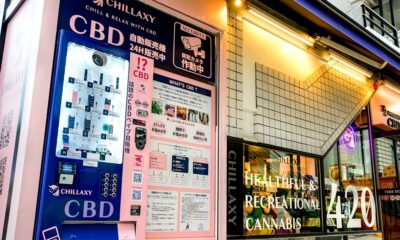
Retailers now face heavy losses, with little time to adapt. A shopkeeper in Tokyo's Shibuya district said his store would comply with the ruling, but expressed disappointment at the ban.
«CBN is simply a natural and more effective way to help people fall asleep, better than traditional sleeping pills,» he said, adding that his store would stop selling the product altogether by June.
Japan's decision is part of a broader national policy that combines limited medical reform with strict penal repression. In December 2023, Japan enacted legislation authorizing certain medicines derived from cannabis under strict conditions, while increasing penalties for unauthorized use up to a maximum of seven years in prison.



















«Vincy Gold»: Humboldt Seed Company on the Hunt for Saint Vincent Sativas

Cronos Completes the Acquisition of CanAdelaar for 57.5 million euros

Cannabis with a "bloody" twist: Discover Sensi True Blood and Sensi Sangria, the two new strains from Sensi Seeds

Hemp: The Council of the EU Takes a Stand on New Production and Marketing Rules

Missouri's legal cannabis market accounts for 93 % of consumer spending

THC Gummies: How to Read a Certificate of Analysis Before Buying

British patients now have access to THCV-rich cannabis flowers

Spain: Medical Cannabis Is Coming to About 50 Hospitals

JIHE 2026: Japan’s Largest Trade Show Dedicated to Hemp and CBD Returns to Tokyo with More Than 100 Industry Players

New Caledonia: The Courts Clear the Way for the Return of CBD
-
 Business3 weeks ago
The legal cannabis market in New York exceeds 4 billion $ in revenue
-

 Cannabis in France4 weeks ago
Which countries legalized medical cannabis before France?
-
Cannabis in France1 week ago
France already has 3,000 cannabis retail outlets. None of them are legal.
-
Business4 weeks ago
South Korea is preparing to begin local production of medical cannabis to meet rising demand
-
Cannabis in the U.S.1 week ago
A DEA report confirms that there are no fatal cannabis overdoses
-
Cannabis in Thailand4 weeks ago
From the boom in dispensaries to a purely medical approach: Thailand is revising its cannabis policy
-
Cannabis and driving4 weeks ago
Medical Cannabis and Driving: New South Wales Ends Automatic Penalties for THC
-
Cannabis in France3 weeks ago
France’s Drug Policy Chief Defends Cannabis Prohibition... and Runs Into the Facts
















You must be logged in to post a comment Login