Israel: decriminalization of cannabis use takes effect

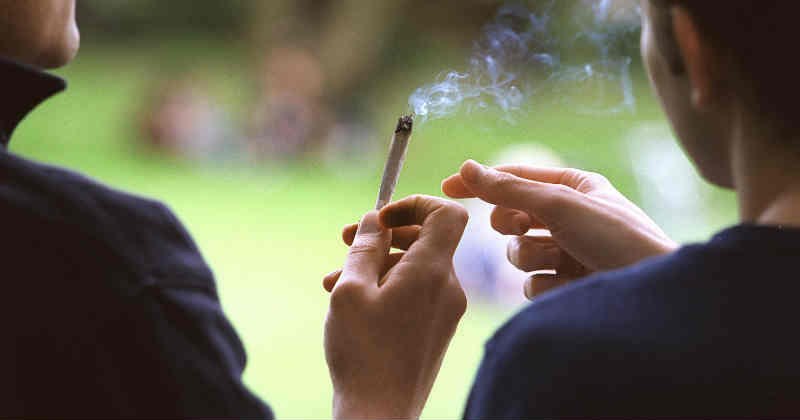
The reform aimed at decriminalize cannabis use in Israel It went into effect last night at midnight. The Israeli police will no longer arrest users but will simply issue fines. This is a double-edged policy, since the police were already largely tolerant of the cannabis users and might adopt a more restrictive approach due to a streamlined citation process.
Breaking Free from the Criminal System
This policy change had been under consideration for two years. In 2017, at the initiative of Public Security Minister Gilad Erdan, the government decided to amend the Narcotics Law and the criminal procedure regarding offenses involving the use and possession of cannabis for personal use. These amendments had been passed by the Knesset in July 2018 and are now in effect for three years on a pilot basis.
Under the reform, suspects will be fined 1,000 shekels (€230) for a first offense and 2,000 shekels (€460) for a second offense, without a criminal record being established. A criminal record will be established in the event of a third offense (within seven years), but this can be waived if the suspect agrees to an alternative: a prevention program, community service, or a higher fine. It is up to the police to determine whether the consumption or possession is for personal use, including with regard to the quantity, although a previous regulation mentions a limit of 15 grams as a reference.
Cannabis is not legal, but its use has been decriminalized, meaning that it no longer results in criminal prosecution (except in cases of repeat offenses). Police officers will simply issue a fine and confiscate the cannabis. Consuming cannabis in public is thus treated as a minor offense, similar to making noise at night or jaywalking. according to The Jewish Press – Private consumption will not be subject to prosecution. This situation should not be confused with the French fine which does not amount to decriminalization since criminal proceedings and the creation of a criminal record remain in effect.
The Limitations of This Policy
Public Security Minister Gilad Erdan described this policy as an «important first step» and a «shift toward education, public information, and rehabilitation.» reports that the Times of Israel. However, this policy does not apply to everyone: it excludes soldiers, prisoners, and minors who remain subject to prior criminal proceedings—though it is recommended that minors be referred to rehabilitation programs.
Some legalization advocates have criticized this new policy, which they believe could lead to increased enforcement. In fact, cannabis users already benefited from an informal policy of tolerance, particularly because the police often considered it unnecessary to create criminal records for ordinary citizens. However, the fine-based procedure—by streamlining law enforcement and eliminating criminal records for first-time offenses—could result in increased crackdowns on cannabis use.











JIHE 2026: Japan’s Largest Trade Show Dedicated to Hemp and CBD Returns to Tokyo with More Than 100 Industry Players

New Caledonia: The Courts Clear the Way for the Return of CBD

The Brazilian medical cannabis market continues to grow

Morocco: Three Cannabis-Based Medications Approved for the Treatment of Epilepsy

Canopy Growth Receives New EU-GMP Certification to Strengthen Its Presence in Europe

Three years after legalizing medical cannabis, Albania continues to establish regulations for it

The first plant-based medical THC spray arrives in the United Kingdom

Medical Cannabis in Germany: THC Prices Vary by a Factor of 12

France already has 3,000 cannabis retail outlets. None of them are legal.

Morocco's exports of legal cannabis have expanded to 15 countries
-
 Business2 weeks ago
The legal cannabis market in New York exceeds 4 billion $ in revenue
-

 Cannabis in France4 weeks ago
Which countries legalized medical cannabis before France?
-
Business4 weeks ago
South Korea is preparing to begin local production of medical cannabis to meet rising demand
-
Cannabis in France4 days ago
France already has 3,000 cannabis retail outlets. None of them are legal.
-
Cannabis in Thailand4 weeks ago
From the boom in dispensaries to a purely medical approach: Thailand is revising its cannabis policy
-
Cannabis in the U.S.5 days ago
A DEA report confirms that there are no fatal cannabis overdoses
-
Cannabis and driving3 weeks ago
Medical Cannabis and Driving: New South Wales Ends Automatic Penalties for THC
-
Cannabis in France3 weeks ago
France’s Drug Policy Chief Defends Cannabis Prohibition... and Runs Into the Facts














You must be logged in to post a comment Login