Israel: medical cannabis will now be sold in pharmacies


The israeli medical cannabis program has been in operation since the early 1990s. However, it has been widely criticized by patients for its lack of accessibility. The government recently announced a liberalization of the program.
A flawed system
To gain access to medical cannabis, patients previously had to apply for a permit directly from the Ministry of Health. These permits were only valid for 3 to 6 months. Because of this short validity period, patients frequently had to renew their permits. The large number of applications - around 300 per day - prevented the Ministry from processing them efficiently.
At the same time, patients could only obtain supplies from a designated producer, or from a dispensary affiliated to that producer, depending on their license. This system poses distribution problems, as if a producer or dispensary is unable to operate, patients are no longer supplied. During a recent reform that forced Israel's largest producer, Tikun Olam, to relocate its production facilities, an insufficient stock left the company unable to supply patients. some 5,000 to 9,000 drug-free patients.
Liberalization
As the Times of Israel, The Ministry of Health announced last Thursday that it would be removing cannabis from the list of dangerous drugs. As a result, it will no longer require a permit from the Ministry and will be available in pharmacies. This liberalization also means that all medical specialists will be able to prescribe cannabis via a standard prescription without requiring a special license or approval from the Ministry.
«I have decided to follow the position of the Ministry of Health's professionals and allow prescriptions rather than authorizations for certain medical conditions for which the diagnosis is clear,» explains Yaakov Litzman, the Minister of Health. However, he did not specify when these new directives will take effect. This desire for reform is not new. Back in 2016, the government seemed to be planning a similar reform.
The limit will be set at 40 grams of cannabis per prescription, and it will remain available only for the following conditions: oncological treatments, Crohn's disease, certain neurological disorders including epilepsy and Parkinson's disease, chronic neuropathic pain, post-traumatic stress disorder, AIDS, certain forms of severe and drug-resistant epilepsy, multiple sclerosis and palliative care. Cannabis may soon be approved for autism and fibromyalgia.
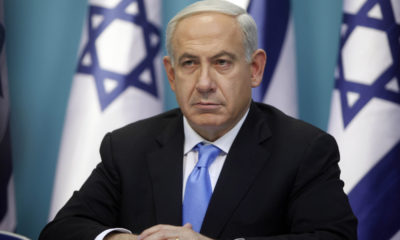
In addition, Benjamin Netanyahu seemed to be considering the legalization of recreational cannabis during his campaign against the rival right-wing pro-cannabis Zehut party. Now that he has been confirmed as head of state for a fifth term, he has not commented on the subject. In any case, the possession of small quantities of cannabis is a criminal offence. decriminalized for the next three years.












JIHE 2026: Japan’s Largest Trade Show Dedicated to Hemp and CBD Returns to Tokyo with More Than 100 Industry Players
New Caledonia: The Courts Clear the Way for the Return of CBD

The Brazilian medical cannabis market continues to grow

Morocco: Three Cannabis-Based Medications Approved for the Treatment of Epilepsy

Canopy Growth Receives New EU-GMP Certification to Strengthen Its Presence in Europe

Three years after legalizing medical cannabis, Albania continues to establish regulations for it

The first plant-based medical THC spray arrives in the United Kingdom

Medical Cannabis in Germany: THC Prices Vary by a Factor of 12

France already has 3,000 cannabis retail outlets. None of them are legal.

Morocco's exports of legal cannabis have expanded to 15 countries
-
 Business2 weeks ago
The legal cannabis market in New York exceeds 4 billion $ in revenue
-

 Cannabis in France4 weeks ago
Which countries legalized medical cannabis before France?
-
Business4 weeks ago
South Korea is preparing to begin local production of medical cannabis to meet rising demand
-
Cannabis in France4 days ago
France already has 3,000 cannabis retail outlets. None of them are legal.
-
Cannabis in Thailand4 weeks ago
From the boom in dispensaries to a purely medical approach: Thailand is revising its cannabis policy
-
Cannabis in the U.S.5 days ago
A DEA report confirms that there are no fatal cannabis overdoses
-
Cannabis and driving3 weeks ago
Medical Cannabis and Driving: New South Wales Ends Automatic Penalties for THC
-
Cannabis in France3 weeks ago
France’s Drug Policy Chief Defends Cannabis Prohibition... and Runs Into the Facts
















You must be logged in to post a comment Login