[INTERVIEW] Franck Milone of LaFleur: «We aspire to be France's leading producer of medical cannabis to pharmaceutical standards».»

Hi Franck. You're the founder of LaFleur, a French medical cannabis company. Can you (re)explain LaFleur's project to us?
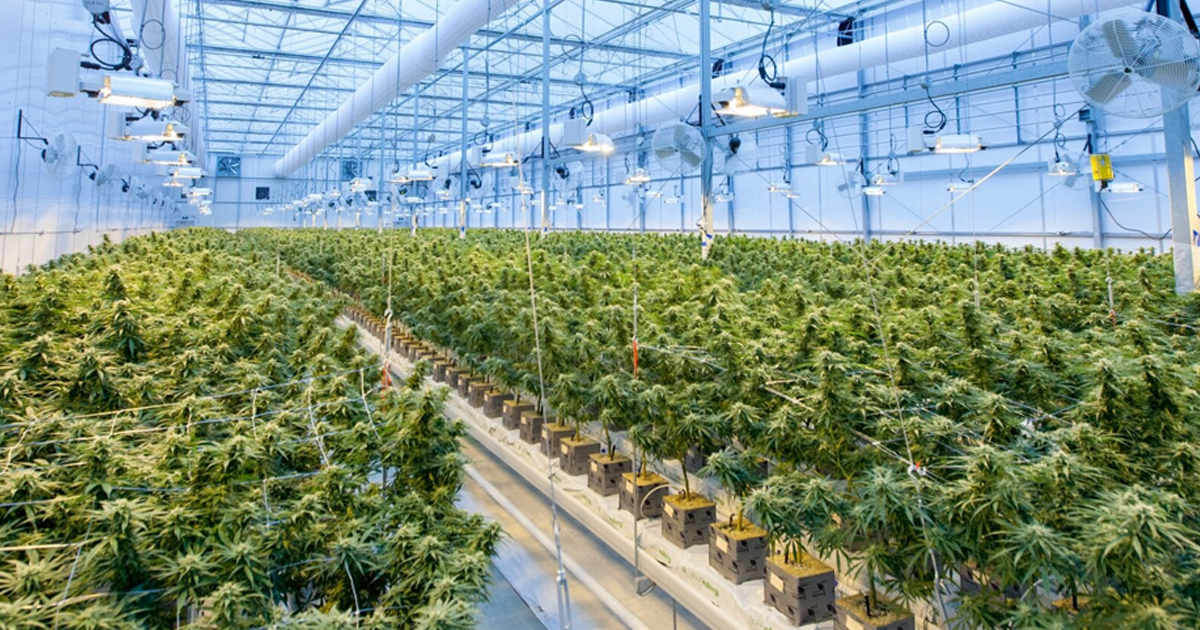
Indeed, I founded DelleD in 2014 and LaFleur is our branch specializing in cannabis-based pharmaceutical development. We began on the agronomic side by developing expertise in horticultural light for production in a controlled environment (optimizing and standardizing production), followed by the use of the plant's active ingredients in the healthcare field (improving therapeutic solutions for patients suffering from various illnesses who could benefit from them).
From the outset, I wanted to set up research projects, because I know that this is the key to the acceptance of cannabis by the medical and scientific world, having myself been confronted with health professionals who didn't believe in it. It's also through research that new therapies can be developed. With legislation and its regulatory constraints, the challenge has been to overcome this and implement research projects.
LaFleur has been working for years to change the regulatory environment for the benefit of research and patients. These constrain researchers in their scientific endeavors and prevent patients from gaining access to cannabis-based therapeutic innovations. As a company, we are also constrained in our actions to develop innovations.
Let's face it, the potential widespread use of medical cannabis is bound to attract a lot of people to work on it and set up businesses, perhaps with an idealized vision of what we see in the USA/Canada. If the legal provisions are not the same, one of the common points will probably be that you don't launch a medical cannabis project just with knowledge of cannabis. In particular, medical cannabis is a very expensive entrepreneurial field. How did you manage to finance LaFleur, in a very closed French context? What were your biggest obstacles?
It's been a six-year obstacle course to find the funds. We sold the house my father left us when he died, and I invested everything I had to finance the company. During the fund-raising process, funders took the subject lightly, and it wasn't taken seriously, even by investment funds specializing in health and plants. How many times have I heard investment managers tell me that “cannabis is too divisive”, as if that took precedence over helping sick people.
Today, it's a little different: people see cannabis as a potential short-term income source, a way to make money. quick win, And when you present them with the financial or regulatory barriers, things change, and therapeutic cannabis no longer seems all that interesting.
That's why our approach has been to build and orient our work over the long term. Most pharmaceutical laboratories work on chemical substances and molecules. What sets us apart is that we use cutting-edge technologies to study plant-derived active ingredients, something that is highly unusual in the modern pharmaceutical industry. Last July, for example, we successfully raised 3 million euros from a private investor, enabling LaFleur to pursue the development of a new oncology treatment based on cannabis active ingredients. It also gives us access to new complementary financing.
LaFleur's objective is to cover the entire value chain, from agronomic production to the development of pharmaceutical specialties, but also to be open to partnerships with other pharmaceutical companies in order to maximize therapeutic solutions for patients. LaFleur is developing as a leader from research to production.
For a while you were close to InVivo, one of France's biggest agricultural groups. What didn't work out with them? Were they ultimately uninterested in cannabis? Or were they put off by the lack of progress in legislation?
Yes, they spotted us when we won the start-up competition at the 2018 Paris Agricultural Show with our Hortimind project (horticultural lighting and artificial intelligence). We then initiated a collaboration with Food&Tech, the innovation arm of the InVivo group, which didn't materialize because the LaFleur project didn't generate enough short-term cash flow, the market was uncertain and production volumes too low for...an agricultural cooperative. And we're a pharmaceutical company, which is a long way from InVivo's core business.
You're right, with an unclear market and legislation, investors looking for market traction and immediate income are chilled. Not forgetting that our overall funding requirement is 40 million euros, LaFleur has chosen to focus on areas where cannabis has yet to prove itself and where research needs to be stepped up...
An initial preclinical study was thus initiated in 2018 and aimed to assess whether the use of cannabinoids is effective in the treatment of certain cancers. The challenge of our project is therefore not simply to produce cannabis for therapeutic purposes, but to begin building the conditions for the emergence of pharmaceutical specialties that could provide a marketing authorizatioń.
Our positioning around research enables us to highlight projects already underway, and to highlight the results of projects already underway. We are working in the general interest of patients and the medical profession to adapt treatments to patients and their pathologies. We are working hard to ensure that our research projects will enable us to bring our cannabis-based pharmaceutical products to market by 2024.
Will you take part in the therapeutic cannabis experiment? And will you end up being the only Frenchman to do so?
On November 24, we submitted our application to take part in the experiment launched by the ANSM on the use of cannabis for therapeutic purposes.
This is a historic step forward that mobilizes LaFleur as an economic player and moves me personally as a patient who has suffered from multiple sclerosis for more than a century.
of 10 years.
At LaFleur, we've been waiting for this moment for years, and we're continuing to push for access to the medical use of cannabis to be made available in France. After raising our first funds this summer, our investors are ready to follow us on this experimental project.
The recent decree of October 7, 2020 on experimenting with the medical use of cannabis is a first step, but we now need to be able to produce therapeutic cannabis products in France. That's why we won't be able to take part in the experiment.
Since early 2020, however, we've been working to set up a secure cannabis cartridge production facility in France, with a view to taking part in experimentation and securing the use of cannabis flowers while collecting usage data through a connected medical device.
In this sense, we hope that the decision of the United Nations Commission on Narcotic Drugs on November 2, 2020 approving the «reclassification» of cannabis and its resin in international conventions, recognizing its medical usefulness, will enable the publication of a decree authorizing the production and manufacture of cannabis flower-based medicines on national soil.
The covid-19 pandemic and examples from abroad demonstrate that sovereignty has become an essential paradigm in current and future healthcare policies.
What prompted you to work specifically on the subject?
At the age of 18, I was diagnosed with multiple sclerosis following a neurological crisis. Like many sufferers, I was confronted with the limits of existing therapies and the complementarity that cannabis-based products could provide. As a patient, I know how difficult it is for the tens of thousands of sufferers who need legal access to treatment based on the active ingredients of cannabis. That's why I got involved́ very early on, creating this specialist company when I was just 22.
Today, as a patient entrepreneur, I'm proud to have created LaFleur to help and interact with patients and the medical profession. I know the importance of tracking therapeutic benefits and side effects to ensure safety for all, and to respond to the growing needs of populations faced with an increasing prevalence of chronic diseases.
Today, you're one of the pioneers of medical cannabis in France, having obtained authorization to import cannabis for your R&D projects. But you were already a pioneer in horticultural LEDs with your company DelleD, at a time when HPS was still king. Could your experience in this area be applied to your therapeutic cannabis project?
Ahah, you're absolutely right, that's how I thought of it, it's come full circle. In fact, the development and marketing of LED Horticole is DelleD's historical activity. Put on stand-by from a commercial point of view, as we at 100% are focused on research, it nevertheless remains strategic for the company's project as a whole. Horticoled is our brand for the design and distribution of LED horticultural lighting for professionals and amateurs in horticulture/agriculture, for indoor cultivation.
One of DelleD's medium-term objectives is to finalize the transition from the Horticoled brand to the Hortimind brand, which aims to offer a global solution for intelligent control of LED artificial light applied to market garden and horticultural crops, with a view to optimizing plant production and crop monitoring, and ultimately improving the economic and environmental performance of our industrial site.
The development of the LaFleur project requires the construction of a secure building specifically for varietal selection, optimization and standardization of plant production, as well as the construction of a specific, secure and robotized building for the production of cannabis for therapeutic purposes.
With a view to optimizing and securing the production of cannabis for medical use in a confined environment, we are equipping our industrial site with the Hortimind solution to control all aspects of the production and use of cannabis plants and flowers.
You're now based in Angers. Why are you there? Are neighboring businesses aware that they're rubbing shoulders with one of France's potential future cannabis cultivation sites?
LaFleur understands that when it comes to working in the plant sector, Angers is the international benchmark. Indeed, plants have been a speciality of Angers for two centuries, and remain the benchmark for production, training and research, with almost 450 experts (researchers, engineers and technicians) working on plants and over 2,500 students.
In addition, the presence of Vegepolys Valley, a plant competitiveness cluster with which we've been collaborating for over 5 years now, supports and brings together players across the entire plant value chain, from genetics to uses. Members innovate for plants, on plants and through plants. This public-private, multi-sector, multi-trade network brings together expertise from upstream to production and downstream.
This concentration of expertise in the Anjou region will enable the LaFleur project to develop under the best possible conditions, and give it the ambition to become a center of excellence in the field of therapeutic cannabis.
Medical cannabis took its time coming to France. Chances are it will also take its time to become widespread and truly accessible, in the same way as the difficulties encountered by patients in the UK. Whatever approach France chooses, how will LaFleur fit into the future medical cannabis program?
Proud to be working for the health of patients in France, we aspire to be the leading producer of medical cannabis to pharmaceutical standards and to design cannabis-based products for patients. We know that for cannabis to be integrated like any other medicine, doctors need to be fully convinced that the benefit/risk balance of products is in favor of prescribing it for serious illnesses.
Pharmacy and hospital pharmacies are also central to the success of therapeutic cannabis in France. The entire medical profession needs to get to grips with this tool, which has the potential to revolutionize healthcare.
That's why we're continuing to advance the science around medical cannabis, so that the therapeutic value and risks of medicines based on cannabis active ingredients are fully understood. Through the LaFleur project, I believe it is essential to advance current scientific knowledge in this field. Our preclinical and clinical research program is designed with this in mind, and for me, it's a prerequisite for the success of the project. sine qua none the success of a national therapeutic cannabis program.

















The Brazilian medical cannabis market continues to grow

Morocco: Three Cannabis-Based Medications Approved for the Treatment of Epilepsy

Canopy Growth Receives New EU-GMP Certification to Strengthen Its Presence in Europe

Three years after legalizing medical cannabis, Albania continues to establish regulations for it

The first plant-based medical THC spray arrives in the United Kingdom

Medical Cannabis in Germany: THC Prices Vary by a Factor of 12

France already has 3,000 cannabis retail outlets. None of them are legal.

Morocco's exports of legal cannabis have expanded to 15 countries

Aurora Cannabis Doubles Its Production Capacity in Germany

Tilray is accelerating its operations in Europe thanks to a license in Portugal
-
 Business2 weeks ago
The legal cannabis market in New York exceeds 4 billion $ in revenue
-

 Cannabis in France4 weeks ago
Which countries legalized medical cannabis before France?
-
Business4 weeks ago
South Korea is preparing to begin local production of medical cannabis to meet rising demand
-
Cannabis in France4 days ago
France already has 3,000 cannabis retail outlets. None of them are legal.
-
Cannabis in Thailand4 weeks ago
From the boom in dispensaries to a purely medical approach: Thailand is revising its cannabis policy
-
Cannabis in the U.S.5 days ago
A DEA report confirms that there are no fatal cannabis overdoses
-
Cannabis and driving3 weeks ago
Medical Cannabis and Driving: New South Wales Ends Automatic Penalties for THC
-
Cannabis in France3 weeks ago
France’s Drug Policy Chief Defends Cannabis Prohibition... and Runs Into the Facts















You must be logged in to post a comment Login