H4CBD: the new CBD?


Tetrahydrocannabidiol (H4CBD), often referred to as hydrogenated CBD or THD, is a hydrogenated form of CBD. H4CBD is 100 times more potent than CBD at the CB1 receptor and has stronger anti-inflammatory properties than CBD.
Can you get high after taking H4CBD?

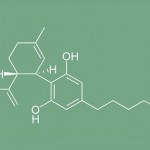
H4CBD molecule
It’s not easy to answer this question. H4CBD has a significantly weaker psychoactive effect than THC. For users who have no experience with THC or who are sensitive to THC, the H4CBD is a mild-to-moderate cannabimimetic, which means it produces a noticeable uplifting yet relaxing effect—a stress-relieving euphoria without significant intoxication.
What are the effects of H4CBD?
H4CBD is not intoxicating, with just a «baby kick» of THC. Following consumer tests of the KANNASTAR vape pen with 98.5% purity, H4CBD proved disappointing for THC users, even when inhaling just one-third of a 1-mL cartridge.
All frequent CBD users reported feeling the effects within a few minutes after taking a few puffs. For the average CBD user, this is «CBD you can actually feel.» If you’re a THC or HHC user, you won’t like it—but that’s not a problem, since this product isn’t designed to compete with THC.
H4CBD exhibits a binding affinity 100 times greater for the human CB1 receptor (Ki = 145 nm) than CBD (Ki = > 10 µm). This places H4CBD in the same range as CBN in terms of psychotropic potential, perhaps slightly more potent.
H4CBD also exhibits stronger anti-inflammatory properties than CBD. This study examined the production of ROI, NO, and TNF-alpha by macrophages. The study indicates that H4CBD exhibits stronger anti-inflammatory biomarkers than traditional CBD.
H4CBD is psychoactive but not intoxicating—similar to caffeine or nicotine in that regard. It is 100 times more potent than CBD on your CB1 receptor and also has stronger anti-inflammatory properties than CBD. It’s all about a better, more potent CBD. This cannabinoid will slowly replace traditional CBD because it’s the CBD that works.

Is hydrogenated CBD the same as H4CBD?
Although H4CBD is a type of hydrogenated CBD, it is not the only one. Another option is H2CBD, which has two additional hydrogen atoms instead of four. In fact, there are many different hydrogenated versions of CBD available, each with a different chemical composition and physiological effects.
Is H4CBD 100 times stronger than CBD?
It is 100 times more potent than CBD at your CB1 receptors, but that doesn’t mean it is 100 times more potent than CBD. Generally speaking, CBD has little affinity for CB1 and may even reduce its activity. However, when combined with four hydrogen atoms, CBD’s affinity for CB1 is significantly increased, making the new cannabinoid (H4CBD) more psychoactive. But even though H4CBD is 100 times more psychoactive than CBD, its psychotropic properties are still far weaker than those of THC.
Based on a study that was not replicated more than 15 years ago, scientists now speculate that H4CBD may have a significantly higher affinity than CBD—but for the CB1 receptors in the nervous system, rather than the primary target of traditional CBD.
Are H4CBD and HHC the same thing?
Although they have similar origins, H4CBD and HHC are distinct substances. HHC is the hydrogenated version of THC (although it is now synthesized from CBD for legal reasons), just as H4CBD is the hydrogenated form of CBD. However, because the cannabinoids from which they are derived differ, HHC and H4CBD have distinct effects.

Is H4CBD safe?
To comment on the safety of H4CBD, we need more information. H4CBD and CBD are chemically identical, and CBD’s overall safety has already been established. However, hydrogenation can sometimes negatively alter substances. Therefore, we will have to wait for researchers to conduct further studies on the safety of H4CBD.
How is it done?
H4CBD is a fully hydrogenated form of CBD. It is a chemical process that adds hydrogen atoms to a selected molecule. This process is used throughout the food and wellness industries; for example, margarine is produced by hydrogenating vegetable oil.
Is H4CBD legal?
Fully hydrogenated H4CBD products contain undetectable levels of THC. This could only be illegal in countries where even the use of CBD is prohibited.
Where can I buy high-quality H4CBD products?
KANNASTAR has joined the initiative to develop «Creative Products with Significant Cannabinoids.» The product line uses H4CBD as its primary cannabinoid. There are versions containing pure H4CBD as well as blends with other cannabinoids to enhance the synergistic effect. Order through the H4CBD online store, and you’ll receive your product in a few days.















The Brazilian medical cannabis market continues to grow

Morocco: Three Cannabis-Based Medications Approved for the Treatment of Epilepsy

Canopy Growth Receives New EU-GMP Certification to Strengthen Its Presence in Europe

Three years after legalizing medical cannabis, Albania continues to establish regulations for it

The first plant-based medical THC spray arrives in the United Kingdom

Medical Cannabis in Germany: THC Prices Vary by a Factor of 12

France already has 3,000 cannabis retail outlets. None of them are legal.

Morocco's exports of legal cannabis have expanded to 15 countries

Aurora Cannabis Doubles Its Production Capacity in Germany

Tilray is accelerating its operations in Europe thanks to a license in Portugal
-
 Business2 weeks ago
The legal cannabis market in New York exceeds 4 billion $ in revenue
-

 Cannabis in France4 weeks ago
Which countries legalized medical cannabis before France?
-
Business4 weeks ago
South Korea is preparing to begin local production of medical cannabis to meet rising demand
-
Cannabis in France4 days ago
France already has 3,000 cannabis retail outlets. None of them are legal.
-
Cannabis in Thailand4 weeks ago
From the boom in dispensaries to a purely medical approach: Thailand is revising its cannabis policy
-
Cannabis in the U.S.5 days ago
A DEA report confirms that there are no fatal cannabis overdoses
-
Cannabis and driving3 weeks ago
Medical Cannabis and Driving: New South Wales Ends Automatic Penalties for THC
-
Cannabis in France3 weeks ago
France’s Drug Policy Chief Defends Cannabis Prohibition... and Runs Into the Facts














Factcheckezvosarticles
March 8, 2023 at 3:08 p.m.
How can you state in the same article that this molecule has high affinity for CB1 receptors (the binding site responsible for THC's psychotropic effects) and yet that it is not psychotropic?
First you write, «H4CBD has a significantly weaker intoxicating effect than THC,» and then, «H4CBD is psychoactive, but not intoxicating.» You really need to make up your mind, don’t you? Aren’t you contradicting yourself? Similarly, how can you say that a molecule is non-intoxicating and then compare it to nicotine, one of the most addictive substances in existence? This is pure denial.
Brunhart
May 24, 2023 at 12:29 p.m.
CHECK THE FACTS IN THESE ARTICLES
1. "Psychoactive" and "psychotropic" are two different things; brush up on your vocabulary before you tear an article apart.
2. Just because the CB1 receptor «binds» to THC doesn’t necessarily mean it’s associated with anything psychoactive; this receptor also binds to many other molecules that aren’t necessarily psychoactive…
3. The comparison to nicotine was made to highlight psychoactive substances used on a daily basis, just as caffeine was also mentioned. The comparison ends there, and nicotine addiction is completely irrelevant here. A product can be psychoactive without being addictive…
Anyway, just to be clear, I have no connection to Newsweed, but reading angry comments from people who feel the need to constantly prove that they know everything without even reading the material properly is somewhat disappointing and sad…