Europe proposes raising THC limits in foodstuffs

In 2015, the European Food Safety Authority (EFSA) set the maximum daily intake of THC 1 μg (microgram) per kilogram of body weight (bw) in food.
While the Member States and the Commission are now proposing new maximum levels—up to 7.5 mg/kg (ppm) for hemp oil and 3.5 mg/kg (ppm) for dry foods— the European Industrial Hemp Association (EIHA) considers these levels to still be too low.
The EIHA countered the proposed new levels with its recommendation to raise the upper limit of the’hemp seed oil, derived from seeds and flowers, with a maximum level of 20 mg/kg (ppm) of Δ-9 THC.
An adoption in the coming months
Lorenza Romanese, executive director of the EIHA, told BusinessCann : «The EFSA’s current limit values are extremely strict and outdated. They are based on inaccurate guideline values that have been used for far too many years. For decades, the EIHA has been advocating for a harmonized and scientifically based approach to THC levels in food at the EU level.”.
«Although we are pleased to see the European Commission taking action to adopt binding limits for THC in food products across Europe—including 7.5 mg per kg (ppm) of THC for hemp oil—we still believe this does not go far enough.»
In a press release, the EIHA describes these new guidelines as «unnecessarily low, unsupported by scientific evidence, and unacceptable.».
The European Commission plans to adopt these new directives before the end of the year. Once in place, they will bring Europe into compliance with other jurisdictions, such as North America and Australia.
However, the EIHA continues to push for a higher upper limit—specifically, 10 mg in dry foods and 20 mg in seed-derived oils—which would bring Europe in line with Canada.
The EIHA raised further concerns regarding the inclusion of Δ-9-THCa in the total THC value proposed by the EFSA. To establish clear guidelines for THC levels in hemp and CBD products, the EIHA will launch its own trial involving 200 human participants by the end of the year.
Lorenza Romanese added, «It should be noted that, even based on these exceeded recommended levels, there is nothing to prevent the sale or compromise the safety of products such as hemp seed oil.»
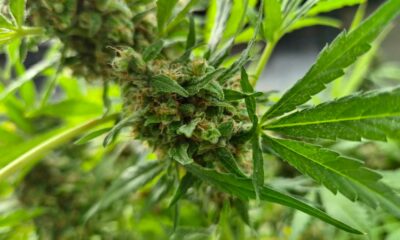
Hemp-derived foods naturally contain traces of tetrahydrocannabinol (delta-9-THC), which remains in the food even after the most thorough cleaning process.
Real-World Challenges
These strict rules sometimes lead to product recalls. Last month, Lidl Germany recalled all of its hemp-based products and warned customers against consuming them due to an allegedly high THC level.
In early 2020, an EFSA report examined THC levels in 12 different categories of hemp-based foods, including hemp oil, breads, and teas.
More than 1,500 samples were collected in the Czech Republic, Germany, Italy, and Romania. The report concluded that THC levels in people consuming large amounts of hemp-based products could exceed the safety threshold for THC and potentially lead to effects on the central nervous system and an increased heart rate.


















JIHE 2026: Japan’s Largest Trade Show Dedicated to Hemp and CBD Returns to Tokyo with More Than 100 Industry Players
New Caledonia: The Courts Clear the Way for the Return of CBD

The Brazilian medical cannabis market continues to grow

Morocco: Three Cannabis-Based Medications Approved for the Treatment of Epilepsy

Canopy Growth Receives New EU-GMP Certification to Strengthen Its Presence in Europe

Three years after legalizing medical cannabis, Albania continues to establish regulations for it

The first plant-based medical THC spray arrives in the United Kingdom

Medical Cannabis in Germany: THC Prices Vary by a Factor of 12

France already has 3,000 cannabis retail outlets. None of them are legal.

Morocco's exports of legal cannabis have expanded to 15 countries
-
 Business2 weeks ago
The legal cannabis market in New York exceeds 4 billion $ in revenue
-

 Cannabis in France4 weeks ago
Which countries legalized medical cannabis before France?
-
Business4 weeks ago
South Korea is preparing to begin local production of medical cannabis to meet rising demand
-
Cannabis in France4 days ago
France already has 3,000 cannabis retail outlets. None of them are legal.
-
Cannabis in Thailand4 weeks ago
From the boom in dispensaries to a purely medical approach: Thailand is revising its cannabis policy
-
Cannabis in the U.S.5 days ago
A DEA report confirms that there are no fatal cannabis overdoses
-
Cannabis and driving3 weeks ago
Medical Cannabis and Driving: New South Wales Ends Automatic Penalties for THC
-
Cannabis in France3 weeks ago
France’s Drug Policy Chief Defends Cannabis Prohibition... and Runs Into the Facts













You must be logged in to post a comment Login