German cannabis company in talks with Taliban

A Little Investigation by Newsweed was right. Cpharm, the German version, is indeed the company in talks with the Taliban government in Afghanistan, as we announced in November. The Bonn-based company has confirmed with Cannabis Now.
« We began discussions with Afghanistan in 2017, when their Parliament legalized medical cannabis. »In November 2020, we set up a site in the north of the country, with experts, to establish a laboratory. But the former government, put in place by the Americans, was very corrupt.”, says Cpharm CEO Werner Zimmermann.
The entrepreneur isn't very tough toward the new Taliban government, having overthrown former President Ashraf Ghani by force in August. Their regime has not yet been recognized by any other country, including Germany. The Islamist fundamentalists are also accused by numerous NGOs of persecuting and killing their opponents, and for having plunged their country into famine.
According to Cannabis Now, Zimmermann hopes enter into an agreement with that regime. He even goes a step further with his compliments: «The new government really likes us because we are its voice in showing the world just how corrupt the old government was.»
Exceptional cannabis, but a brutal dictatorship
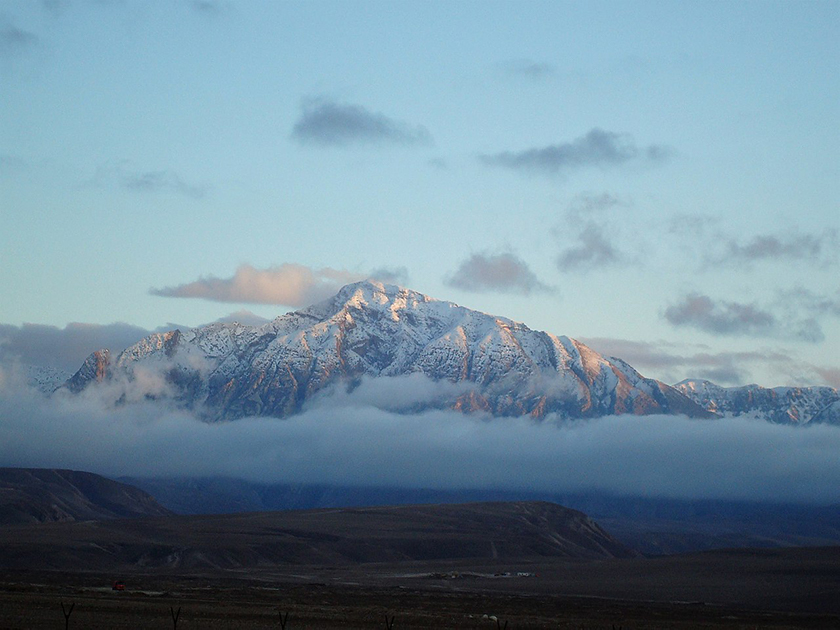
Cpharm’s project aims to establish a cannabis production facility in Balkh Province, near Mazar-i-Sharif in the north of the country, a historic center of cannabis production. 100% of the Afghan crop will be processed into medicines and creams and then exported to Germany. According to the company, it has received approval for this from the Federal Institute for Drugs and Medical Devices, the German regulatory agency.
The dilemma is a major one for the cannabis companies : Should they trade with Afghanistan? That country is literally the birthplace of cannabis. The earliest varieties of the plant are born in the Hindu Kush, a mountainous region that today straddles the border between Afghanistan and Pakistan. The cannabis produced there, —including the hash—is among the best in the world.
Yet it is hard to forget the dictatorship that has taken hold of the country. Since the Taliban seized power, Afghanistan has received virtually no international aid—on which it had depended. As a result, it has sunk deeper into crisis, with the return of hunger according to the UN. Investment by foreign companies can therefore provide some relief to the local population.
«Wherever opium is grown today, cannabis could be grown in the future» , says the CEO of Cpharm to the German newspaper *Bild*. « »It was important to us that they invest. That's how people can find work.", a Taliban spokesperson said. It remains to be seen whether Cpharm will instead be accused of supporting the highly controversial Taliban regime. Undoubtedly, his kind words toward the new government will not go unnoticed.




















The United States Bans «Non-Natural» Synthetic Cannabinoids; THC Remains Legal Until December 11

Morocco's first CBD medication for epilepsy hits pharmacy shelves

November 2026's CBD Highlights: 10 Flowers and Rosins to Discover from 5 French Producers

Vanuatu is still trying to get its medical cannabis sector off the ground after years of delays

Snoop Dogg Opens His Cannabis Club in Barcelona

In Texas, Democrats and Republicans are beginning to find common ground on the legalization of cannabis

Proposition 215, 30 Years Later: When Cannabis in California Was a Movement, Not an Industry

Village Farms Expands Cannabis Production in the Netherlands while its European Business Jumps by 75%

Bedrocan's bankruptcy delays medical cannabis reform in the Netherlands

Where to Buy Affordable CBD in 2026? Our Tips for Making the Right Choice
-
 Business3 weeks ago
Cronos Completes the Acquisition of CanAdelaar for 57.5 million euros
-
Cannabis in France4 weeks ago
France already has 3,000 cannabis retail outlets. None of them are legal.
-
Cannabis in Quebec2 weeks ago
Cannabis: What France Could Learn from Quebec, Eight Years After Legalization
-
Cannabis in the U.S.4 weeks ago
A DEA report confirms that there are no fatal cannabis overdoses
-
Business4 weeks ago
Tilray is accelerating its operations in Europe thanks to a license in Portugal
-
Cannabis in New Zealand2 weeks ago
Chronic Pain: New Zealand Is Testing Cannabis to Improve Sleep
-
CBD4 weeks ago
October 2026 CBD Highlights: 10 Strains and Hash to Discover from 5 French Producers
-
Cannabis in Morocco4 weeks ago
Morocco: Three Cannabis-Based Medications Approved for the Treatment of Epilepsy















You must be logged in to post a comment Login