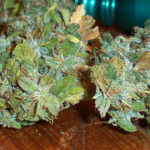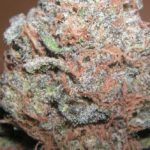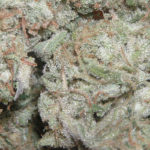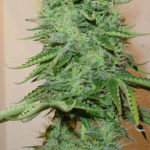
The Hindu Kush, abbreviated Kush or sometimes spelled Hindukush, Indukush, Hindu Kuch, is the genetic mother of nearly all commercial Indica strains available today.
It's a 100% Pure Indica Landrace, native to the Afghan-Pakistani mountains of the Hindu Kush, which stretches from Afghanistan through northern Pakistan to northwestern India.
Grown in this region for thousands of years for the production of charas, One of the world’s most renowned hashish strains, it was introduced to the United States in the 1970s and has become the genetic foundation for hundreds of hybrid strains, including the’OG Kush, Bubba Kush and dozens more.
With a THC content of 17–20% and nearly narcotic effects, it is one of the most potent and historically significant strains in the cannabis world.
Kush: Meaning, Translation, and Scientific Name
There are several questions that come up time and again regarding Kush. Here are the straightforward answers:
What does «Kush» mean? Kush is the name of the mountain range Hindu Kush (Hindukush in Dari), which stretches for about 800 km across Afghanistan, Pakistan, and northern India. The term Hindu Kush literally means «Hindu killer» in Farsi/Dari, a historical reference to the deadly conditions of the mountain passes for merchant caravans. It is in this geographical region that the cannabis indica plants from which this variety is derived grow naturally.
How do you spell «Hindu Kush»? The official spelling is Hindu Kush (two words). The variants Hindukush, Hindu Kush, Indukush, Hindukush, Indo Kush all refer to the same variety or the same geographic region.
What is the scientific name for Kush? The Hindu Kush belongs to the species Cannabis sativa L., subspecies indica (Cannabis sativa subsp. indica var. afghanica (according to certain taxonomies). It is often cited as Cannabis indica in popular literature.
«Kush» as a generic term In modern cannabis culture, the term «kush» has become a generic term referring to any indica-dominant strain with an earthy, spicy aroma and pronounced sedative effects. Thus, «OG Kush,» «Bubba Kush,» «Purple Kush,» and «Banana Kush» do not necessarily contain pure Hindu Kush genetics. It is as much an evocative family name as it is a genetic indicator.
⚠️ Synthetic Kush: A Dangerous Misconception
In English-speaking countries (the United Kingdom, the United States, Australia, etc.) and in Africa, the term «Kush» or «fake Kush» is used on the street to refer to synthetic cannabinoids (also known as spice, K2 or herbal highs). These substances do not no genetic, chemical, or botanical connection with Hindu Kush or with natural cannabis.
Synthetic cannabinoids marketed under the name «Kush» are synthetic molecules manufactured in laboratories and sprayed onto inert herbs to mimic the appearance of cannabis. Their effects are radically different—and often far more dangerous—than those of natural cannabis: seizures, psychosis, cardiac arrest, and death have been documented. They are not detectable by standard THC tests.
If you’ve heard the term «Kush» used in this context, it’s not referring to the cannabis strain discussed in this article.
Origins and History: From Afghanistan to the United States
The Hindu Kush mountain range and natural cannabis
In the mountainous regions of Afghanistan, Pakistan, and northern India, cannabis has grown wild on mountainsides for thousands of years. These plants, subjected to extreme conditions of high altitude, cold, and drought, have developed over generations a resin that is particularly abundant which protects their flowers from intense UV rays and the cold. It is this resin that has earned the Charas and Afghan hashish.
Charas: The Traditional Use of the Hindu Kush
In local tradition, the Hindu Kush was not grown to be consumed as dried flowers. It was used exclusively for the production of Charas, a resin obtained by rubbing fresh flowers between the palms of the hands. Charas from the Parvati Valley (India) and Malana Cream are two of the most renowned types of charas in the world, produced for centuries from wild or semi-cultivated Kush cannabis plants.
Cannabis also played a religious role: it was used in Hindu and Sufi ceremonies as an offering to the gods, particularly Shiva, or consumed in the form of bhang (a cannabis-infused milk drink) during religious festivals such as Holi.
Arrival in the United States in the 1970s
Like the Thai and other landraces, the Hindu Kush was introduced to the United States by American travelers who explored the region in the 1960s and 1970s, the famous Hippie Trail which connected Europe to South Asia via Afghanistan and India. Seeds were brought back to California and incorporated into West Coast breeding programs.
Sensi Seeds and Conservation
The Sensi Seeds in Amsterdam, which standardized Hindu Kush as a commercial strain in the 1980s. Their version is now the global benchmark for «pure» Hindu Kush, although there are many interpretations and the true pure Afghan landrace is hard to find outside its region of origin.
Is Hindu Kush an indica or a sativa?
The Hindu Kush is a 100% Indica at 100%, one of the purest landraces available on the market, along with the’Afghan woman.
It is precisely this Indica purity that makes it such an important genetic benchmark. It exhibits all the morphological and phenotypic characteristics of Indica in their most refined form:
- Very compact port : low-growing plant (60–90 cm), extremely dense buds
- Fast flowering : 49 to 56 days, among the shortest on the market
- Abundant resin : an exceptionally thick layer of trichomes, a result of its adaptation to mountain conditions
- Exclusively physical effects : deep high, sedation, almost narcotic effect
There is no trace of sativa in this strain. While Hindu Kush may seem «mentally stimulating» at very low doses, this is an illusion caused by the initial mild euphoria; the physical high quickly takes over.
Appearance, aromas, and terpenes of Hindu Kush
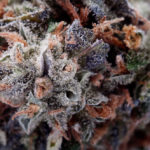
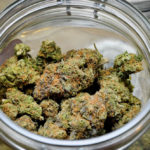
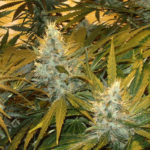
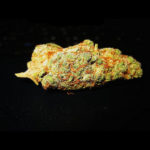
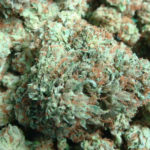
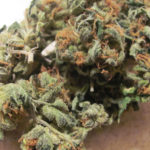
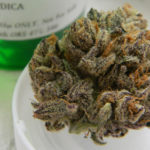
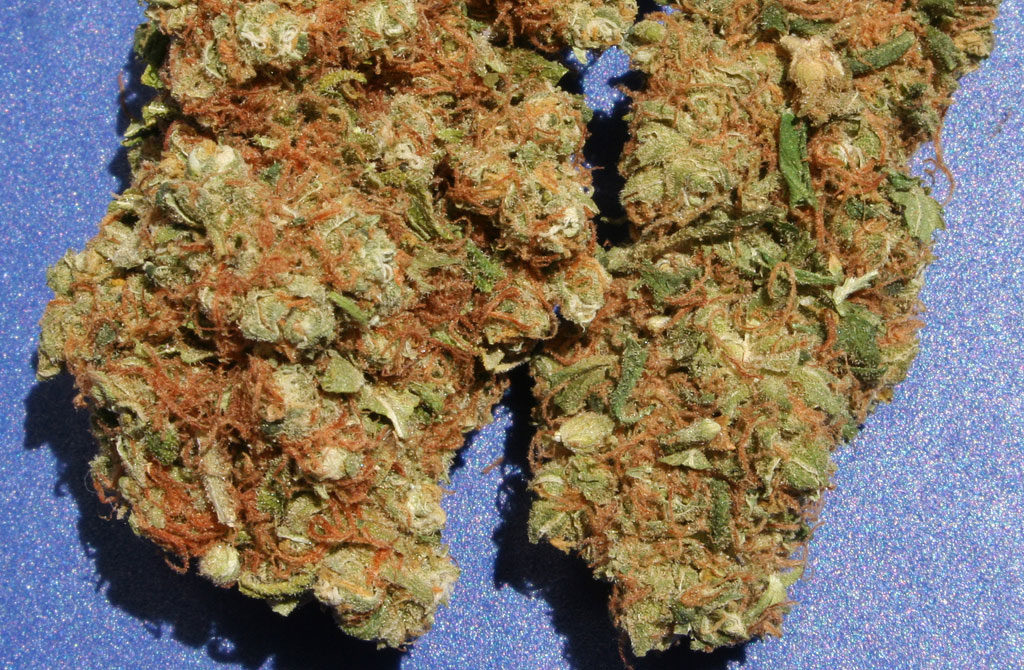
The Hindu Kush is visually recognizable by its massive, extremely dense buds, covered with a layer of silvery-white trichomes so thick that it gives the flowers a frosted or slightly silvery appearance. Some phenotypes develop shades of purple in the leaves when nighttime temperatures drop due to anthocyanins.
Nose: A dominant earthy and musky profile, with subtle notes of citrus and exotic wood. A faint hint of diesel in the base notes evokes its Afghan origins. Incense and aromatic herbs round out the profile, with aromas that directly evoke the bazaars of Afghanistan.
In the mouth: The smoke is harsh and can make you cough—a hallmark of resinous Afghan Indicas. On the exhale, notes of pine, incense, and dried herbs.
Its dominant terpenes :
- Myrcene : the most abundant terpene in Afghan landraces, responsible for its earthy and musky notes and its powerful sedative effect
- Caryophyllene : spicy and peppery notes, anti-inflammatory properties
- Pinene : resinous and pine notes, with a slightly refreshing quality
What are the effects of Hindu Kush?
The effects of Hindu Kush are among the most powerful and «pure» of all commercial Indicas, offering an uncompromising Indica experience.
Slow onset: Unlike modern hybrids, Hindu Kush has a gradual onset. It can take 15 to 20 minutes to feel the first effects, which can lead impatient users to consume too much.
Initial phase : A mild mental high and an uplifted mood precede the physical high. This is the only «cerebral» effect of this strain.
Main phase: the narcotic high: This is where the Hindu Kush reveals its true nature. A deep and gradual physical relaxation spreads through the limbs, causing a physical heaviness characteristic. Users describe a sensation of being «sunk into the sofa,» with the intention but not the ability to get up. This fixed asset is one of the most well-documented characteristics of Hindu Kush and one of the reasons why it is so effective for medical use.
From almost psychedelic effects At high doses, mild visual distortions and unusual tactile sensations may occur. This is not a psychedelic sativa; it is the high concentration of indica THC that produces these effects.
Main effects :
- Deep-tissue and relaxing massage
- Heaviness in the limbs (pronounced «couch-lock» effect)
- Mild initial euphoria
- Deep muscle relaxation
- Appetite stimulation
- Help falling asleep
Possible side effects:
- Dry mouth and dry eyes (almost systematic)
- Severe paranoia
- Dizziness in consumers who are not used to pure Indica strains
⚠️ Not recommended during the day If you have obligations, Hindu Kush is a strain best enjoyed in the evening or at night. Its sedative effects make it unsuitable for any activity that requires concentration or physical mobility.
Medical Uses of the Hindu Kush
Hindu Kush is one of the leading medical cannabis strains for conditions requiring strong sedative and analgesic effects:
- Chronic pain : Its nearly narcotic analgesic effect is one of the most potent on the market, comparable in intensity to modern Kush hybrids but with a more «raw» profile»
- Insomnia : When administered at the appropriate dose, deep sedation induces rapid sleep onset and prolonged sleep
- Nausea : effective for chronic nausea, particularly that associated with intensive treatments
- Stress and severe anxiety : In moderate doses, the physical high cuts through mental rumination
- Lack of appetite : Constant and powerful appetite stimulation
- Muscle spasms : Deep muscle relaxation relieves muscle tension and spasms
Culture of the Hindu Kush
Hindu Kush is one of the easier to grow, its natural hardiness, a trait inherited from the harsh mountain conditions of Afghanistan, makes it resilient to almost anything.
Indoors :
- Flowering time: 49–56 days, one of the shortest on the market
- Height: 60–90 cm, no staking required
- Yield: 350–450 g/m², modest but consistent
- Resistant to mold, pests, and temperature fluctuations
- Perfect for small spaces
Outdoor :
- Harvest: late September to early October
- Tolerates cool conditions better than most varieties, a trait inherited from the cold Afghan nights
- Low-profile, suitable for private outdoor gardens
The genetic heritage of the Hindu Kush, the mother of all Indicas
The Hindu Kush is, along with the’Afghan woman, the landrace strain that serves as the foundation for nearly all modern commercial Indicas and hybrids. Its presence in the cannabis family tree is ubiquitous:
Direct descendants :
- OG Kush : the most influential hybrid in the history of California cannabis
- Bubba Kush : a leading sedative indica strain in the U.S.
- Purple Kush : Hindu Kush × Purple Afghani
- Afghan Kush : specific Afghan phenotype
- Banana Kush : a popular fruit hybrid
Second-generation descendants (via OG Kush):
- Girl Scout Cookies : OG Kush × Durban Poison
- Wedding Cake : via GSC
- Sunset Sherbet : via GSC
- Gelato : via GSC
The Hindu Kush is thus the great-great-grandmother of a large part of the California Cookies scene, a genetic lineage that spans decades and continents.