
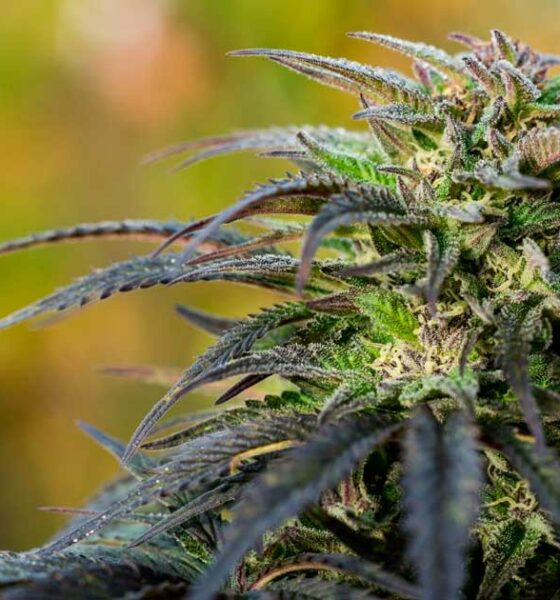
Autoflowering varieties: definition, cultivation and comparison with photoperiodics
A autoflowering variety (or autoflowering is a cannabis plant that triggers flowering according to its age, not the length of the light cycle. Unlike traditional photoperiodic strains, which require a 12 hr light/12 hr dark transition to flower, autos automatically switch from vegetative phase to flowering after a genetically determined number of weeks, regardless of the amount of light received.
This characteristic is inherited from the Cannabis ruderalis, a wild subspecies native to the cold regions of Central Asia and Eastern Europe, which has developed this mechanism to adapt to the short seasons of these latitudes.
Origin: the role of Ruderalis
The Cannabis ruderalis is the origin of all modern autoflowering varieties. This subspecies grows naturally in the wild in Russia, Mongolia and the mountainous regions of Central Asia. Flowering is age-induced, generally 20 to 40 days after germination, and not photoperiod-induced.
Alone, ruderalis produces few flowers and contains little THC, which makes it unattractive for direct consumption. But the breeders understood its potential very early on: by crossbreeding it with sativas and indicas quality, it is possible to create hybrids that combine the automatic flowering of ruderalis with the power, aroma and yield of modern varieties. This is the principle behind all current auto varieties.
Autoflowering vs photoperiodic: the fundamental differences
This is the most sought-after comparison on the subject, and the most useful for choosing between the two types.
| Autoflowering | Photoperiodic | |
|---|---|---|
| Flowering trigger | Age of plant | Changing the light/dark cycle |
| Complete cycle | 8 to 11 weeks | 16 to 30 weeks |
| Size | Compact (40-100 cm) | Variable (60-300 cm) |
| Yield | Medium (50-200 g/plant) | High (100-600 g/plant) |
| THC potency | Good (15-25% depending on variety) | Very high possible (25-35%) |
| Cloning | Difficult / not recommended | Easy |
| Recommended light | 18-20h/day continuous | 18h veg. → 12h/12h flowering |
| Error sensitivity | Low | Moderate to high |
| Outdoor cultivation | All year round, several harvests | One harvest per season |
The autoflowering cultivation cycle
Speed is the main characteristic of autos. Here are the typical stages of a 9-10 week auto variety:
Weeks 1-2 - Germination and seedling The seed germinates and develops its first leaves (cotyledons, then first true leaves). The plant is still fragile, so avoid adding nutrients too early.
Weeks 2-4 - Short vegetative phase The plant develops its branches and main leaves. Unlike photoperiodics, this phase cannot be extended at will. Use this time to lightly shape the plant if desired (LST only, no aggressive techniques such as late topping).
Weeks 3-4 - Appearance of pre-flowers Without any change in light, the first white pistils appear at the nodes. Flowering starts automatically.
Weeks 4-8 - Flowering the heads get bigger and richer with trichomes. This is the most light- and nutrient-intensive period of flowering.
Weeks 8-11 - Ripening and harvesting Harvest: pistils turn orange, trichomes turn from translucent to milky. Harvesting generally takes place between 8 and 11 weeks after germination, depending on the variety.
Advantages of autoflowering varieties
Speed From seed to harvest in 8 to 11 weeks, compared with 4 to 7 months for photoperiodic outdoor plants. This is the main advantage.
Several harvests per season For example: outdoors, an auto can be sown and harvested 2 or 3 times between spring and autumn in our latitudes, whereas a photoperiodic plant can only be harvested once a year.
Independence from the light cycle No need to control photoperiod. Autos bloom under any light program, making indoor cultivation much simpler (no separate tent for flowering).
Compact Their small size (generally 40 to 100 cm) makes them discreet and suitable for small spaces, balconies or closets.
Resistance Ruderalis heritage: autos are generally more resistant to temperature variations, humidity and pests than photoperiodic varieties.
Easy for beginners The short cycle leaves little room for prolonged errors, and tolerance to environmental variations reduces the risk of losing a plant.
Disadvantages of autoflowering varieties
Lower yield autos generally produce less than a photoperiodic plant of the same area grown correctly. The short cycle doesn't give the plant time to develop such an imposing structure.
No reliable cloning A self clone inherits its mother plant's biological clock. If the mother is 4 weeks old, the clone «thinks» it is 4 weeks old and will start flowering almost immediately, without developing roots or sufficient structure. Cloning is technically possible, but rarely profitable.
Less control over harvest time With a photoperiodic system, the grower chooses when to trigger flowering by changing the light cycle. With an auto, it's the plant that decides.
Lower stress resistance in vegetative phase autos don't «catch up» as well as photoperiodic plants after major stress (late repotting, nutritional deficiency, dehydration). The short cycle leaves no time for recovery.
Growing tips specific to autoflowers
Light A program of 20h light/4h dark is generally optimal for indoor autos, maximizing growth and photosynthesis without ever triggering photoperiodic confusion. Some growers use 18h/6h to save electricity, with similar results.
Substrate Soil: cars prefer light, well-aerated soil with little initial fertilization. A mix of potting soil and perlite (70/30) is a good base. Avoid substrates too rich in nitrogen at start-up, which can burn young plants.
Nutrients The doses are lower than for photoperiodic systems, especially for vegetative plants. Introduce flowering nutrients gradually, as soon as the first pre-flowers appear.
Potting Potting: ideally, sow directly into the final pot (3 to 7 liters, depending on variety). Repotting stresses the plant and, with the short cycle of a car, can cost several days of useful growth.
Training LST (Low Stress Training, gently bending the branches with ties) is compatible with autos and improves light exposure. On the other hand, topping (cutting off the apical bud) is risky: if done too late, the plant won't have enough time to recover before flowering.
The most popular autoflowering varieties
Seed banks have invested heavily in the development of autos over the last ten years, producing hybrids that rival the best photoperiodics in terms of potency and aroma.
The most popular varieties include : Northern Lights Automatic (classic, robust, relaxing effects), Gorilla Glue Auto (powerful, resinous, earthy aromas), Amnesia Haze Auto (dominant sativa, lemony aromas, cerebral effects), Wedding Cake Auto (modern hybrid, very resinous, sweet aromas), and Blueberry Auto (relaxing effects, characteristic fruity aromas).







Medical Cannabis in Germany: THC Prices Vary by a Factor of 12

France already has 3,000 cannabis retail outlets. None of them are legal.

Morocco's exports of legal cannabis have expanded to 15 countries

Aurora Cannabis Doubles Its Production Capacity in Germany

Tilray is accelerating its operations in Europe thanks to a license in Portugal

Boston will host the 10th annual State of the Cannabis Industry Conference on October 26

A DEA report confirms that there are no fatal cannabis overdoses

A British patient is challenging the NHS's refusal to reimburse medical cannabis

October 2026 CBD Highlights: 10 Strains and Hash to Discover from 5 French Producers

