Is cannabis addictive?
As cannabis becomes more widely available in the United States, and Europe begins to take an interest in its medical properties, the question of cannabis addiction or dependence often comes up. Can cannabis users, and by extension cannabis-treated patients, become cannabis addicts?
According to a 2011 study Among recreational drug users, the probability of becoming dependent on cannabis is 8.9%. By comparison, other substances carry a much higher risk of dependence: 67.5 for nicotine, 22.7% for alcohol and 20.9% for cocaine. In the case of cannabis, 1 consumer in 10 is therefore likely to have a problem with his or her cannabis consumption.
| Substance | Dependency risk | Physical dependence | Withdrawal syndrome |
|---|---|---|---|
| Nicotine | 67,5% | Strong | Yes (irritability, intense cravings) |
| Alcohol | 22,7% | Strong | Yes (potentially serious) |
| Cocaine | 20,9% | Moderate | Yes (depression, fatigue) |
| Cannabis | 8,9% | Low | Mild (irritability, insomnia) |
| Heroin | ~23% | Very strong | Yes (very intense) |
| Caffeine | ~9% | Low | Mild (headaches) |
| CBD | 0% | No | No |
Source: Anthony et al., 2011 - data on recreational consumers
Cannabis tolerance
Tolerance to a substance, such as cannabis, can mean having to use more and more to get the desired effects, or having less effect with a dose that was previously effective. The tolerance to THC has been demonstrated, especially after repeated use.
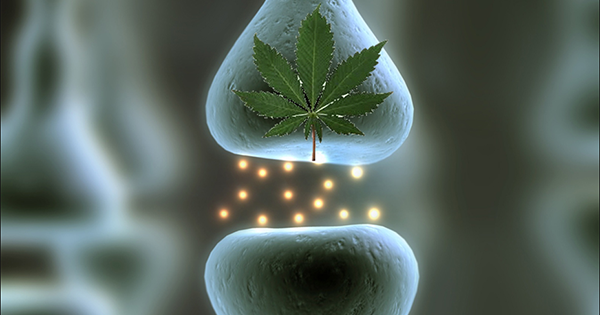
Animal studies first suggested that tolerance arises as a result of reduced cannabinoid receptors in the brain available when exposed to THC on a chronic basis. A 2012 study has shown that humans obey the same tolerance mechanism.
What is cannabis addiction?
Beyond a simple definition - consumption that encroaches too much on daily life - there are a number of other factors to consider signs of cannabis addiction.
Physiologically, cannabis addiction can be explained by the fact that chronic users of THC-rich cannabis have a lower number of cannabinoid receptors than non-users. In the previous study, researchers showed that this decline was reversible. Abstinence for 4 weeks resulted in an increase in cannabinoid receptors to normal levels.
The cannabidiol (CBD), a non-psychoactive cannabinoid in cannabis, does not induce tolerance, as it does not interact directly with cannabinoid receptors.
Who is most at risk of developing an addiction?
Cannabis dependence does not affect all users equally. Several factors significantly increase the risk:
Age of onset This is the most well-documented factor. Adolescents who start before the age of 16 have a significantly higher risk of addiction than adults - the developing brain is more sensitive to the desensitization of CB1 receptors. Some studies estimate the risk for early adopters to be as high as 17%.
Frequency and quantity Daily use is the main predictor of dependence. A weekend user is unlikely to develop an addiction; a daily user who has been using for several years runs a much higher risk.
THC content Modern varieties with very high THC content (25%+) and concentrates (60-90% THC) activate CB1 receptors much more intensely than traditional cannabis - potentially accelerating desensitization and tolerance.
Psychological vulnerability Cannabis: people suffering from anxiety, depression or post-traumatic stress disorder sometimes use cannabis as a form of self-medication - which can create a psychological dependency that is stronger and more difficult to resolve.
Genetics As with all addictions, a genetic component is likely, though less well documented than for alcohol or nicotine.
How addictive is cannabis?
Contrary to popular belief, people can become addicted to cannabis.
Cannabis dependence can be physics The body adapts to the presence of THC and develops tolerance, requiring increasing doses for the same effect. It can also be psychological Cannabis addiction: the habit of using to cope with stress, boredom, anxiety or insomnia creates a behavioral dependency, even without marked physical symptoms. Most cannabis addictions are psychological in nature. This is why cannabis withdrawal is less physically intense than that for alcohol or opioids, but can be psychologically difficult.
Not all users develop tolerance to cannabis or its effects. But people who find themselves unable not to use, or who need higher doses to feel the same effects, may want to quit using cannabis temporarily or permanently. Visit cannabis withdrawal should not be taken lightly.
How to wean yourself off cannabis
Symptoms and duration of withdrawal
The symptoms of cannabis withdrawal - called cannabic withdrawal syndrome in the DSM-5 since 2013 - generally appear within 24-72 hours of cessation in chronic users and last 1 to 2 weeks:
| Symptom | Frequency | Duration |
|---|---|---|
| Irritability, aggressiveness | Very common | 1-2 weeks |
| Insomnia, intense dreams | Very common | 1-3 weeks |
| Anxiety, agitation | Common | 1-2 weeks |
| Reduced appetite | Common | 1 week |
| Depression, low mood | Common | 1-2 weeks |
| Headaches | Moderate | A few days |
| Sweating, shivering | Less frequent | A few days |
These symptoms are uncomfortable but not dangerous - unlike alcohol withdrawal, which can be medically serious. Two approaches are possible: gradual cessation (gradual reduction of doses) or abrupt cessation. The microdosing can accompany a gradual reduction.
CSAPA structures (Centres de Soins, d'Accompagnement et de Prévention en Addictologie) offer free, confidential support for people wishing to reduce or stop their consumption.
Effects of cannabis withdrawal
The effects of cannabis withdrawal are multiple and do not affect everyone in the same way. It used to be thought that stopping cannabis use had no side effects, but recent studies have shown that heavy cannabis users suffer side effects when they stop abruptly.
The most common symptoms of cannabis withdrawal are anxiety, low mood, irritability, difficulty sleeping, vivid or strange dreams, stomach pains and general physical discomfort. These symptoms last from one to two weeks. And the cannabidiol can reduce the side effects of THC withdrawal.
What about medical patients?
According to Bonni Goldstein, an American physician and author of the book «How the most misunderstood plant is curing everything from chronic pain to epilepsy», medical patients who have never used cannabis regularly in their lives, and who start using it for medical reasons, are unlikely to become addicted. She advises her patients to take the minimum dose that gives them the desired effects, and to skip doses as long as the product is effective, to avoid developing tolerance.
CBD can also enhance the efficacy of medical cannabis and ward off addiction. The use of cannabinoids in acid form (THCA or CBDA) can also help reduce the chances of developing tolerance and maintain medical effects.
The dependence on any substance is possible (think chocolate, coffee, sugar, etc.). Chronic cannabis users often feel the need to pause their consumption. To avoid uncomfortable side effects, Dr. Bonni Goldstein recommends using CBD, smoked or in crystals, to soothe them.





Medical Cannabis in Germany: THC Prices Vary by a Factor of 12

France already has 3,000 cannabis retail outlets. None of them are legal.

Morocco's exports of legal cannabis have expanded to 15 countries

Aurora Cannabis Doubles Its Production Capacity in Germany

Tilray is accelerating its operations in Europe thanks to a license in Portugal

Boston will host the 10th annual State of the Cannabis Industry Conference on October 26

A DEA report confirms that there are no fatal cannabis overdoses

A British patient is challenging the NHS's refusal to reimburse medical cannabis

October 2026 CBD Highlights: 10 Strains and Hash to Discover from 5 French Producers

