Arizona: anti-legalization campaign funded by Big Pharma

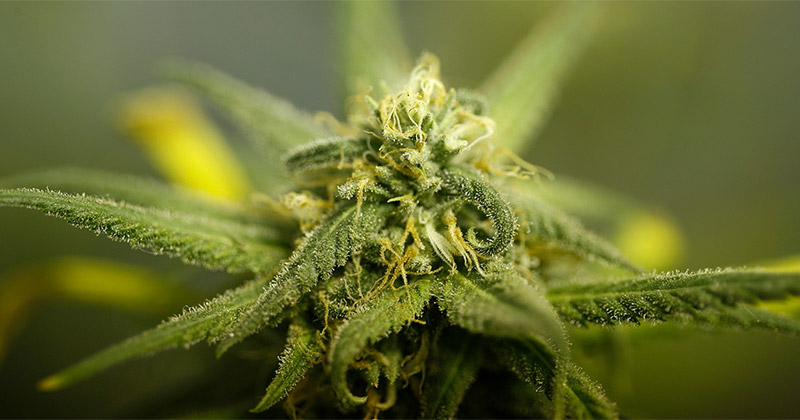
You might think that cannabis is illegal because it's dangerous, or that it hasn't been studied enough. It would seem that there is sometimes a dark side to its prohibition.
In Arizona, Insys Therapeutics, a pharmaceutical company that distributes fentanyl, an opioid 50 times stronger than heroin currently under fire after several patient deaths, recently donated 500,000$ to the state's anti-legalization campaign.
Arizona will be one of the 5 states to vote on cannabis legalization in November, If Proposition 205 is passed, every adult will be able to grow up to 6 plants per person and hold up to 28g of cannabis. Medical cannabis was legalized here in 2011.
So why is Insys funding the anti-lega campaign? The official reason given by the company in a declaration is that Proposition 205 «struggles to protect Arizona citizens, especially children».
But The Washington Post cites a much more down-to-earth reason: Insys has developed a product called Dronabinol, a drug that uses a synthetic version of tetrahydrocannabinol to relieve chemotherapy-induced nausea and vomiting.
Insys makes no secret of the competition from natural cannabis and its concern about multiple legalizations. In a statement to the Securities and Exchange Commission, the American «stock market watchdog», reads:
«The legalization of cannabis or non-synthetic cannabinoids in the United States may significantly limit the commercial success of Drobaninol. If cannabis or non-synthetic cannabinoids are legalized in the U.S., the market for dronabinol products could be significantly reduced and our ability to generate revenue and our business prospects would be materially adversely affected.»
Insys also explains that dronabinol is «one of the only cannabinoids approved in the U.S. by the FDA» and «therefore, in the U.S., dronabinol products do not have to compete with natural cannabis or non-synthetic cannabinoids».
The company readily concedes that scientific literature has shown the benefits of cannabis over synthetic dronabinol, and that support for cannabis legalization is growing. In a section of the document reporting on competitive threats, Insys notes that several states «have already implemented laws legalizing medicinal and recreational cannabis».
«It appears that they are trying to kill a non-pharmaceutical market to line their own pockets,» says J.O Holyoak, a member of the pro-legalization campaign.
Tom Angell, one of his counterparts, says Insys' donation to the anti-lega campaign blunts the argument that legalization would endanger public safety. Several studies have shown that cannabis can be effective in treating pain, with no risk of overdose or side effects caused by opioid painkillers such as fentanyl. Other studies have shown that deaths from opioid overdoses decreased in areas with access to medical cannabis.
«It's hard to understand how people who profit from the sale of drugs like fentanyl can stand by and say that cannabis is too dangerous to legalize,» says Tom Angell.
The anti-legacy camp has not apologized for receiving the donation, however, and instead defends Insys's willingness to work on synthetic cannabinoid-based medicines by «following FDA rules».
This isn't the first time Insys has intervened in cannabis policy. In 2011, the company had written to the DEA to express opposition to easing restrictions on natural THC, citing «potential abuses on the need to develop large cannabis crops in the US». 2014, the company had done the same about CBD.
See you in November to see if they've thrown 500K$ out the window.








Kentucky now has 26 medical cannabis dispensaries

«Vincy Gold»: Humboldt Seed Company on the Hunt for Saint Vincent Sativas

Cronos Completes the Acquisition of CanAdelaar for 57.5 million euros

Cannabis with a "bloody" twist: Discover Sensi True Blood and Sensi Sangria, the two new strains from Sensi Seeds

Hemp: The Council of the EU Takes a Stand on New Production and Marketing Rules

Missouri's legal cannabis market accounts for 93 % of consumer spending

THC Gummies: How to Read a Certificate of Analysis Before Buying

British patients now have access to THCV-rich cannabis flowers

Spain: Medical Cannabis Is Coming to About 50 Hospitals

JIHE 2026: Japan’s Largest Trade Show Dedicated to Hemp and CBD Returns to Tokyo with More Than 100 Industry Players
-
 Business3 weeks ago
The legal cannabis market in New York exceeds 4 billion $ in revenue
-
Cannabis in France1 week ago
France already has 3,000 cannabis retail outlets. None of them are legal.
-
Cannabis in the U.S.2 weeks ago
A DEA report confirms that there are no fatal cannabis overdoses
-
Cannabis in France3 weeks ago
France’s Drug Policy Chief Defends Cannabis Prohibition... and Runs Into the Facts
-
Studies on cannabis2 weeks ago
Cannabis Oil and Endometriosis: A Promising Study for Pain Relief
-
CBD3 weeks ago
In Brazil, researchers are developing an innovative CBD eye drop
-
Business1 week ago
Tilray is accelerating its operations in Europe thanks to a license in Portugal
-
Cannabis in France2 weeks ago
CBD in France: Traceability, Retail Stores, THC and Driving… What the New Bill Proposes

















You must be logged in to post a comment Login