The cannabis situation in Mauritius

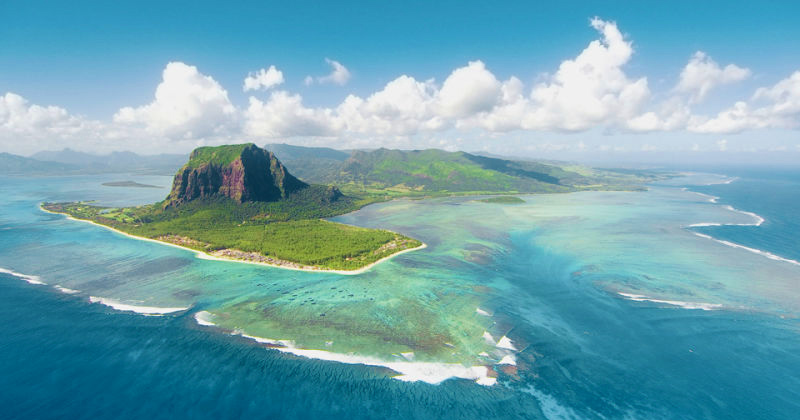
Mauritius, bathed in the waters of the Indian Ocean near Madagascar, is renowned for its white sandy beaches and crystal-clear waters. Thousands of holidaymakers and newlyweds who visit the island every year have little idea of the extent to which illicit substances, including cannabis, are used. Despite extremely strict control by the authorities, the plant enjoys great popularity with the island's inhabitants. They live in a multicultural mix of 1.2 million people whose ancestors come from Europe, Africa, India and China.
Drug use on the island is not a recent phenomenon. After the abolition of slavery in 1834, the then British colony saw an influx of Indian workers who brought cannabis to the island. At the same time, immigrants from China brought opium. These substances are mainly used for traditional purposes and are not considered a public health problem. In the 20th century, the island gained in importance as a maritime and air crossroads of the Indian Ocean. The 70s and 80s saw the arrival of heroin and other hard drugs. Trafficking in these substances disrupted the traditional consumption of soft drugs, with inevitable negative consequences for Mauritian society.
I saw the double face of cannabis when I arrived. I was the only passenger on the flight to be singled out for more than an hour of thorough baggage inspection. This was purely by chance according to the customs agents, but my dreadlocks certainly played a part in their choice. As two of them carefully checked the contents of my bag, we started chatting. They immediately broached the subject of the cannabis, This is why they are so fond of the European food, arguing that that from Europe is not as good as that from India. A country to which they regularly travel to visit distant relatives and ’relax«.
What about Shiva and the Rastafarians?
Weed, also known as «Gandia» or «masse» in Mauritian Creole, is a social taboo. However, it should not be forgotten that half the population is Hindu. In this religion, there is a close link between the use of cannabis and the practice of worship. In India, many rituals and religious festivals openly include the use of cannabis, unlike here, where everything is done in secret.
However, Hindus are not the only ones to associate their beliefs with the use of cannabis. In Mauritius, there are also Rastafarians. I noticed that the only people wearing dreadlocks are Afro-Mauritians (people of African origin, most of them Christians). You rarely come across them, as the majority population is extremely conservative. What's more, dreadlocks are associated with cannabis use. This was confirmed by one of them, François (I've changed his name to keep his anonymity), whom I met on the beach where he and his family had camped for several days during the vacations. «I work in public works, so I don't have a problem with my hair, but it's true that if I wanted to find a better job, it wouldn't work. The bosses won't accept us with it on our heads». Then he looked admiringly at my dreadlocks and was even more surprised to learn that I work as a lawyer. «Maybe our society will become more tolerant, like yours,» he added. Besides, the only other people I've seen wearing dreads were working on boats as skeepers or fishermen.
A young bartender of Hindu origin said to me «I'd like hair like you, it's terribly cool, but I can't, because of family and work». The number of people interested in me because I'm white and wear dreadlocks is impressive. After the first few days, I stop counting those who approach me for that reason.
I had to look for real Rastafarians in the mountains to the south-west of the island, near Chamarel - an unofficial location of this movement well known to the government. There, I was welcomed by an old painter, Jean-luc, whom I had met earlier in the capital Port Louis. During our long discussions in his hut surrounded by a large garden of fruit trees, this artist undeniably convinced me that dreadlocks were not just a fashion phenomenon but a way of life. He shaped my perception of the world, where respect for nature, voluntary modesty and love for neighbors play an extremely important role. «You know, I don't care who comes here, I'll accept anyone without any difference, even the killers I met in prison. Rastafarians feel at home everywhere, even in prison». He goes on to tell me about his many experiences behind bars for repeated cannabis-related offences. And he's not the only one.
The martyr Kaya
Half of my new acquaintances in Mauritius have been in prison at least once for using or possessing cannabis. Although there are dangerous substances on the island, such as heroin or various new synthetic substances, the obsession of law enforcement with cannabis is impressive. Once, while I was hitchhiking, I was picked up by a gentleman who happened to work for a local anti-drug service. He told me that he didn't understand why cannabis was being targeted, as he didn't see it as a serious threat. Helicopters fly over the island's inaccessible areas and cane fields on a daily basis, looking for clandestine plantations.
The situation hasn't changed much since 1999, when 2,000 people were officially detained in prison, 75% of them for cannabis-related offences. On this occasion, a concert in support of decriminalization was organized, featuring local musician Joseph Reginald Topize, known as Kaya. He is the founder of «seggae», a blend of reggae style and sega, traditional Mauritian music. Although the concert went off without a hitch, two days later 5 people were arrested for smoking or inciting marijuana use, including Kaya. Immediately, his family and supporters organized a collection to raise the money needed to pay the bail. However, he was not released and Kaya was discovered dead in his cell. The official version claims that the symptoms of withdrawal had driven him mad enough to bang his head against the bars of his cell. This version is disputed by the coroner's report from the neighboring French island of Reunion, which concludes that the death was suspicious and probably the result of blows and violence. This event triggered an avalanche of ethnic violence and public disorder, as Afro-Mauritian insurgents attacked police and set fire to police stations. The situation with the Hindu elites got out of hand.
We're going to take the weed and turn it into a business.
In this country, where religion and politics are closely intertwined, power is in the hands of the Hindus. The dominant ideology is profit, and the island has a high degree of nepotism and corruption. The witch-hunt against cannabis has taken on enormous proportions, and it can be assumed that hard drugs are an unofficial tool used by ruling groups to marginalize an already socially excluded poor population. As a member of the local Coast Guard confirmed to me, what he finds in incoming vessels is only a fraction of the real traffic, and it's an open secret that most drugs are imported by politicians themselves during their air travels, thanks to their diplomatic immunity.
A lighter future? Hard to imagine.
Future prospects don't look too optimistic for cannabis fans. Decriminalization has been advocated for many years by local lawyer and former Minister of Justice, Rama Valayden, but his efforts have not borne fruit. While some expert estimates suggest that decriminalization (possession of a small quantity for personal use, along the lines of the reforms carried out in some liberal European and North American countries and states), would save the treasury 30% each year in prison and justice system expenses, not to mention the loss to society of having so many productive citizens in custody. Across the country, unfounded fantasies about marijuana persist among official authorities. As a result, there is no state-authorized use for medical purposes, and the political will to change is absent here. Either politicians foolishly believe in the efficacy of strict prohibition, which no serious research data can justify, or they are part and parcel of the hard drug trade and don't want to see consumption reduced or really work to improve the population's health.
Smoke cannabis on the neighbouring island instead
According to UN statistics, marijuana is regularly used by 4% of the population, but my observation is a vastly underestimated figure. A gram can cost between €25 and €40 (for the best value I recommend Chamarel). If you plan to smoke here, it's a good idea to pack rolling papers and tobacco for transport. Rolling paper is illegal, but sold on the sly. It costs around 4 euros here, and rolling tobacco is not available for sale. Bringing your own rolling tobacco will help you justify the possession of rolling papers. These accessories are prohibited here, as are all other tools such as bongs, pipes, etc., possession of which can result in a fine of €240. Possession of cannabis itself is punishable by a tenfold fine and up to five years' imprisonment. Penalties for consumption in flagrante delicto, cultivation or sale of cannabis are even higher.
In conclusion, Mauritius is a tropical paradise where you can smoke, but it will cost you not only a significant amount of money, but also a noticeable dose of stress. White tourists, considered the mainstay of the local economy, enjoy considerable tolerance on the part of the authorities, but I'd recommend a visit by plane or boat to the nearby mountain paradise of the sister island of Reunion. In this French overseas department, thanks to the advantages of the EU, all you need is your identity card, and you won't be harassed by the local authorities for simple possession or consumption of zamal, the reputed local cannabis, in a pleasant tropical French art de vivre.






Cronos Completes the Acquisition of CanAdelaar for 57.5 million euros

Cannabis with a "bloody" twist: Discover Sensi True Blood and Sensi Sangria, the two new strains from Sensi Seeds

Hemp: The Council of the EU Takes a Stand on New Production and Marketing Rules

Missouri's legal cannabis market accounts for 93 % of consumer spending

THC Gummies: How to Read a Certificate of Analysis Before Buying

British patients now have access to THCV-rich cannabis flowers

Spain: Medical Cannabis Is Coming to About 50 Hospitals

JIHE 2026: Japan’s Largest Trade Show Dedicated to Hemp and CBD Returns to Tokyo with More Than 100 Industry Players

New Caledonia: The Courts Clear the Way for the Return of CBD

The Brazilian medical cannabis market continues to grow
-
 Business3 weeks ago
The legal cannabis market in New York exceeds 4 billion $ in revenue
-

 Cannabis in France4 weeks ago
Which countries legalized medical cannabis before France?
-
Cannabis in France7 days ago
France already has 3,000 cannabis retail outlets. None of them are legal.
-
Business4 weeks ago
South Korea is preparing to begin local production of medical cannabis to meet rising demand
-
Cannabis in the U.S.1 week ago
A DEA report confirms that there are no fatal cannabis overdoses
-
Cannabis in Thailand4 weeks ago
From the boom in dispensaries to a purely medical approach: Thailand is revising its cannabis policy
-
Cannabis and driving4 weeks ago
Medical Cannabis and Driving: New South Wales Ends Automatic Penalties for THC
-
Cannabis in France3 weeks ago
France’s Drug Policy Chief Defends Cannabis Prohibition... and Runs Into the Facts















You must be logged in to post a comment Login