Legal cannabis achieves what the «War on Drugs» never could

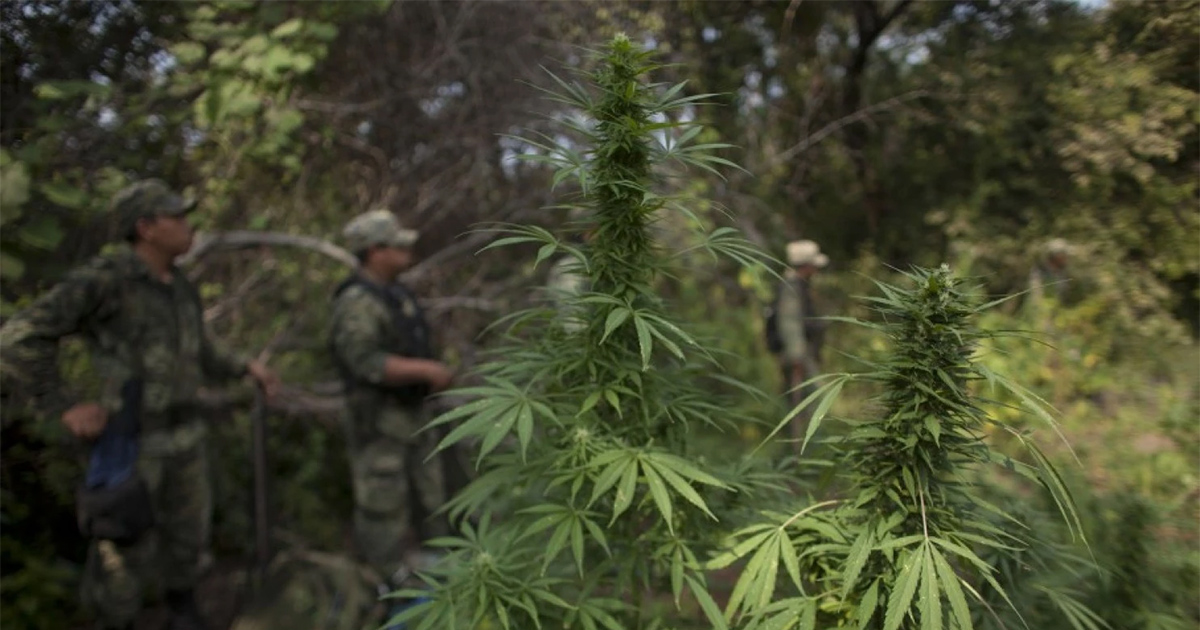
Legal cannabis may be achieving what a few decades of prohibition and repression were unable to: cut into the profits of the Mexican drug cartels.
The latest data Border Police show that in 2015, seizures along the Mexican border reached their lowest level in 10 years. Customs agents seized 680 tonnes of cannabis, compared with 1,800 in 2009.
Read more: Mexican cannabis production declines as U.S. legalization proceeds
The report supports many reported stories of the difficulties experienced by Mexican cannabis growers in the face of increased competition. As domestic cannabis production explodes in states such as California, In Colorado and Washington, cannabis prices have collapsed.
«Two or three years ago, a kilo of cannabis was worth between 60 and 90$,» reported a Mexican farmer. to NPR December 2014. «Now cartels pay between 30 and 40$. That's a big difference. If the United States continues to legalize cannabis, they're going to put us out of business.».
And it's not just a question of price: Mexican growers are also feeling the pressure of quality. «The quality of cannabis produced in Mexico and the Caribbean is inferior to that of American or Canadian cannabis,» noted the DEA in 2015. «Law enforcement agencies report that Mexican cartels are beginning to produce higher quality cannabis to satisfy U.S. demand.».
The decline in border seizures, coupled with an increase in cannabis use among the European population, suggests that Americans are sourcing through national networks. Experts warn, however, that the recreational cannabis market has little impact on this national preference; medical cannabis does, however.
California remains the leader in illicit cannabis production, and legal production under state medical supervision. A good barometer for this are the DEA data on cannabis eradication, which indicates where police forces are discovering and destroying cannabis plantations. In 2014, California seized 60% of all U.S. cannabis. According to these figures, California is still one step ahead of states where recreational cannabis is already legal (Washington, Oregon, Alaska, Colorado).
A new trend observed by the DEA is the export of cannabis from the USA to Mexico. The cartels are of course adapting to this new situation, and declining profits from cannabis sales are driving them to turn to heroin and meth.






Medical Cannabis in Germany: THC Prices Vary by a Factor of 12

France already has 3,000 cannabis retail outlets. None of them are legal.

Morocco's exports of legal cannabis have expanded to 15 countries

Aurora Cannabis Doubles Its Production Capacity in Germany

Tilray is accelerating its operations in Europe thanks to a license in Portugal

Boston will host the 10th annual State of the Cannabis Industry Conference on October 26

A DEA report confirms that there are no fatal cannabis overdoses

A British patient is challenging the NHS's refusal to reimburse medical cannabis

October 2026 CBD Highlights: 10 Strains and Hash to Discover from 5 French Producers

CBD in France: Traceability, Retail Stores, THC and Driving… What the New Bill Proposes
-
 Business2 weeks ago
The legal cannabis market in New York exceeds 4 billion $ in revenue
-

 Cannabis in France3 weeks ago
Which countries legalized medical cannabis before France?
-
Business3 weeks ago
South Korea is preparing to begin local production of medical cannabis to meet rising demand
-
Cannabis in Thailand3 weeks ago
From the boom in dispensaries to a purely medical approach: Thailand is revising its cannabis policy
-
Cannabis and driving3 weeks ago
Medical Cannabis and Driving: New South Wales Ends Automatic Penalties for THC
-
Cannabis in Argentina4 weeks ago
Argentina Opens Its Market to Hemp Flowers Containing 1% of THC
-
Autism3 weeks ago
Autism and Cannabis: Results from the First Placebo-Controlled Trial of NTI164
-
Cannabis in France2 weeks ago
France’s Drug Policy Chief Defends Cannabis Prohibition... and Runs Into the Facts

















Juan
March 10, 2016 at 20 h 37 min
The Mexican peasants who used to grow cannabis have simply thrown themselves into growing poppies, which will flood their neighboring country with heroin... so legalization also has a perverse effect (less weed from Mexico but a staggering rise in hard drugs): let's face it, the black market is still there, the only difference being that the product is of better quality than the Mexican cannabis on the streets of legalized cities and states.
As for the powerful cartels, they're making more profits than ever because they've practically abandoned cannabis and are concentrating more on supplying cocaine, heroin and meth, which generate more addictions, crime, wars between gangs and cartels, and so on. You've got to stop saying that legalization will put an end to all ills, because that's a load of rubbish. Open your eyes: between 60 and 70% of the cannabis sold in the US (even in legalized states) is black market. .