
Bernard Debré's 10 mistakes on France Inter

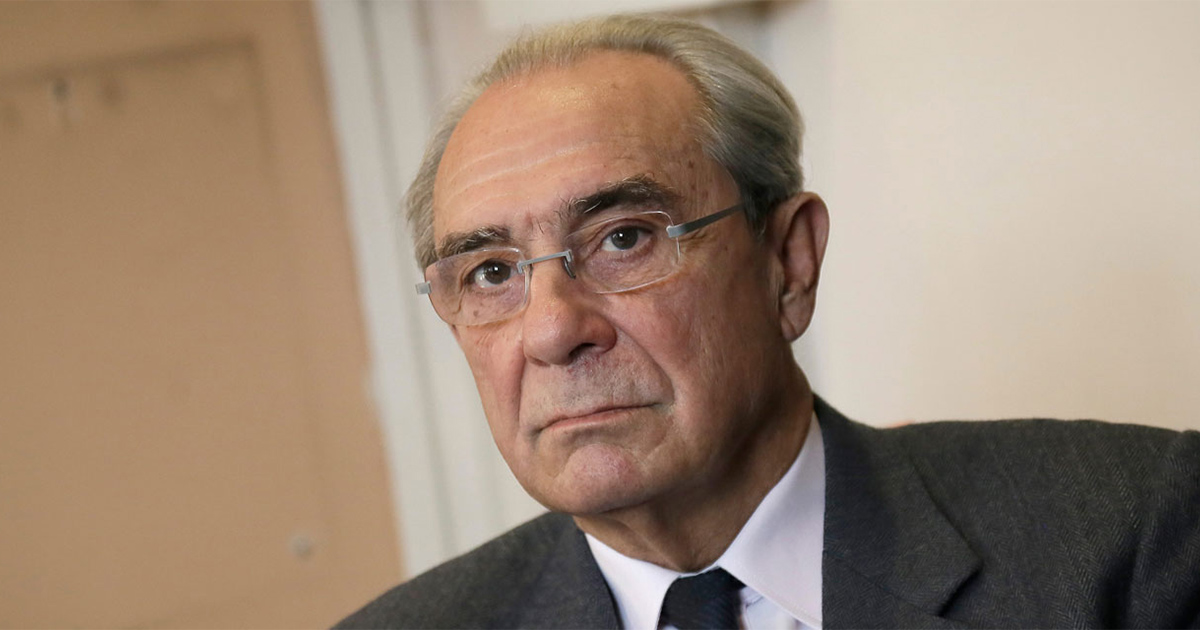
Yesterday, the France Inter program «Le Téléphone Sonne,» hosted by Mickael Thébault, focused the debate on the cannabis legalization.
This program, which airs from 7:20 p.m. to 8:00 p.m., features members of the public who ask questions of the guests. The guests then try to answer them through discussion. Last night, Mickael Thebault hosted LR lawmaker Bernard Debré, a professor of medicine and urological surgeon, and Dr. Bertrand Dautzenberg from the Pitié-Salpêtrière Hospital. An analysis of the 40-minute debate and Bernard Debré’s nonsense.
The first question comes from a listener in her fifties who uses cannabis to treat her condition. In her question, she mentions the’absence of cannabis addiction and his obligation to buy supplies on the black market.
Response from Bernard Debré: «But we must understand that cannabis—and no one can deny this—cannabis leads to addiction, psychological disorders, and physical disorders, and this is recognized by everyone. She says that, but it’s just as addictive as tobacco.»
Mr. Debré is immediately contradicted by Dr. Dautzenberg, who points out that tobacco is significantly more addictive than cannabis. Kevin Hill, an addiction expert, is adamant: only 17% of minors become addicted and 9% of adults, whereas 90% of tobacco use is due to addiction. The representative did not address the unknown origin of the product.
«Smoking cannabis for medical purposes is heresy.»
It’s almost as if we were hearing from the DEA, which does not recognize any therapeutic benefits of cannabis. That is, until this week, when it has approved a clinical trial on the use of cannabis as a legal medication. In the United States, 1.2 million people smoke or ingest cannabis for therapeutic purposes.
«Cannabis, when used at a young age, disrupts or prevents the brain from developing properly, which will either cause or contribute to the emergence of psychiatric disorders in young people. I believe it causes disorders in young people and contributes to their development in adults. (…) Furthermore, cannabis causes lung and bladder cancer.»
It’s hard to disagree with Mr. Debré on this point. Countries that legalize cannabis also prohibit minors from accessing it and require dispensaries to be located far from schools. As for cancer, cannabis alone does not cause cancer. Tobacco mixed into joints, on the other hand, is often the cause. Researchers also frequently lament the lack of studies on the long-term effects of cannabis on the body.
«What I'm asking for is to make it a «traffic violation»—that is, to amend the laws so that occasional users are fined.»
Fines are already being issued, ranging from 160 to 15,000€ for the use and possession of narcotics in quantities of less than 50g. In 2010, 120,000 people were arrested for using or possessing cannabis. In response to a question from a listener via the website suggesting that cannabis be legalized to relieve the burden on the courts and police forces, Mr. Debré replied without hesitation: «In that case, we could relieve the backlog in the courts by legalizing murder.» A little joke for when you're out of arguments.
«Decriminalizing drugs—that’s the danger. Is there a difference between soft drugs and hard drugs, since people often move from one to the other? We start by saying, ‘We’re going to decriminalize a drug because it’s soft,’ but are there really such things as hard drugs and soft drugs? I’m not sure; people often move from one to the other, and besides, those who usually smoke cannabis know they’ll mix it with tobacco, ecstasy, and so on… In fact, some cannabis growers add ecstasy to the roots to make it stronger. »
The so-called "gateway drug" theory—a key argument used by anti-cannabis advocates—is refuted by the statistics in this infographic where only 11% of those who have smoked cannabis «will try cocaine.» 40 % of smokers will never use any other drugs (including alcohol).
In this case, it would be alcohol that leads to smoking: only 10% of people actually tried cannabis before alcohol. The distinction between “hard drugs” and “soft drugs” was established by the Netherlands in 1976. The term “soft drugs” is used precisely to distinguish them from the physiological harm caused by hard drugs. Medical cannabis can be used to treat people in fact, addicted to hard drugs.
And as for the claim about ecstasy in cannabis roots, I’d really like to know where Mr. Debré got that information (maybe from one of his many visits to cannabis plantations, or is it an old grower’s trick?) or what France Inter put in its herbal tea…
«What would reduce drug use is treatment and prevention, and there is no prevention in schools.»
True and false. Every year, the national police send officers to high schools to explain the dangers of drugs. In 2004, the government implemented the system Youth Consumer Consultation. Parents and children can visit for free.
On the other hand, this prevention effort is strictly regulated and, as a result, ineffective. It is carried out by the police, not by doctors, which immediately frames the issue as a legal matter rather than a public health one. Healthcare professionals have very limited leeway when it comes to prevention due to the ban on cannabis. Parents are subjected to the national propaganda campaign, while the ban actually drives young people toward substances that are not harmless at their age.
«You’ve also realized that cocaine could be legalized, which has been done in some South American countries. Not that they had trouble reducing consumption, and we heard the same argument: it brings in money, but don’t forget about synthetic drugs, which are replacing cannabis.»
Some countries have, in fact, legalized cocaine in small quantities: Colombia and the Czech Republic up to 1g, and Peru up to 2g. However, selling it remains illegal in those countries, and therefore generates no revenue for the government (or, if it does, it’s through unofficial channels, but that’s another issue). The Portugal has decriminalized all drugs in 2001, and the government developed a system of assistance and support that led to a drop in drug use throughout the country.
Synthetic drugs are also attracting an increasing number of users. Although they are very dangerous, they are often legal and exploit variations in their molecular structure to slip through the cracks in the law. Legalizing cannabis could help combat this scourge.
«Mr. Dautzenberg and I are both doctors: that’s already an advantage, because it means we can be a little more open-minded about drugs. We shouldn’t be naive and just say, «We just need to legalize it»—that’s extremely dangerous.”. »
Ah, the appeal to authority. Studying medicine doesn't necessarily broaden one's mind—Mr. Debré is living proof of that.
«There has been an extraordinary increase in drug use: opium, cocaine, and synthetic drugs.»
Finally, some credit is due to Dr. Debré, who is telling the truth. Indeed, as this report from the French Monitoring Center for Drugs and Drug Addiction shows, drug seizures of synthesis explodes and cocaine use is becoming increasingly common.
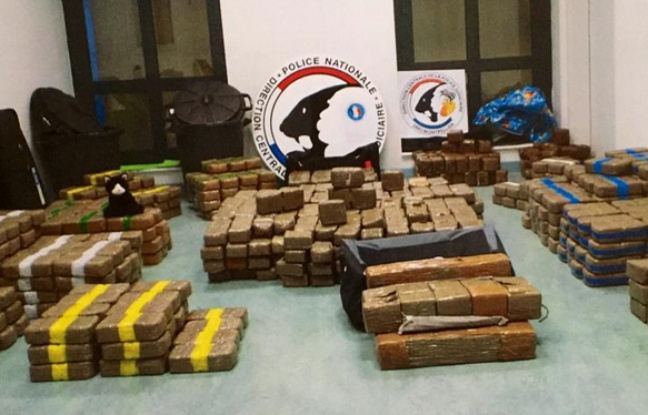
In conclusion, holding a debate is always interesting. But the guests still need to know what it’s all about. In hindsight, one might legitimately wonder why France Inter decided to invite Mr. Debré? Hiding behind his medical degree, he spouts the same old rhetoric as Nixon’s America, defending his glass of red wine and his cigarettes, while leaving no room for a substance consumed by 10% of the French population every year, sold on the blackthe table without quality control, which fuels terrorist networks to the tune of several hundred million euros, and regularly makes headlines due to score-settling incidents or «exceptional» customs seizures.
As Nietzsche would say, «Convictions are more dangerous enemies of the truth than lies.»
You can find the France Inter show as a podcast.
Theo Caillart and the Watcher







CBD is said to promote athletic recovery, without improving performance

294 cannabis clubs in Chile: a booming movement with uneven distribution

Chronic Sciatica: New York Approves First Clinical Trial of a THC-Based Medication

United States: The DEA is accelerating the integration of medical cannabis at the federal level

Florida is nearing one million patients using medical cannabis

Uruguay Revives Its Plan to Allow Tourists to Legally Access Cannabis

In Brazil, researchers are developing an innovative CBD eye drop

Autism: Medical Cannabis Is Linked to Reduced Anxiety

The $28 billion U.S. hemp market remains under threat

Jamaica Eases Small Farmers' Access to the Cannabis Market
-
 Business6 days ago
The legal cannabis market in New York exceeds 4 billion $ in revenue
-

 Cannabis in France2 weeks ago
Which countries legalized medical cannabis before France?
-
Business2 weeks ago
South Korea is preparing to begin local production of medical cannabis to meet rising demand
-
Cannabis in the Netherlands4 weeks ago
One year after the launch of the Dutch cannabis experiment, the first trends are emerging
-
Cannabis in Thailand2 weeks ago
From the boom in dispensaries to a purely medical approach: Thailand is revising its cannabis policy
-
Cannabis in France4 weeks ago
French medical cannabis remains stalled at the Ministry of Health
-
Cannabis in Argentina3 weeks ago
Argentina Opens Its Market to Hemp Flowers Containing 1% of THC
-
Cannabis and driving2 weeks ago
Medical Cannabis and Driving: New South Wales Ends Automatic Penalties for THC
















gh0stwrit3r
April 29, 2016 at 2:40 p.m.
What a load of nonsense—all just to please his voters and his party. Especially since he must have been smoking weed in medical school back when he was a student there. But shh—the French don’t like that…
Leon Dessertines
July 29, 2016 at 1:51 p.m.
Ah, the Debrés!!!! What a wonderful family… from Michel, to Jean Louis, and now Bernard—we’ve been putting up with their chronic misinformation for several generations now. A dynasty of idiots.