An Australian study calls into question the efficacy of cannabis against chronic pain

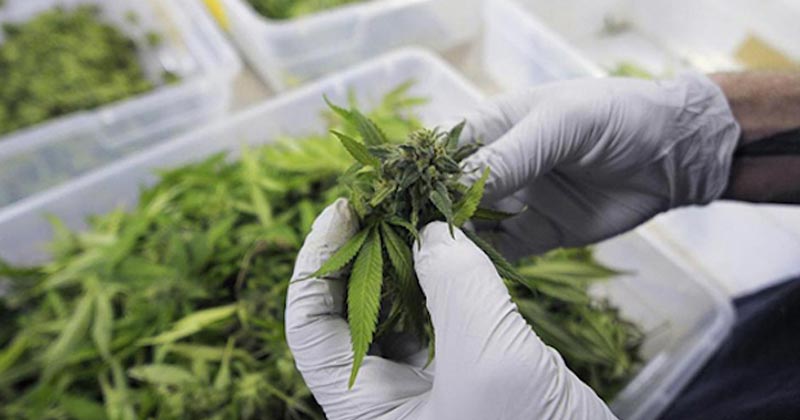
In the United States, Canada and the Netherlands, chronic pain unrelated to cancer is the main reason for the therapeutic use of cannabis. One of the hopes linked to the recent trend towards legalizing medical cannabis is that it could reduce the consumption of opiates, a treatment controversial for its lack of long-term efficacy.
It is against this backdrop that’a study An independent Australian study, funded by the National Health and Medical Research Council and the Australian government, was carried out on chronic pain patients undergoing opiate treatment to determine the possible impact of cannabis use on their pain and opiate consumption.
An inconclusive study
Among the participants, 24% used cannabis for pain relief. After 4 years' follow-up, it was shown that participants who used cannabis, compared with those who didn't, had :
- Higher perception of pain intensity
- A higher rate of pain interference
- Lower self-management of pain
- Higher anxiety
In short, the study found no evidence of a link between cannabis use and pain reduction or reduced opiate consumption. On the other hand, the study confirms recent research claiming that cannabis reduces the effective management of depressive and anxiety disorders. Despite these findings, the researchers note that its use is common among people with chronic pain unrelated to cancer, and that interest in the plant is increasing significantly.
Regular cannabis users justified their use by pain reduction, rating its efficacy at 7 on a scale of 1 to 10. Stopping or reducing use was justified by side-effects, lack of efficacy and difficulties of access due to the illegality of medical cannabis at the time of the study.
Study limits
The study contrasts with previous studies on the subject in its length (4 years), depth and inclusion of patients with complex profiles. Nevertheless, the fact that the patients used illicit cannabis may have an impact on the results of the study, which could turn out to be different with legal cannabis, of better quality and accompanied by medical follow-up. Further studies including placebo effects and a controlled product are still lacking.
Illegality also means that patients may not have been completely honest about their cannabis use. What's more, the researchers took into account the frequency of consumption rather than the quantity and quality of cannabis consumed. Different plant compositions have different effects.
The researchers themselves have a number of reservations about the relevance of the study. Firstly, the representativeness of the sample of people analysed may not be sufficiently diverse. Secondly, it is possible that patients who already use cannabis to relieve their pain suffer from more serious pathologies, and that their pain management is already weaker, a priori, than the population studied who do not use it. It is therefore conceivable that cannabis had a positive effect on their pain levels, which could have been worse. An effective method would have been to deprive them of cannabis, but this requires a controlled environment, which is not feasible for long-term studies.





New Caledonia: The Courts Clear the Way for the Return of CBD

The Brazilian medical cannabis market continues to grow

Morocco: Three Cannabis-Based Medications Approved for the Treatment of Epilepsy

Canopy Growth Receives New EU-GMP Certification to Strengthen Its Presence in Europe

Three years after legalizing medical cannabis, Albania continues to establish regulations for it

The first plant-based medical THC spray arrives in the United Kingdom

Medical Cannabis in Germany: THC Prices Vary by a Factor of 12

France already has 3,000 cannabis retail outlets. None of them are legal.

Morocco's exports of legal cannabis have expanded to 15 countries

Aurora Cannabis Doubles Its Production Capacity in Germany
-
 Business2 weeks ago
The legal cannabis market in New York exceeds 4 billion $ in revenue
-

 Cannabis in France4 weeks ago
Which countries legalized medical cannabis before France?
-
Business4 weeks ago
South Korea is preparing to begin local production of medical cannabis to meet rising demand
-
Cannabis in France4 days ago
France already has 3,000 cannabis retail outlets. None of them are legal.
-
Cannabis in Thailand4 weeks ago
From the boom in dispensaries to a purely medical approach: Thailand is revising its cannabis policy
-
Cannabis in the U.S.5 days ago
A DEA report confirms that there are no fatal cannabis overdoses
-
Cannabis and driving3 weeks ago
Medical Cannabis and Driving: New South Wales Ends Automatic Penalties for THC
-
Cannabis in France3 weeks ago
France’s Drug Policy Chief Defends Cannabis Prohibition... and Runs Into the Facts
















You must be logged in to post a comment Login