7,000 cannabis shops closed in 2025 in Thailand

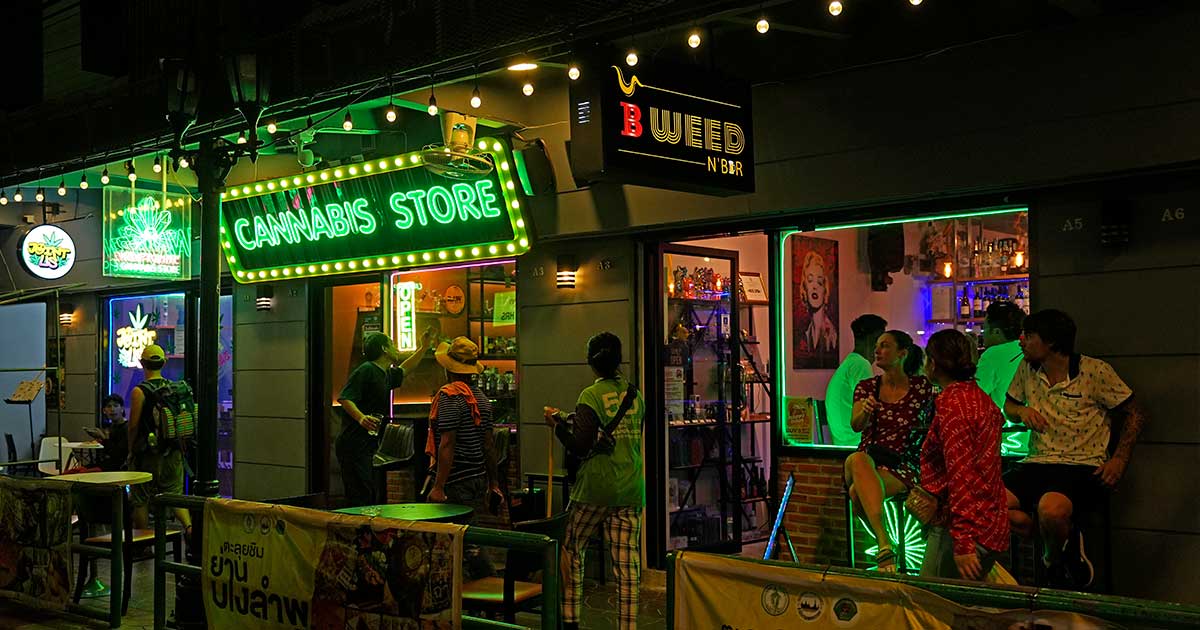
Thailand's Minister of Public Health, Pattana Promphat, confirmed this week that more than 7,000 cannabis stores closed their doors in 2025 after failing to renew their licenses.
These closures follow the government's decision to’more supervision of cannabis sales.
According to Pattana, existing ministerial regulations were designed in a very different context and have proved insufficient to manage the scale and impact of today's cannabis market. A new regulatory project, recently approved by Cabinet, aims to introduce a clearer, more restrictive control mechanism for the’export, sale and processing of cannabis for commercial purposes, with the declared aim of protecting consumers and limiting negative effects on local communities.
Licenses limited to four types of legal establishment
Under the new system, the sale of cannabis will only be authorized in establishments explicitly recognized by law. These include medical facilities, and pharmacies, and retailers of herbal products and where traditional healers work.
Pattana said the settlement would specify that the cannabis must be prescribed by doctors and that its distribution must be carried out by clearly identified and authorized personnel.
The Minister insisted that Thailand has a sufficient number of qualified health professionals to support this model nationwide. By integrating cannabis distribution into the healthcare system, the government hopes to curb unregulated retail practices while maintaining medical oversight.
«The cannabis-related businesses will have to adapt,» said Pattana, adding that operators wishing to renew or apply for a license will have to comply with the new standards once the regulations come into force.
Thousands of stores forgo renewal
Official figures illustrate the scale of the contraction. On December 28, 2025, Thailand had 18,433 cannabis-related establishments throughout the country. In 2025 alone, 8,636 licenses expired, but only 1,339 renewal applications were submitted, representing approximately 15,5% of eligible companies. Visit 7,297 stores chose not to apply, leaving approximately 11,136 approved establishments still in operation.
Downsizing is far from over. The Ministry of Health is planning for the expiry of 4,587 licenses in 2026 and A further 5,210 in 2027, This points to further consolidation as operators assess their ability to comply with more stringent requirements.
Stricter standards for premises, storage and personnel
In addition to limiting the number of people authorized to sell cannabis, the draft regulations considerably tighten operational standards. Licensed premises will be required to install efficient odor elimination systems and smoke to avoid disturbing neighboring residents. Stores must also be located on premises owned by the applicant, or on which the applicant has clear legal rights to operate.
Storage and quality controls is another key point. Cannabis must be kept in a dedicated warehouse, stored separately to avoid contamination, and at controlled temperature and humidity, away from direct sunlight, No product should be placed directly on the floor.
Staff regulations have also been tightened. Each approved establishment must have at least one employee on duty at all times, who has completed the official training provided by the Department of Traditional and Alternative Thai Medicine, to ensure compliance with professional and safety standards.
Continuous access for patients
Despite the wave of closures, Pattana made it clear that patients would not be left without cannabis-based treatments. He emphasized that, since distribution will be carried out by doctors in medical establishments, the country's hospitals are well placed to meet demand.
«Patients who use cannabis for therapeutic purposes will certainly not face shortages,» he said, presenting the reform as a shift from a very open retail system to a more clinically integrated one.
During the transition period, existing licenses will remain valid until their expiry date. All renewals and pending applications will be assessed according to the new rules once the regulations officially come into force.
The amendments to the law are currently undergoing legal review, after which they will be signed and implemented, with no further details yet on the timetable.























«Vincy Gold»: Humboldt Seed Company on the Hunt for Saint Vincent Sativas

Cronos Completes the Acquisition of CanAdelaar for 57.5 million euros

Cannabis with a "bloody" twist: Discover Sensi True Blood and Sensi Sangria, the two new strains from Sensi Seeds

Hemp: The Council of the EU Takes a Stand on New Production and Marketing Rules

Missouri's legal cannabis market accounts for 93 % of consumer spending

THC Gummies: How to Read a Certificate of Analysis Before Buying

British patients now have access to THCV-rich cannabis flowers

Spain: Medical Cannabis Is Coming to About 50 Hospitals

JIHE 2026: Japan’s Largest Trade Show Dedicated to Hemp and CBD Returns to Tokyo with More Than 100 Industry Players

New Caledonia: The Courts Clear the Way for the Return of CBD
-
 Business3 weeks ago
The legal cannabis market in New York exceeds 4 billion $ in revenue
-

 Cannabis in France4 weeks ago
Which countries legalized medical cannabis before France?
-
Cannabis in France1 week ago
France already has 3,000 cannabis retail outlets. None of them are legal.
-
Business4 weeks ago
South Korea is preparing to begin local production of medical cannabis to meet rising demand
-
Cannabis in the U.S.1 week ago
A DEA report confirms that there are no fatal cannabis overdoses
-
Cannabis in Thailand4 weeks ago
From the boom in dispensaries to a purely medical approach: Thailand is revising its cannabis policy
-
Cannabis and driving4 weeks ago
Medical Cannabis and Driving: New South Wales Ends Automatic Penalties for THC
-
Cannabis in France3 weeks ago
France’s Drug Policy Chief Defends Cannabis Prohibition... and Runs Into the Facts














You must be logged in to post a comment Login