Thailand proposes to regulate cannabis while keeping it legal


Thailand has finally decided to regulate its cannabis industry and maintain the’use of cannabis for medical purposes.
This development follows the country's initial decision to decriminalize cannabis in 2022, the the first Southeast Asian country to do so. However, the ease of access and the open consumption of cannabis have sparked a public debate, which led to political promises of stricter controls.
The latest effort takes the form of a new bill of law proposed by ministry of public health, The aim is to create a more controlled framework for the use of the plant in Thailand.
New legislation to regulate cannabis consumption
The proposed bill aims to strike a balance between industry growth and public health concerns.
While it still authorizes cannabis for medical treatment, research and certain consumer products, it imposes stricter rules for non-medical use. Unlike its predecessors, the new bill does not explicitly prohibit the recreational use of cannabis.
However, consumers who use cannabis for purposes other than those authorized still face penalties, including fines of up to 60,000 baht (1,600 euros). Those who sell cannabis or its derivatives for unauthorized purposes risk up to a year in prison or a fine of 100,000 baht, or both.
The law will continue to permit the use of cannabis and its extracts in products phytotherapeutics, food and cosmetics, This maintains the plant's potential in various industries.
Impact on the Thai cannabis industry
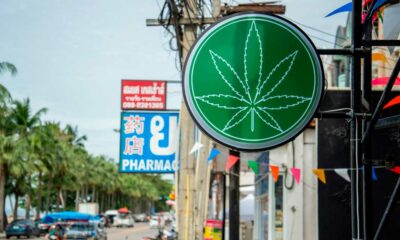
Thailand's cannabis industry has grown significantly since decriminalization in 2022, with over 9,400 dispensaries operating in the country.
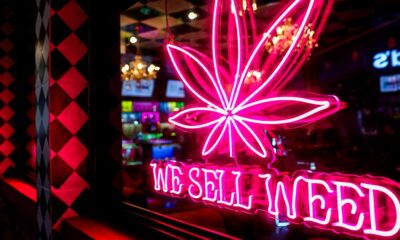
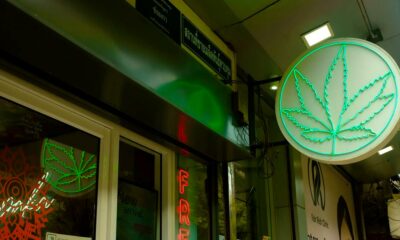
The legal vacuum that followed the decriminalization has enabled dispensaries to proliferate, in particular to Bangkok and other popular tourist destinations. These establishments sell all kinds of cannabis products, from flowers and oils to cannabis-infused edibles.
While the new bill may seem favorable to the cannabis industry compared with earlier, more restrictive versions, it nonetheless poses difficulties for growers, sellers and places where alcohol consumption is permitted.
They will have to apply for new licenses or permits to continue operating legally. Failure to comply with these rules could result in heavy fines or prison sentences, adding further pressure to an already booming sector.
The proposed licensing rules for the planting, sale, export and import of cannabis are part of a wider effort to introduce tighter controls and ensure public safety.
Political and public reaction
The Pheu Thai party, who leads the ruling coalition, initially campaigned on a platform that included the reclassification of cannabis as a narcotic, with the aim of restricting its use for medical purposes due to fears of potential addiction.
However, the political opposition, particularly that of the Bhumjaithai party, the second largest party in the coalition, forced the Pheu Thai to reconsider its position. Visit Bhumjaithai party played an important role in promoting the decriminalization of cannabis, making it a key issue in the party's political platform.
This political friction led to a reversal of policy, allowing cannabis to remain legal for the time being. The new bill, while imposing more restrictions, reflects a compromise between these competing political factions.
According to the Bhumjaithai party, This change is a victory for the people, especially those who are in favor of keeping cannabis legal for medical purposes.
The public has also expressed varying opinions on the issue. A survey published at the beginning of the year showed that a majority Thai was in favor of reclassifying cannabis as a narcotic, reflecting concern about the public health consequences of widespread, unregulated use.
Before the bill comes into force, the public and industry players will have an opportunity to comment. Visit ministry of public health gave until September 30 for comments and suggestions. If approved, it will then be submitted to Parliament for final review.





















«Vincy Gold»: Humboldt Seed Company on the Hunt for Saint Vincent Sativas

Cronos Completes the Acquisition of CanAdelaar for 57.5 million euros

Cannabis with a "bloody" twist: Discover Sensi True Blood and Sensi Sangria, the two new strains from Sensi Seeds

Hemp: The Council of the EU Takes a Stand on New Production and Marketing Rules

Missouri's legal cannabis market accounts for 93 % of consumer spending

THC Gummies: How to Read a Certificate of Analysis Before Buying

British patients now have access to THCV-rich cannabis flowers

Spain: Medical Cannabis Is Coming to About 50 Hospitals

JIHE 2026: Japan’s Largest Trade Show Dedicated to Hemp and CBD Returns to Tokyo with More Than 100 Industry Players

New Caledonia: The Courts Clear the Way for the Return of CBD
-
 Business3 weeks ago
The legal cannabis market in New York exceeds 4 billion $ in revenue
-

 Cannabis in France4 weeks ago
Which countries legalized medical cannabis before France?
-
Cannabis in France1 week ago
France already has 3,000 cannabis retail outlets. None of them are legal.
-
Cannabis in the U.S.1 week ago
A DEA report confirms that there are no fatal cannabis overdoses
-
Cannabis in Thailand4 weeks ago
From the boom in dispensaries to a purely medical approach: Thailand is revising its cannabis policy
-
Cannabis and driving4 weeks ago
Medical Cannabis and Driving: New South Wales Ends Automatic Penalties for THC
-
Cannabis in France3 weeks ago
France’s Drug Policy Chief Defends Cannabis Prohibition... and Runs Into the Facts
-
Studies on cannabis2 weeks ago
Cannabis Oil and Endometriosis: A Promising Study for Pain Relief














You must be logged in to post a comment Login