
Cannabis in Thailand: Towards purely medical regulation?


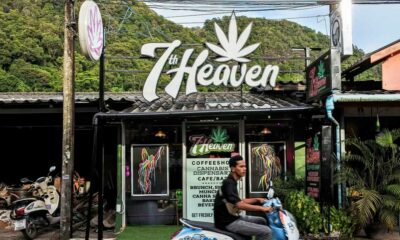
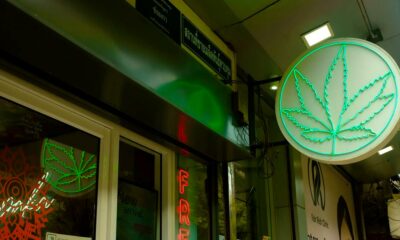
In 2022, the Thailand made headlines around the world in removing cannabis from its list of controlled substances. This decision created a significant legal vacuum, leading to an increase in cannabis-related activities across the country. Cannabis dispensaries sprang up on nearly every street corner in Bangkok, and both tourists and locals were able to easily access them.
A push toward medical regulation
However, the landscape of cannabis laws in Thailand is once again on the verge of changing dramatically. Following the general election in May 2023, the new government, led by Prime Minister Srettha Thavisin, plans to regulate cannabis. A government committee has already voted to reclassify cannabis and hemp as «Schedule 5 drugs,» bringing them into line with kratom and psychedelic mushrooms.
The Minister of Health , Somsak Thepsutin, has strongly opposed the recreational use of cannabis, which he links to serious problems such as heroin addiction, depression, and suicide—a position that many consider outdated and lacking in scientific basis. Despite this, the commission unanimously recognized the therapeutic and medical properties of cannabis and agreed that it should be used for medical, not recreational, purposes.
Public opinion and government actions
A survey conducted by the Ministry of Health showed that a significant majority—about 80% of the 111,201 people surveyed—supported reclassifying cannabis back to its former illegal status. Nevertheless, this plan has faced considerable opposition. About a hundred protesters gathered outside the Prime Minister’s official residence, voicing their dissatisfaction and calling for a thorough study of the benefits of cannabis. Prasitchai Nunual, of the Thai Cannabis Future Network, called for the creation of a new committee tasked with establishing the facts regarding cannabis use and its impact on the country.
The decision to reclassify cannabis, which is set to take effect on January 1, 2025, has raised concerns among cannabis advocates and politicians. Anutin Charnvirakul, head of the Bhumjaithai party and former minister of public health, is a strong advocate for the legalization of cannabis. He has pledged to oppose the reclassification when it is brought before the’Narcotics Control Board (OCS), emphasizing the need for political stability to maintain investor confidence.
Mr. Charnvirakul argued that frequent changes in cannabis policy could deter investors and harm the country’s economic prospects. He warned that recriminalization could lead to legal uncertainty for those who have invested in the cannabis industry and those who grow cannabis plants.
The Bhumjaithai party, who played a played a central role in the initial legalization of cannabis, remains a key player in this debate. The party’s flagship policy during the 2019 general election was to decriminalize cannabis, a promise that Charnvirakul kept when he was appointed Minister of Public Health. However, with his current position as Minister of the Interior, the party’s influence over health policies has diminished, as these matters now fall under the purview of Thepsutin of the Pheu Thai party.
Charnvirakul has made it clear that if a cabinet reshuffle were to allow the Bhumjaithai Party to regain control of the Ministry of Public Health, he would immediately work to remove cannabis from the list of controlled substances. His commitment to this cause highlights the deep political divisions and the complexity of cannabis legislation in Thailand.
As Thailand moves toward new cannabis regulations, several key questions remain unanswered, including the future of the businesses established so far and that of local growers.

















Argentina Opens Its Market to Hemp Flowers Containing 1% of THC

The French Socialist Party still doesn't know how to approach the legalization of cannabis

Science in the City International: Paris at the Heart of Transatlantic Scientific and Medical Dialogue

Christine Fréchette is alienating Quebec’s cannabis industry

Rima Hassan: When «Drugs» Become a Political Weapon

From Marathons to Ultratrails: How Extreme Running Affects the Endocannabinoid System

Four days of THC may make breast cancer less aggressive, according to a new study

Medical Cannabis: 14 Organizations Finally Call for Enforcement of the Law

One year after the launch of the Dutch cannabis experiment, the first trends are emerging

High Ground: The Crash of a Plane Full of Marijuana That Made History in Yosemite
-
 Cannabis and driving1 week ago
Cannabis and CBD: French Drivers Can Now Lose Their License Even Without a Positive Test Result
-
Cannabis in France2 weeks ago
Cannabis Legalization: The LFI Bill Has a Major Problem—THC
-

 Cannabis in the Netherlands3 days ago
One year after the launch of the Dutch cannabis experiment, the first trends are emerging
-
Cannabis in France4 days ago
French medical cannabis remains stalled at the Ministry of Health
-
Business3 days ago
The United Kingdom Is Moving Closer to a Regulated CBD Market
-
Cannabis in Europe2 weeks ago
Andorra Paves the Way for Medical Cannabis Cultivation
-
Cannabis in France2 weeks ago
Drought: Could Hemp Become the New Hope for French Farmers?
-
Cannabis in Quebec2 weeks ago
Cannabis in Quebec: The 21-Year-Old Age Requirement in the Spotlight












You must be logged in to post a comment Login