
In Nebraska, patients still have trouble making their voices heard

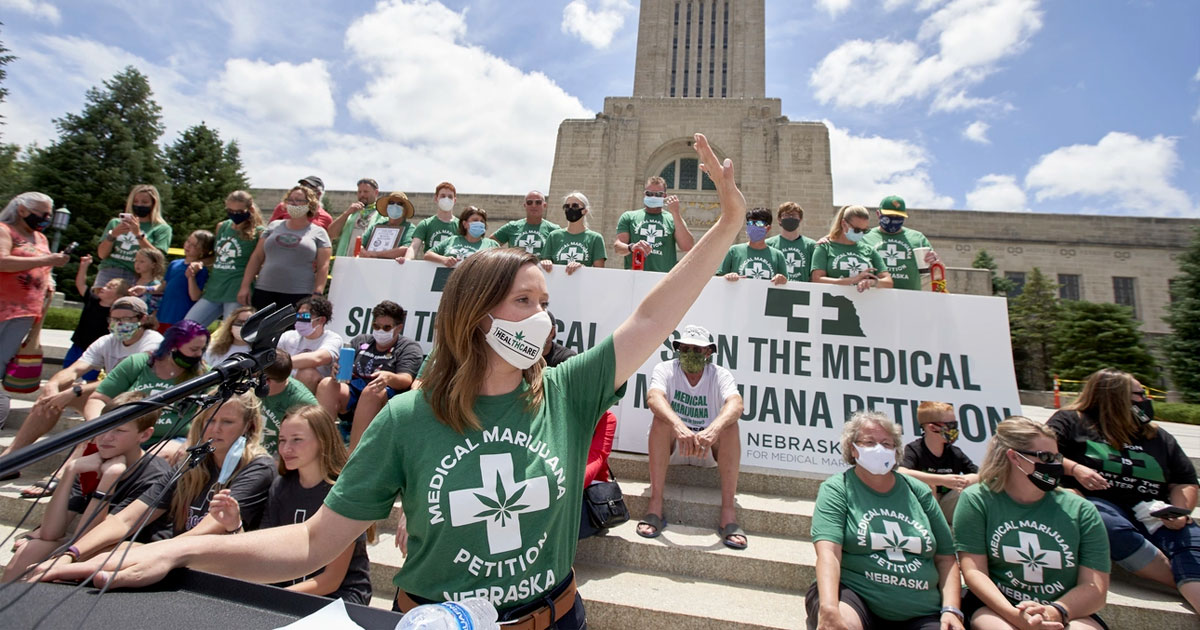
Nebraska senators held a hearing on a new bill to legalize medical cannabis last Thursday.
The Judiciary Committee of the unicameral legislature reviewed the bill introduced by Democratic Senator Anna Wishart, who has been fighting for several years to get this reform passed, both through the legislative process and through election campaigns led by activists.
Members of the same committee also met later that afternoon to discuss separate proposals to legalize cannabis for adults.
«My goal is for no family to have to flee our state to gain access to medical cannabis »for herself or a loved one," Ms. Wishart said in her opening remarks at the hearing on medical cannabis
«This bill will not fail because of a lack of compromise or thoughtful consideration on the part of all the senators and stakeholders who have worked on this issue,» she said. «If this bill fails, it will fail—as it has in the past—because of political pressure from a few people in our state who are using their power to override the will of the people.»
Wishart pointed out that the legislation has already been revised since the last session to address certain concerns, including the removal of provisions allowing people to smoke or vape cannabis. She said she was «willing to further restrict this bill as long as it remains patient-centered.».
https://www.facebook.com/annawishartforlegislature/posts/657774626156797
After lawmakers heard testimony from people who pleaded with them to consider their stories and those of their children with serious illnesses who could benefit from cannabis, the state’s Republican attorney general, Mike Hilgers, testified against the bill.
He challenged the constitutionality of the legalization of medical cannabis, arguing that it conflicts with the federal prohibition, and stated that there had been a «dereliction of duty by the federal government» regarding the Department of Justice’s non-interventionist approach to state cannabis programs in recent years.
In particular, when asked what his office would do if Nebraska legalized medical cannabis, he replied that there would be an «obligation to enforce constitutional laws»—which suggests that law enforcement might seek to interfere with implementation and continue to criminalize people who use cannabis, regardless of any policy changes, or perhaps seek to prevent the law from taking effect.
A representative from the Nebraska State Patrol also expressed opposition to the legislation, testifying that the reform would support the illicit market and would increase the number of drunk-driving incidents. He also stated that it would create problems for gun owners, although a lawmaker pointed out to him that a federal court had recently ruled that the ban on cannabis users owning firearms was unconstitutional.
The legislation submitted to the committee calls for a system of medical cannabis dispensaries where people could purchase and possess up to two and a half ounces (70 grams) of cannabis for therapeutic purposes if they suffer from one of 16 eligible medical conditions, including cancer, epilepsy, HIV/AIDS, and chronic pain.





















CBD is said to promote athletic recovery, without improving performance

294 cannabis clubs in Chile: a booming movement with uneven distribution

Chronic Sciatica: New York Approves First Clinical Trial of a THC-Based Medication

United States: The DEA is accelerating the integration of medical cannabis at the federal level

Florida is nearing one million patients using medical cannabis

Uruguay Revives Its Plan to Allow Tourists to Legally Access Cannabis

In Brazil, researchers are developing an innovative CBD eye drop

Autism: Medical Cannabis Is Linked to Reduced Anxiety

The $28 billion U.S. hemp market remains under threat

Jamaica Eases Small Farmers' Access to the Cannabis Market
-
 Business6 days ago
The legal cannabis market in New York exceeds 4 billion $ in revenue
-

 Cannabis in France2 weeks ago
Which countries legalized medical cannabis before France?
-
Business2 weeks ago
South Korea is preparing to begin local production of medical cannabis to meet rising demand
-
Cannabis in the Netherlands4 weeks ago
One year after the launch of the Dutch cannabis experiment, the first trends are emerging
-
Cannabis in Thailand2 weeks ago
From the boom in dispensaries to a purely medical approach: Thailand is revising its cannabis policy
-
Cannabis in France4 weeks ago
French medical cannabis remains stalled at the Ministry of Health
-
Cannabis in Argentina3 weeks ago
Argentina Opens Its Market to Hemp Flowers Containing 1% of THC
-
Cannabis and driving2 weeks ago
Medical Cannabis and Driving: New South Wales Ends Automatic Penalties for THC















You must be logged in to post a comment Login