
The EU Simplifies Regulations Governing Hemp Cultivation


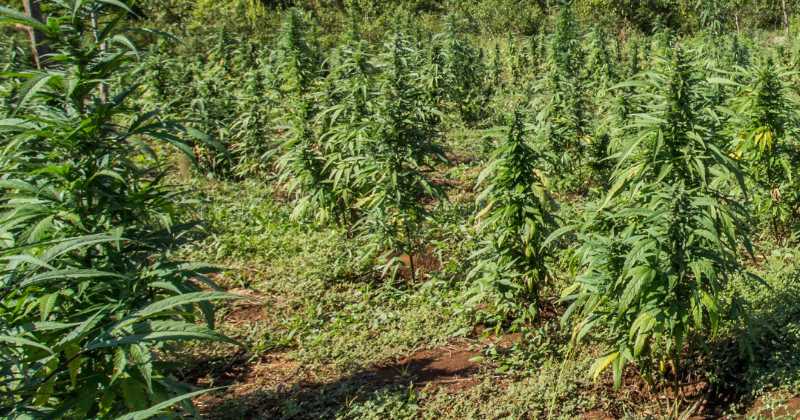
The European Union has adopted new rules to simplify the monitoring of hemp crops.
Regulations on hemp are becoming more flexible
The delegated regulation Commission Regulation (EU) 2026/177 amends the rules governing hemp production under the Common Agricultural Policy (CAP). Adopted in January and published in March, this regulation is now in effect and grants Member States greater flexibility in organizing compliance checks.
The European Commission indicates that experience has shown that controls can be simplified without compromising the reliability of the THC testing. The new framework therefore provides national authorities with greater flexibility regarding compliance audit timelines and allows for lower audit rates in order to reduce administrative costs.
The underlying requirements have not gone away. CAP payments for hemp production remain contingent on the use of eligible certified seeds and compliance with the applicable THC threshold. Authorities must also continue to record detailed information from THC inspections, including test results, sampling procedures, the number of tests, and the proportion of the reported area that was inspected.
For on-site inspections, the regulation sets minimum rates of 15% of the hemp areas declared under a single procedure and 10% when a Member State applies a prior authorization system. This provides greater flexibility than a uniform inspection regime while maintaining defined inspection thresholds.
A broader agricultural reform is still pending
The provisions on hemp are only part of a much broader set of changes to EU agricultural rules. Regulation No. 2026/177 also amends the provisions concerning producer organizations, market withdrawals, support mechanisms, and environmental requirements related to permanent grassland.
Several of these changes will take effect on January 1, 2027, as part of an effort to simplify the implementation of the CAP.
With regard to hemp, however, the most immediate effect lies in the revision of the approach to inspections. The regulation does not fundamentally alter the conditions for granting CAP payments, but it does change the way in which Member States can verify compliance.
Hemp's role in the CAP remains a separate issue
Beyond the regulation that has already been adopted, the future role of hemp in European agricultural policy remains a subject of debate. Discussions within the Council of the European Union relate to changes to the rules of the’common market organization, which cover a wide range of agricultural issues, from marketing standards to market interventions and import duties.
Any potential impact on hemp will depend on negotiations involving the Council, the European Parliament and the European Commission. Therefore, no definitive conclusions can be drawn at this stage.
Another proposal currently under consideration in the European Parliament would aim to recognize the hemp flowers as agricultural products eligible for CAP subsidies. This initiative is distinct from Regulation No. 2026/177 and has not yet been transposed into European Union law.














294 cannabis clubs in Chile: a booming movement with uneven distribution

Chronic Sciatica: New York Approves First Clinical Trial of a THC-Based Medication

United States: The DEA is accelerating the integration of medical cannabis at the federal level

Florida is nearing one million patients using medical cannabis

Uruguay Revives Its Plan to Allow Tourists to Legally Access Cannabis

In Brazil, researchers are developing an innovative CBD eye drop

Autism: Medical Cannabis Is Linked to Reduced Anxiety

The $28 billion U.S. hemp market remains under threat

Jamaica Eases Small Farmers' Access to the Cannabis Market

Faced with resistance from Aurora, Curaleaf raises its offer by 25%
-
 Business5 days ago
The legal cannabis market in New York exceeds 4 billion $ in revenue
-
Cannabis and driving4 weeks ago
Cannabis and CBD: French Drivers Can Now Lose Their License Even Without a Positive Test Result
-

 Cannabis in France2 weeks ago
Which countries legalized medical cannabis before France?
-
Business2 weeks ago
South Korea is preparing to begin local production of medical cannabis to meet rising demand
-
Cannabis in the Netherlands3 weeks ago
One year after the launch of the Dutch cannabis experiment, the first trends are emerging
-
Cannabis in Thailand2 weeks ago
From the boom in dispensaries to a purely medical approach: Thailand is revising its cannabis policy
-
Cannabis in France4 weeks ago
French medical cannabis remains stalled at the Ministry of Health
-
Cannabis in Argentina3 weeks ago
Argentina Opens Its Market to Hemp Flowers Containing 1% of THC














You must be logged in to post a comment Login