
EIHA lobbies for 1% THC limit in EU hemp reform

L’European Industrial Hemp Association (EIHA) calls for a major overhaul of European regulations on hemp, urging European lawmakers to raise the legal limit from THC for industrial hemp at 1% as part of the upcoming reform of the Common Agricultural Policy (CAP).
In a policy brief related to the 2028–2032 CAP review, the EIHA argues that the current threshold of 0.3% of THC no longer reflects agronomic realities or the needs of a rapidly expanding European hemp sector. If adopted, this proposal would mark one of the most significant regulatory changes for hemp cultivation in decades.
At the same time, the association welcomed another proposal from the European Commission aimed at officially recognizing the entire hemp plant, including the flowers and leaves, as falling under the EU’s agricultural framework when it is derived from authorized varieties.
Climate-related pressures and legal uncertainty
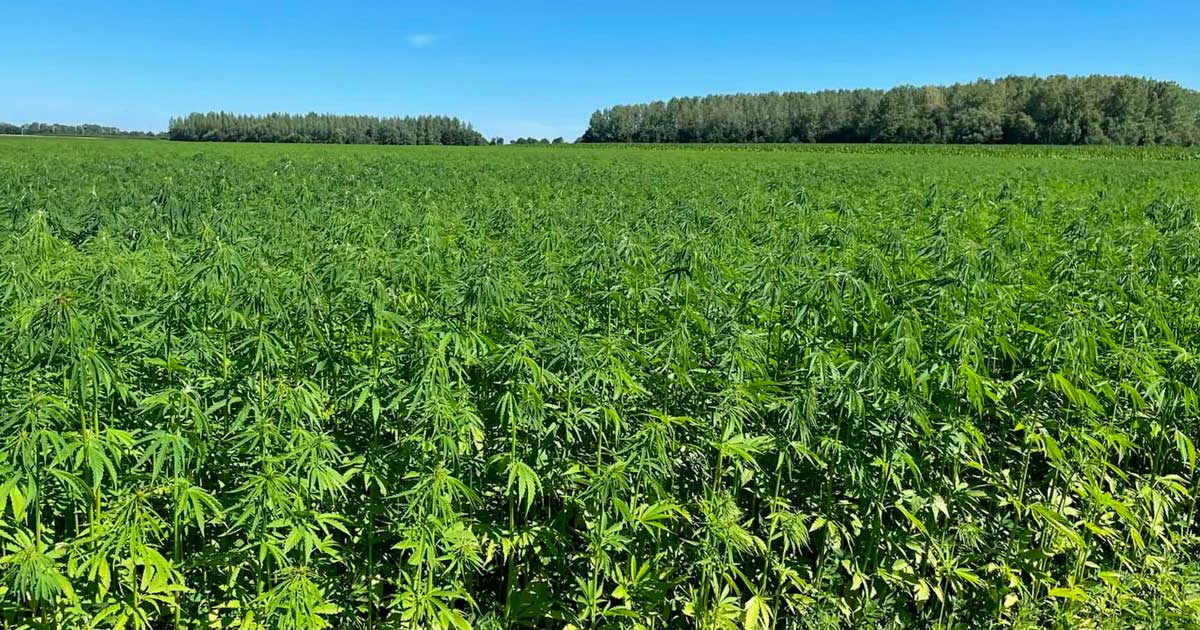
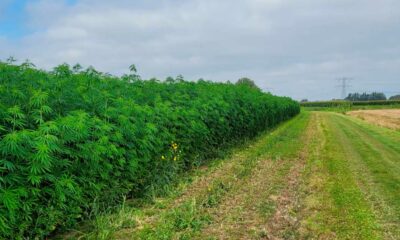
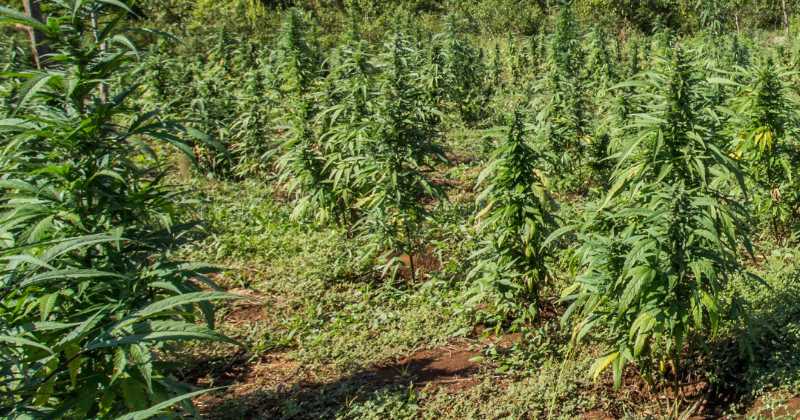
Under current European regulations, hemp grown in open fields must not exceed 0.3% of THC in order to be eligible for CAP subsidies. Although farmers plant certified varieties, natural environmental factors such as heat and sunlight can influence cannabinoid production. According to the EIHA, these climatic variations can cause compliant crops to exceed the 0.3% threshold by a small margin, exposing producers to sanctions in countries where this threshold is used to distinguish legal hemp from illegal cannabis, to subsidy penalties, or even to the forced destruction of crops.
The association describes this as a disproportionate risk for farmers acting in good faith.
In advocating for a harmonized threshold of 1% of THC, the EIHA asserts that the EU would provide greater legal certainty, reduce climate-related crop losses, and ensure that regulatory limits align with scientific and agricultural realities. Industrial hemp grown with less than 1% of THC, the group argues, remains non-intoxicating and distinct from narcotic cannabis. Consumer safety would continue to be governed by existing European rules on THC levels in finished products.
The debate over THC limits is nothing new. When Europe first introduced specific thresholds in the 1980s, the upper limit was set at 0.5 % before being reduced to 0.3%, then to 0.2% under pressure from France, which placed even greater constraints on breeders and farmers. The The limit ultimately returned to 0.3%, but discussions about raising it resurfaced as the crop spread to warmer regions.
Breeding, Seeds, and Competitiveness
Beyond compliance at the farm level, the EIHA argues that the 0.3% threshold has limited breeding potential in Europe. The development of new varieties under strict low-THC constraints has reduced genetic diversity and limited yield improvements in fiber and seed production.
According to the association, a threshold of 1% would make it possible to expand the EU Variety Catalog, to improve the availability of certified seeds and to support research and innovation. This could prove particularly important as hemp cultivation expands into southern and eastern Europe, where climatic conditions differ from those in traditional growing regions.
Several jurisdictions already enforce higher THC limits. In Europe, the Czech Republic and the Switzerland allow cultivation up to 1% of THC and theItaly at 0.6%. Countries such as Australia, New Zealand, and Uruguay have similar standards in place. The EIHA argues that aligning with these standards would strengthen the EU’s global competitiveness while maintaining a clear distinction between industrial hemp and cannabis with high THC content.
Although this is not explicitly mentioned in the position statement, a higher cultivation limit could also have an impact on the economics of cannabinoid extraction, as THC and CBD levels in hemp plants are proportionally linked.
Recognizing the Plant as a Whole
Along with its call for a higher THC threshold, the EIHA expressed its unreserved support for the European Commission’s proposal to recognize all parts of the hemp plant—including the flowers—within the EU’s agricultural framework when they come from authorized varieties.
According to the association, this clarification would help put an end to the ongoing legal uncertainty and prevent divergent interpretations among Member States. It would also ensure the smooth functioning of the EU’s internal market and provide clearer conditions for investment throughout the hemp value chain.
«The CAP reform offers a timely opportunity to modernize the European framework for hemp in a balanced and evidence-based manner,» the EIHA stated in a press release.
Francesco Mirizzi, Executive Director of the EIHA, added: «Hemp is a strategic crop for Europe’s ecological transition and rural development. We strongly welcome the Commission’s proposal recognizing the whole plant and call on lawmakers to supplement it with a realistic THC threshold of 1% that reflects agronomic reality.»

















Cannabis and the Adolescent Brain: French Scientists Make a Key Discovery

EFSA Gives Initial Approval for Synthetic CBD; Natural Extracts Still Pending

Federal Cannabis Reform Once Again on Hold in the United States

Contest: Win a trip to Quebec to experience the hemp harvest firsthand

Bedrocan on Hold Amid Uncertainty Over Medical Cannabis

Newsweed Launches Its Own AI
A new tax of 0.5% could disrupt the hemp industry in Canada

Medical Cannabis and Driving: New South Wales Ends Automatic Penalties for THC

China's Yongji Health Takes Control of Tasmanian Botanics

Autism and Cannabis: Results from the First Placebo-Controlled Trial of NTI164
-
 Cannabis and driving3 weeks ago
Cannabis and CBD: French Drivers Can Now Lose Their License Even Without a Positive Test Result
-

 Cannabis in France6 days ago
Which countries legalized medical cannabis before France?
-
Cannabis in France3 weeks ago
Cannabis Legalization: The LFI Bill Has a Major Problem—THC
-
Cannabis in the Netherlands2 weeks ago
One year after the launch of the Dutch cannabis experiment, the first trends are emerging
-
Business6 days ago
South Korea is preparing to begin local production of medical cannabis to meet rising demand
-
Cannabis in Thailand6 days ago
From the boom in dispensaries to a purely medical approach: Thailand is revising its cannabis policy
-
Cannabis in Argentina2 weeks ago
Argentina Opens Its Market to Hemp Flowers Containing 1% of THC
-
Cannabis in France2 weeks ago
French medical cannabis remains stalled at the Ministry of Health














cbdtech
February 12, 2026 at 15 h 31 min
Reaching the 1 % THC threshold in the fields is a crucial step for the future of the European cannabis industry. This harmonization, spearheaded by the EIHA, not only serves to enhance competitiveness in global markets (Switzerland, the U.S., Italy), but above all ensures greater genetic safety for farmers.
Currently, the 0.3 % limit is too fragile in the face of climate fluctuations: a simple heat wave can naturally cause a plant’s THC level to rise, making the harvest illegal. Raising this threshold means protecting our growers’ expertise and stabilizing CBD production while sticking to non-psychotropic strains. A common-sense fight for European agricultural sovereignty! Fabien CBDtech