
US Congress quietly ends federal ban on medical cannabis

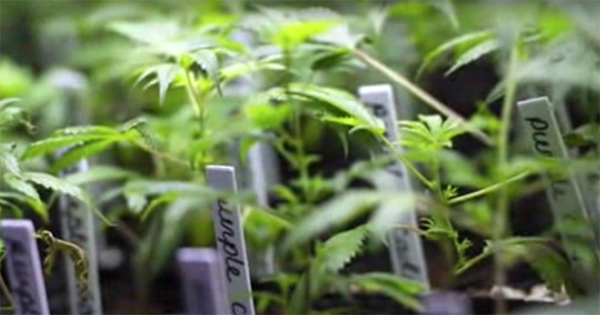
Buried in a 1603-page document on federal government measures is the provision that effectively ends the federal government's prohibition on medical cannabis and marks a major change in American drug policy.
This is the first time the U.S. Congress has approved significant legislation at the national level requested by legalization advocates, ending almost 20 years of tension between the states and Washington over the medical use of cannabis.
Thanks to this provision American states where medical cannabis is legal no longer have to worry about raids by federal narcotics agents. Agents are now prohibited from doing so, even though the Obama administration had already largely followed this rule since 2014. The new measure, when signed by President Obama, will become law.
Cannabis advocates worked hard with Congress to pass this legislation, as they feared a less tolerant future administration. And more importantly from the activists' point of view, Congress' action marks the emergence of a new alliance on cannabis issues: Republicans are taking a major role in supporting states to allow the use of a drug that is still officially considered more dangerous than cocaine.
«This is a victory for a lot of people,» said the measure's co-author, Republican Dana Rohrabacher of Costa Mesa. Approval of the measure represents «the first time in years that the federal government has rolled back its oppressive prohibition on cannabis.».
To date, 32 US states and the District of Columbia have legalized medical cannabis, a movement that began in the 1990s. Even then, some states like California had already been decriminalizing for over 20 years.
Even though the medical cannabis movement has had many successes recently, the DEA still classifies cannabis as one of the most dangerous drugs, with no accepted medical use.
The U.S. Congress has resisted for years to prevent states from charting their own course on cannabis legislation. The measure that prevents the federal government from using its resources to impede state cannabis laws was defeated half a dozen times before it was passed. When Washington DC voted to approve medical cannabis in 1998, Congress used the tools at its disposal to prevent the law from taking effect for 11 years.
«The war against medical cannabis is over,» says Bill Piper, a lobbyist for the Drug Policy Alliance, who calls the change historic. «The fight will now be on for the full legalization of cannabis».







Argentina Opens Its Market to Hemp Flowers Containing 1% of THC

The French Socialist Party still doesn't know how to approach the legalization of cannabis

Science in the City International: Paris at the Heart of Transatlantic Scientific and Medical Dialogue

Christine Fréchette is alienating Quebec’s cannabis industry

Rima Hassan: When «Drugs» Become a Political Weapon

From Marathons to Ultratrails: How Extreme Running Affects the Endocannabinoid System

Four days of THC may make breast cancer less aggressive, according to a new study

Medical Cannabis: 14 Organizations Finally Call for Enforcement of the Law

One year after the launch of the Dutch cannabis experiment, the first trends are emerging

High Ground: The Crash of a Plane Full of Marijuana That Made History in Yosemite
-
 Cannabis and driving1 week ago
Cannabis and CBD: French Drivers Can Now Lose Their License Even Without a Positive Test Result
-
Cannabis in France2 weeks ago
Cannabis Legalization: The LFI Bill Has a Major Problem—THC
-

 Cannabis in the Netherlands5 days ago
One year after the launch of the Dutch cannabis experiment, the first trends are emerging
-
Cannabis in France6 days ago
French medical cannabis remains stalled at the Ministry of Health
-
Business5 days ago
The United Kingdom Is Moving Closer to a Regulated CBD Market
-
Cannabis in Europe2 weeks ago
Andorra Paves the Way for Medical Cannabis Cultivation
-
Cannabis in France2 weeks ago
Drought: Could Hemp Become the New Hope for French Farmers?
-
Cannabis in Argentina2 days ago
Argentina Opens Its Market to Hemp Flowers Containing 1% of THC











You must be logged in to post a comment Login