Donald Trump plans to encourage international war on drugs

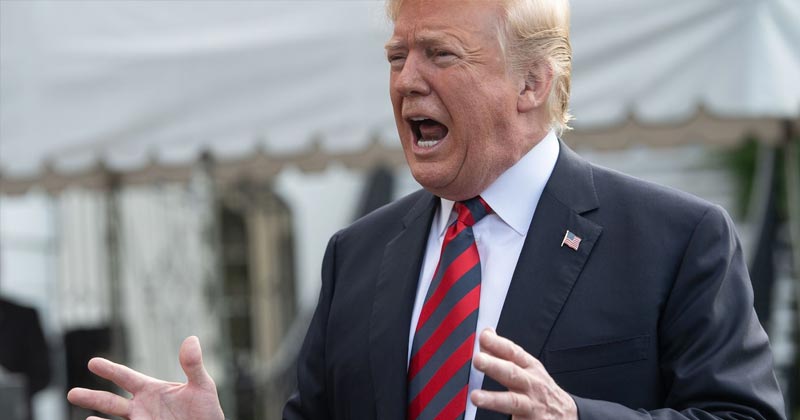
Since Trump's election as President of the United States, it's an understatement to say that political observers are having trouble knowing which foot to dance on. On the subject of cannabis, he oscillates between respect the rights of States to draw up their own legislation on the subject and organize a secret committee to reinforce cannabis prohibition.
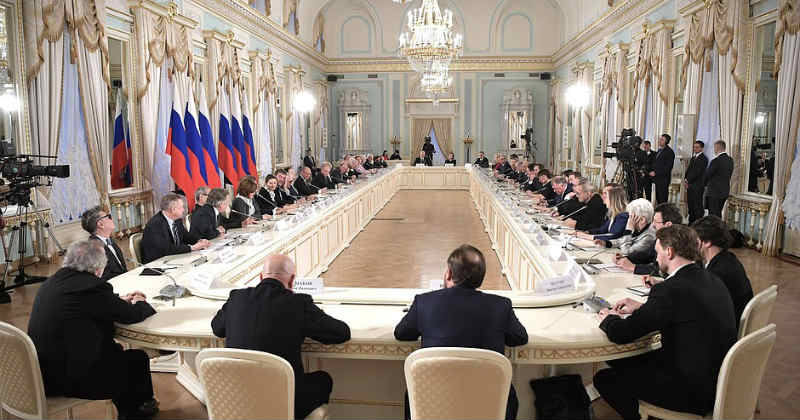
On the sidelines of the upcoming United Nations summit in New York, to be held next Tuesday, September 25, a private event on public drug policy is being organized by the Trump administration. The invitation has only been sent to certain countries that have signed up to a controversial non-negotiable action plan, according to documents obtained by The Intercept, including countries with the most draconian laws on the subject.
The event, entitled« Global Call to Action on the World Drug Problem »(a global call to action on the world's drug problem) leaves us dubious as to the methods employed. The document is unofficial, has not been circulated through the usual channels of communication, has not been negotiated, and is intended to propose a common position before the United Nations.
For Hannah Hetzer, Director of International Policy at Drug Policy Alliance, It seems to be a way of getting countries to get behind Trump and his administration. I think the countries that sign this and then show up for this photo op should be very careful - they don't really know what they're signing up for.«
The document calls for an action plan based on four pillars: demand reduction, treatment of sick people, international cooperation and the reduction of illicit drug supply. It also calls on the UN Narcotics Commission to accelerate its action on synthetic drugs.
Another document that The Intercept indicates that the United States is already collaborating with more than two dozen countries, including China, Saudi Arabia, Singapore, Russia and the United Arab Emirates, the first 3 of which executed drug addicts last year. They also include the UK, India and Costa Rica, countries with more relaxed drug policies.
The United Nations generally agrees on a position that also suits countries with the toughest laws. By 2016, however, the General Assembly had begun a process of openness, moving away from the draconian measures previously adopted. The US administration, during Obama's tenure, had also softened its stance. Trump, who takes great pleasure in undermining everything Obama has done, may want to return to a stricter stance and declare a "no trade" clause. War on Drugs 2.0.





Medical Cannabis in Germany: THC Prices Vary by a Factor of 12

France already has 3,000 cannabis retail outlets. None of them are legal.

Morocco's exports of legal cannabis have expanded to 15 countries

Aurora Cannabis Doubles Its Production Capacity in Germany

Tilray is accelerating its operations in Europe thanks to a license in Portugal

Boston will host the 10th annual State of the Cannabis Industry Conference on October 26

A DEA report confirms that there are no fatal cannabis overdoses

A British patient is challenging the NHS's refusal to reimburse medical cannabis

October 2026 CBD Highlights: 10 Strains and Hash to Discover from 5 French Producers

CBD in France: Traceability, Retail Stores, THC and Driving… What the New Bill Proposes
-
 Business2 weeks ago
The legal cannabis market in New York exceeds 4 billion $ in revenue
-

 Cannabis in France3 weeks ago
Which countries legalized medical cannabis before France?
-
Business3 weeks ago
South Korea is preparing to begin local production of medical cannabis to meet rising demand
-
Cannabis in Thailand3 weeks ago
From the boom in dispensaries to a purely medical approach: Thailand is revising its cannabis policy
-
Cannabis and driving3 weeks ago
Medical Cannabis and Driving: New South Wales Ends Automatic Penalties for THC
-
Cannabis in Argentina4 weeks ago
Argentina Opens Its Market to Hemp Flowers Containing 1% of THC
-
Autism3 weeks ago
Autism and Cannabis: Results from the First Placebo-Controlled Trial of NTI164
-
Cannabis in France2 weeks ago
France’s Drug Policy Chief Defends Cannabis Prohibition... and Runs Into the Facts

















You must be logged in to post a comment Login