Trinidad and Tobago wants to decriminalize cannabis and legalize it for medical and religious use

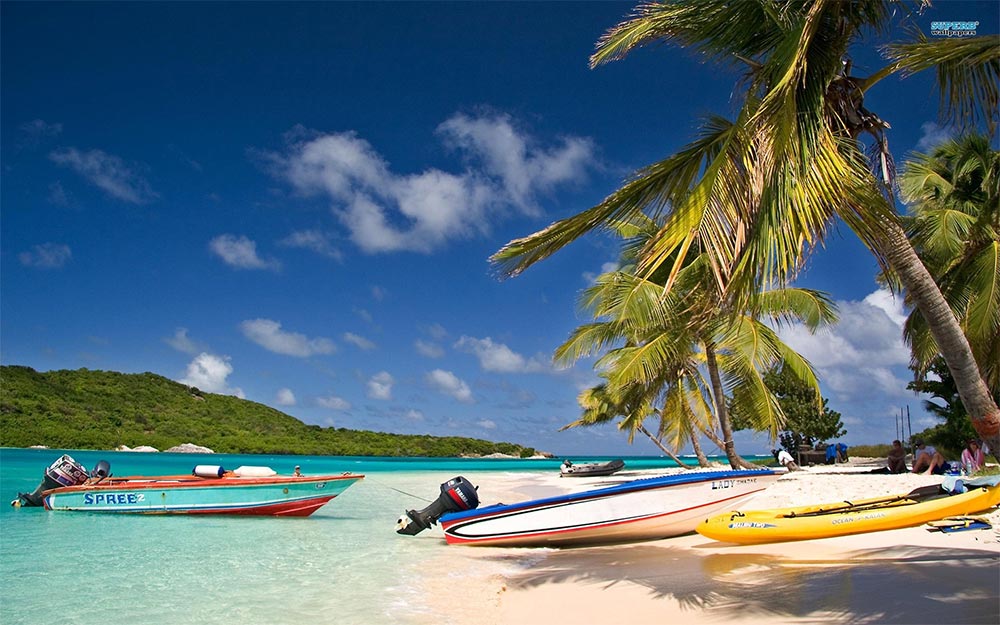
On Friday, the government of Trinidad and Tobago introduced two cannabis bills before its Parliament, one aimed at decriminalizing the possession of small amounts, and the other at legalizing the cannabis for medical purposes and religious.
In a speech before the House of Representatives, Attorney General Faris Al-Rawi stated that the government wanted to reduce the prison population and the costs associated with incarceration for cannabis offenses, and to redirect law enforcement resources toward more serious crimes.
The first proposal would decriminalize possession of 30 grams of marijuana or 5 grams of hashish. For amounts above that and up to 60g, the offense would be punishable by a «fixed penalty notice» of approximately €7,000, which would have no impact on an individual’s criminal record if the fine is paid. The proposal would also authorize the cultivation of four plants for personal use. On this point, the text restricts cultivation to male plants (which do not produce the flowers commonly consumed), though it is unclear whether this is an error or intentional.
The second project The bill would authorize the sale, use, and distribution of cannabis for medical, research, and religious purposes.
A government regulatory agency would be responsible for issuing various licenses, including those for growers, laboratories, processors, dispensaries, importers, exporters, and transporters. Licenses would be granted only to companies with at least 30% in local investment, in order to «prevent abuses associated with multinational dominance in other territories.».
«After extensive research, broad consultation with stakeholders, and a thorough review of the legislation, the government is firmly convinced that it is time to amend the Dangerous Drugs Act and strictly regulate the research, cultivation, supply, and sale of marijuana. This will be achieved through the establishment of a cannabis regulatory authority,» Al-Rawi said.
People who falsely claim medical or religious use without a valid reason may face severe penalties. For example, a person who «uses medical cannabis without being authorized to do so by prescription or on the recommendation of a doctor» is liable to a fine and a sentence of ten years’ imprisonment.
The proposals also impose restrictions on public consumption. People working in certain sensitive industries, such as airlines or bus companies, would face additional restrictions on consumption.
Al-Rawi stated that the government was capable of effectively regulating the cannabis market but acknowledged that it might face some resistance. That said, the leader of the opposition party, Kamla Persad Bissessar, also expressed her support for the decriminalization of cannabis.
Last year, the leaders of 19 Caribbean countries have announced that they would review regulatory proposals to end the ban on cannabis. Since then, several countries such as Saint Christopher or the Barbados have taken steps to amend their countries' cannabis laws.



















JIHE 2026: Japan’s Largest Trade Show Dedicated to Hemp and CBD Returns to Tokyo with More Than 100 Industry Players

New Caledonia: The Courts Clear the Way for the Return of CBD

The Brazilian medical cannabis market continues to grow

Morocco: Three Cannabis-Based Medications Approved for the Treatment of Epilepsy

Canopy Growth Receives New EU-GMP Certification to Strengthen Its Presence in Europe

Three years after legalizing medical cannabis, Albania continues to establish regulations for it

The first plant-based medical THC spray arrives in the United Kingdom

Medical Cannabis in Germany: THC Prices Vary by a Factor of 12

France already has 3,000 cannabis retail outlets. None of them are legal.

Morocco's exports of legal cannabis have expanded to 15 countries
-
 Business2 weeks ago
The legal cannabis market in New York exceeds 4 billion $ in revenue
-

 Cannabis in France4 weeks ago
Which countries legalized medical cannabis before France?
-
Business4 weeks ago
South Korea is preparing to begin local production of medical cannabis to meet rising demand
-
Cannabis in France4 days ago
France already has 3,000 cannabis retail outlets. None of them are legal.
-
Cannabis in Thailand4 weeks ago
From the boom in dispensaries to a purely medical approach: Thailand is revising its cannabis policy
-
Cannabis in the U.S.5 days ago
A DEA report confirms that there are no fatal cannabis overdoses
-
Cannabis and driving3 weeks ago
Medical Cannabis and Driving: New South Wales Ends Automatic Penalties for THC
-
Cannabis in France3 weeks ago
France’s Drug Policy Chief Defends Cannabis Prohibition... and Runs Into the Facts















You must be logged in to post a comment Login