Germany: a company modifies the bacteria that produce tequila to produce cannabinoids

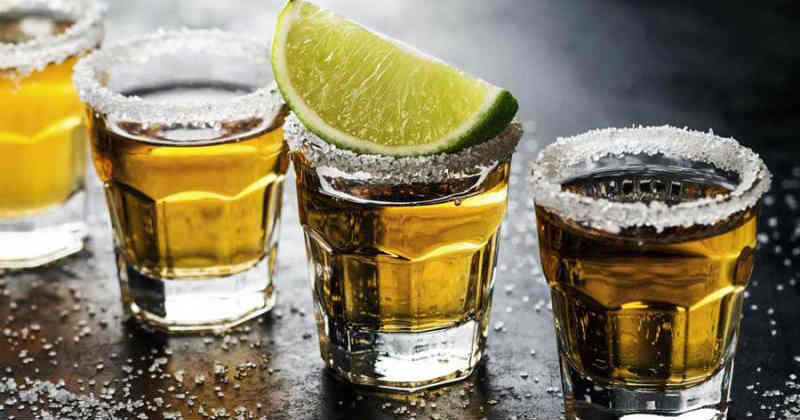
While two companies have already filed patents for producing cannabinoids from yeast, Research into micro-organisms is on the increase. Last February, the German medical cannabis company Farmako filed an international patent for the use of a genetically modified bacterium, normally used to produce tequila, in the production of cannabinoids.
A resourceful bacterium
The special feature of micro-organisms is that they can produce cannabinoids in the laboratory without having to go through the cannabis cultivation and extraction stages. German biotech company Farmako understands this, and has turned its attention to the bacterium Zymomonas mobilis which transforms sugar into alcohol during the tequila fermentation process. She genetically modified this bacterium to produce cannabinoids instead of alcohol, and renamed it Zymomonas cannabinoidis.
To achieve this, Farmako scientists used molecular scissors to cut out the bacterium's genes responsible for alcohol production. The missing DNA segments were then replaced by genes responsible for the production of specific cannabinoids in the plant. The bacterium can therefore produce any cannabinoid from sugar, depending on its modifications. Unlike yeast, which must be destroyed to release the cannabinoids, Farmako's molecule excretes them directly into a solution.
«In one production cycle, we can produce cannabinoids for 900 hours without interruption. For example, during this time, 4.5 kilograms of THC are produced per gram of bacteria,» explains Farmako's co-founder and scientific director, Patrick Schmitt, in a press release. This saves time and scale, as everything is produced in the laboratory, eliminating the need to grow cannabis and extract cannabinoids. It also means less waste and energy expenditure.
«The production of cannabinoids and cannabinoid-based medicines will be synthetic in the future,» explains Farmako founder and CEO Niklas Kouparanis in the same press release. If THC and CBD are already the subject of a growing number of studies, other cannabinoids such as THCV and CBN are little sought-after. Their production by the cannabis plant is not abundant enough, making them more difficult to isolate in their natural state. Thousands of plants would be needed to produce suitable quantities of the molecule. With Farmako's method, however, the production of these molecules would be easier and less costly.
The company recently signed an agreement with Canadian medical cannabis producer Zenabis to supply 36,000 kg of CBD isolate over three years. The company also distributes its production on the German domestic market, and aims to become a world leader in medical cannabis through the creation of vertically integrated structures.









Medical Cannabis in Germany: THC Prices Vary by a Factor of 12

France already has 3,000 cannabis retail outlets. None of them are legal.

Morocco's exports of legal cannabis have expanded to 15 countries

Aurora Cannabis Doubles Its Production Capacity in Germany

Tilray is accelerating its operations in Europe thanks to a license in Portugal

Boston will host the 10th annual State of the Cannabis Industry Conference on October 26

A DEA report confirms that there are no fatal cannabis overdoses

A British patient is challenging the NHS's refusal to reimburse medical cannabis

October 2026 CBD Highlights: 10 Strains and Hash to Discover from 5 French Producers

CBD in France: Traceability, Retail Stores, THC and Driving… What the New Bill Proposes
-
 Business2 weeks ago
The legal cannabis market in New York exceeds 4 billion $ in revenue
-

 Cannabis in France3 weeks ago
Which countries legalized medical cannabis before France?
-
Business3 weeks ago
South Korea is preparing to begin local production of medical cannabis to meet rising demand
-
Cannabis in Thailand3 weeks ago
From the boom in dispensaries to a purely medical approach: Thailand is revising its cannabis policy
-
Cannabis and driving3 weeks ago
Medical Cannabis and Driving: New South Wales Ends Automatic Penalties for THC
-
Cannabis in Argentina4 weeks ago
Argentina Opens Its Market to Hemp Flowers Containing 1% of THC
-
Autism3 weeks ago
Autism and Cannabis: Results from the First Placebo-Controlled Trial of NTI164
-
Cannabis in France2 weeks ago
France’s Drug Policy Chief Defends Cannabis Prohibition... and Runs Into the Facts

















You must be logged in to post a comment Login