Is the recently discovered Mayan city a cannabis plantation after all?

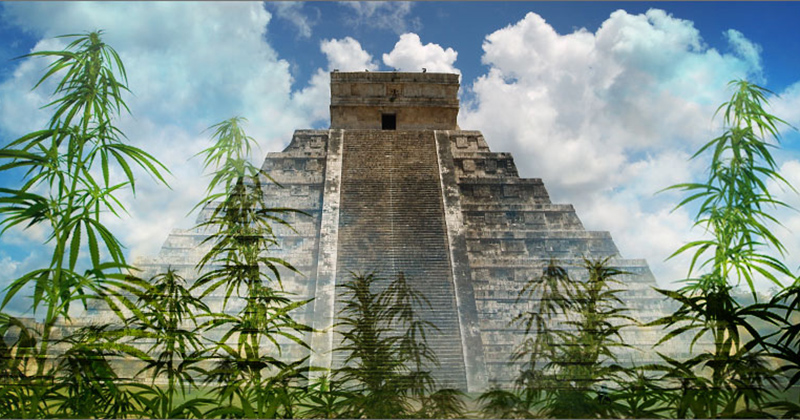
You've probably seen it in the news: a 15-year-old Quebecer has allegedly discovered a new Mayan city by comparing the shape of the constellations and the geographical position of Mayan cities.
Fifteen-year-old William Gadoury has been passionate about archaeology and Mayan culture ever since the Mayan calendar predicted the end of the world in 2012. He worked from maps of known Mayan cities and constellations until he found a link previously unknown to scientists. The Mayans, no less in love with mind-altering substances, They would have laid out their cities in line with the constellations, with the brightest stars corresponding to the largest cities.
22 constellations seemed to correspond to 117 Mayan cities located in Mexico, Guatemala, Honduras and the Dominican Republic. in El Salvador. For the 23rd, two stars corresponded to two known cities, but the third had no terrestrial equivalent.
Using transparencies and Google Earth, he found the probable location of the city in Mexico's Yucatan Peninsula. After contacting the Canadian Space Agency for high-resolution images, the area appears to be filled with 30 geometric shapes partially hidden beneath the jungle canopy.
Excitement: William Gadoury would then have discovered one of the largest Maya cities to date, with a semi-confirmation from Dr. Armand LaRocque, a specialist from the University of New Brunswick in Canada: «the geometric shapes, such as squares or rectangles, that can be seen on these images, are shapes that can hardly be attributed to natural phenomena».
But...
But there is a but. His discovery was quickly called into question by scientists from all over the world, both in terms of method and conclusions.
The major problem is that to verify this would require an expedition to one of the most remote and inaccessible regions of the world. But one voice is heard hear more than others, Geoffrey E. Braswell, archaeologist at the University of California, San Diego:
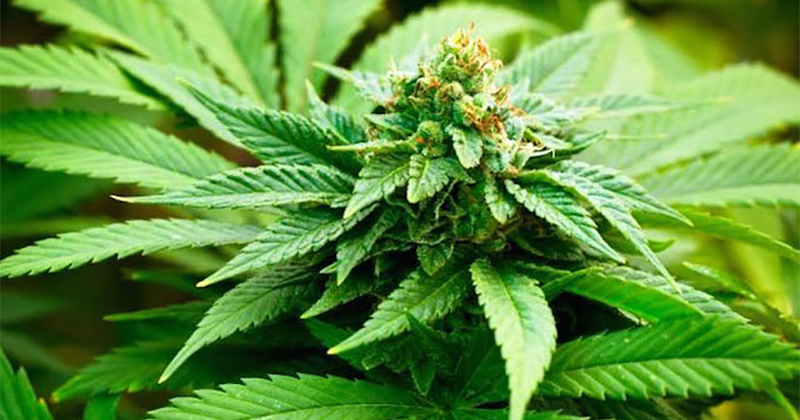
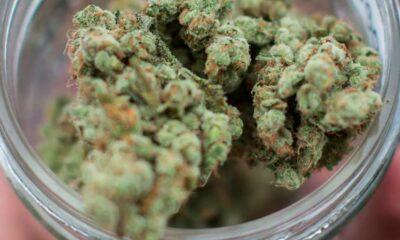
«One of the images shows two rectangles at the southeast corner of a dry lagoon. This is the Laguna El Civalon, in Campeche. The two rectangles identified as pyramids are small fields filled with grass. The fields may lie fallow, or they may be be cannabis crops that are common in the region. There are no major archaeological sites here.
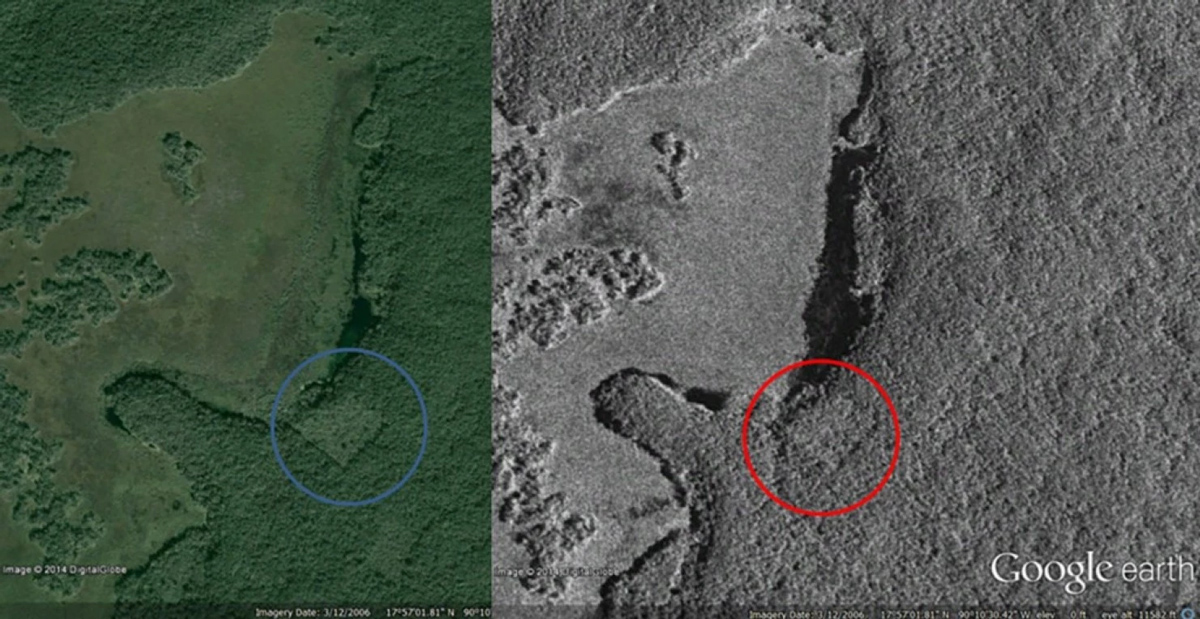
Illegal cannabis planting
The second image corresponds to the location of marshes, not far from already known colonial sites around San Felipe. The region was an important stopover on the way to Guatemala.
If William Gadoury really has found a illegal cannabis plantation, It's a bit of a lose-lose situation for drug dealers to be caught by a 15-year-old and Google Earth, isn't it? Who's going to check it out?









JIHE 2026: Japan’s Largest Trade Show Dedicated to Hemp and CBD Returns to Tokyo with More Than 100 Industry Players

New Caledonia: The Courts Clear the Way for the Return of CBD

The Brazilian medical cannabis market continues to grow

Morocco: Three Cannabis-Based Medications Approved for the Treatment of Epilepsy

Canopy Growth Receives New EU-GMP Certification to Strengthen Its Presence in Europe

Three years after legalizing medical cannabis, Albania continues to establish regulations for it

The first plant-based medical THC spray arrives in the United Kingdom

Medical Cannabis in Germany: THC Prices Vary by a Factor of 12

France already has 3,000 cannabis retail outlets. None of them are legal.

Morocco's exports of legal cannabis have expanded to 15 countries
-
 Business2 weeks ago
The legal cannabis market in New York exceeds 4 billion $ in revenue
-

 Cannabis in France4 weeks ago
Which countries legalized medical cannabis before France?
-
Business4 weeks ago
South Korea is preparing to begin local production of medical cannabis to meet rising demand
-
Cannabis in France4 days ago
France already has 3,000 cannabis retail outlets. None of them are legal.
-
Cannabis in Thailand4 weeks ago
From the boom in dispensaries to a purely medical approach: Thailand is revising its cannabis policy
-
Cannabis in the U.S.5 days ago
A DEA report confirms that there are no fatal cannabis overdoses
-
Cannabis and driving3 weeks ago
Medical Cannabis and Driving: New South Wales Ends Automatic Penalties for THC
-
Cannabis in France3 weeks ago
France’s Drug Policy Chief Defends Cannabis Prohibition... and Runs Into the Facts















You must be logged in to post a comment Login