A psychedelic beer would have helped this former South American empire to reign

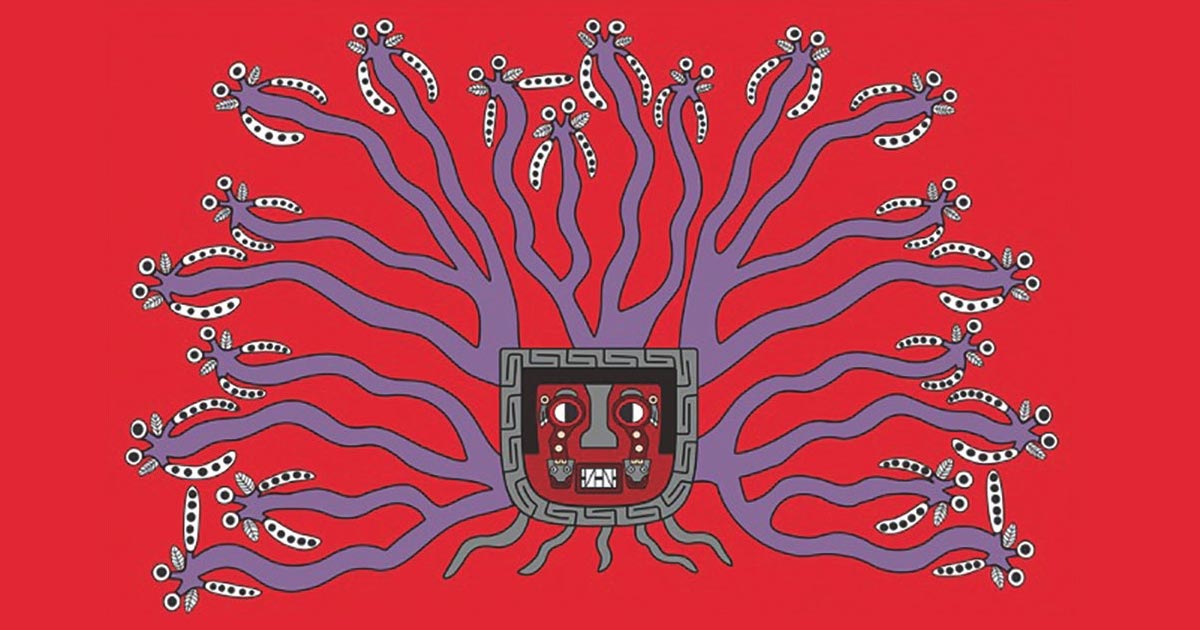
The rulers of an ancient South American empire used psychedelic beer to maintain political control over their society and surrounding communities, according to research published in January.
In a study published in Antiquity, archaeologists have revealed that the leaders of the Wari people served a beer-like beverage made from the fruit of the false pepper tree, a small tree, combined with the seeds of the vilca tree, and served the mixture to guests at communal feasts.
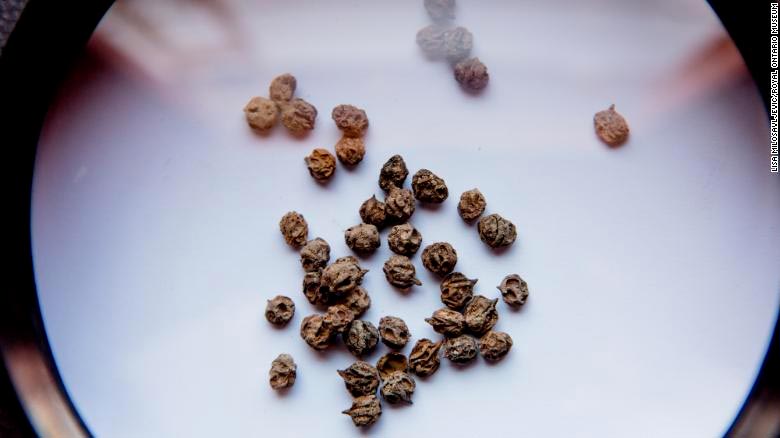
The fruit of the little pepper tree is used to make a beer-like alcoholic beverage called chicha.
«The resulting psychotropic experience reinforced the power of the Wari state, and represents an intermediate stage between exclusionary and entrepreneurial political strategies,» the researchers write in a summary of the study published online by Cambridge University Press. «This Andean example adds to the worldwide catalog documenting the close relationship between hallucinogens and social power».
Power and psychotropic drugs
The Wari built their empire on the high plateaus of the Andes in present-day Peru. They ruled the region from 600 to 1000 A.D. and preceded the Inca empire by four centuries. Archaeologists excavating in Quilcapampa, southern Peru, from 2013 to 2017, discovered the first traces of psychedelic vilca seeds at a Wari site.
Matthew Biwer, Visiting Assistant Professor of Archaeology at Dickinson College in Pennsylvania and lead author of the study, said the discovery sheds light on how indigenous South American civilizations were using psychoactive substances.
«It was a turning point in the Andes in terms of politics and the use of hallucinogens,» said Biwer.
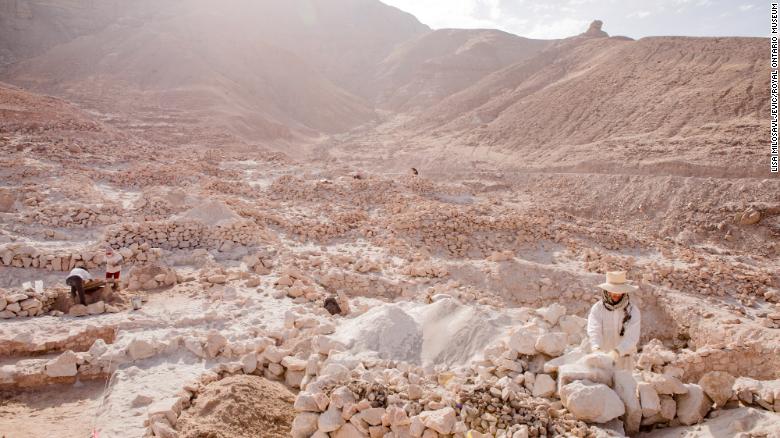
The Wari empire excavation site
«We see this type of hallucinogen use as a different context of use from that of earlier civilizations, which seem to have narrowly kept the use of hallucinogens to a privileged few, or the last Inca empire, which emphasized mass consumption of beer but did not use mind-altering substances like vilca at festivals.»
Pre-Columbian civilizations used vilca, often inhaled as snuff, as far back as 4,000 years ago. The seeds contain the psychedelic substance dimethyltryptamine, as well as bufotenin, a substance similar to serotonin.
«What I've read from ethnographic sources is that you get a very strong sensation of flying,» Biwer told Inverse.
Party people rule the empire
Previous research has revealed that the Wari used feasting and beer as a means of exerting political control over guests from surrounding communities. Researchers at the Quilcapampa site discovered evidence that the Wari made «molle beer», known as chicha, in large quantities. Botanical remains of molle and vilca were found, and ceramics were discovered in the center of the site, an indication of where feasts were held, according to the study authors.
«The Wari added vilca to chicha beer to impress guests at their feasts who couldn't reciprocate the experience,» said Biwer. «This created a debt relationship between the Wari hosts and the guests, who were probably from the surrounding area.».
«We believe that feasting, beer and vilca served to create and cement social ties between Wari-affiliated peoples and local populations as the Empire expanded,» continues Biwer. «It was also a way for Wari rulers to demonstrate and maintain their social, economic and political power.»
Biwer explains that guests were under social pressure to recognize the power of their Wari hosts, and felt obliged to reciprocate in the future.
«There is political power in being able to acquire and use these hallucinogenic substances and provide those experiences,» Biwer said. «I think it provides a really good example of the connection between politics, drug use, intoxication and social ties.»
Researchers have yet to discover why the Wari civilization eventually disappeared. But by continuing to study the sites inhabited by the pre-Columbian civilization, they are learning more about how Peru's first inhabitants lived.
«The Wari empire stretched from northern Peru to the far south, near the Chilean border, and from the coast to the mountainous areas of the Andes,» explains Biwer. «It is the earliest example of an empire in South America, which collapsed around 400 years before the rise of the Inca empire.».





















The Brazilian medical cannabis market continues to grow

Morocco: Three Cannabis-Based Medications Approved for the Treatment of Epilepsy

Canopy Growth Receives New EU-GMP Certification to Strengthen Its Presence in Europe

Three years after legalizing medical cannabis, Albania continues to establish regulations for it

The first plant-based medical THC spray arrives in the United Kingdom

Medical Cannabis in Germany: THC Prices Vary by a Factor of 12

France already has 3,000 cannabis retail outlets. None of them are legal.

Morocco's exports of legal cannabis have expanded to 15 countries

Aurora Cannabis Doubles Its Production Capacity in Germany

Tilray is accelerating its operations in Europe thanks to a license in Portugal
-
 Business2 weeks ago
The legal cannabis market in New York exceeds 4 billion $ in revenue
-

 Cannabis in France4 weeks ago
Which countries legalized medical cannabis before France?
-
Business4 weeks ago
South Korea is preparing to begin local production of medical cannabis to meet rising demand
-
Cannabis in France4 days ago
France already has 3,000 cannabis retail outlets. None of them are legal.
-
Cannabis in Thailand4 weeks ago
From the boom in dispensaries to a purely medical approach: Thailand is revising its cannabis policy
-
Cannabis in the U.S.5 days ago
A DEA report confirms that there are no fatal cannabis overdoses
-
Cannabis and driving3 weeks ago
Medical Cannabis and Driving: New South Wales Ends Automatic Penalties for THC
-
Cannabis in France3 weeks ago
France’s Drug Policy Chief Defends Cannabis Prohibition... and Runs Into the Facts















You must be logged in to post a comment Login