Thailand: medical cannabis on the right track but fears foreign companies

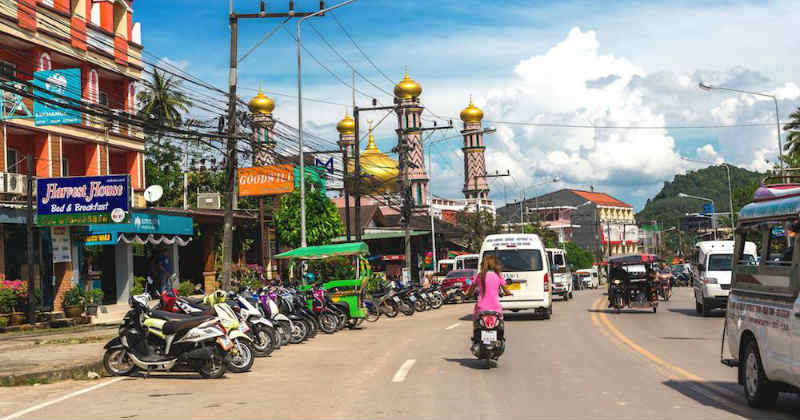
Last November, a political representative had announced that a law to legalize medical cannabis would be presented to the National Legislative Assembly. The bill has now been approved on first reading by the unicameral Parliament. Its aim is to legalize the production, import and export of medical cannabis by amending the Narcotic Substances Act, which currently prohibits the consumption, possession, production, distribution, export and import of cannabis. If the legislation succeeds, Thailand will become the first country in Southeast Asia, a region with particularly stringent anti-drug laws, to partially legalize cannabis.
Thailand's legalization of medical cannabis
The amendment will enable approved patients to access cannabis through healthcare professionals, the government pharmaceutical organization, local administrative agencies or the Red Cross. Cultivation and production sites will be supervised by the Ministry of Public Health in collaboration with the Office of the Narcotics Control Board. The amendment does not remove cannabis from the list of controlled substances, but reclassifies it to authorize its medical use, notably in the treatment of epilepsy and pain and nausea in cancer patients. It also authorizes its use for research purposes, notably in the treatment of Parkinson's and Alzheimer's diseases.
The bill was proposed by 44 members of the National Assembly, and the initiative was well received by other parliamentarians and the public. It received the unanimous support from the assembly (145 votes and one abstention) on first reading and 99.13% of participants in the public poll conducted on the NLA website. Nevertheless, Thailand's institutions aren't all that democratic. Since the coup of May 2014, the former Parliament (the National Assembly of Thailand) has been replaced by a military-backed unicameral chamber, the NLA, and doubts about the transparency of this dictatorial system exist.
The amendment was quickly approved because, according to Bangkok Post, Parliament (and the government) intend to legalize before the end of the year. «In October, Dr. Jet Sirathraanon, Chairman of the Assembly's Public Health Committee, declared that »we will speed up the deliberation of these amendments so that we can complete the procedure before the end of December«. Nevertheless, the NLA must now establish a 29-member panel to review the proposed law, a process that normally takes two months. With elections scheduled for early next year, the outcome of the initiative is uncertain, especially as tensions are already emerging over the modalities of this legalization.
Tensions in civil society
Thai entrepreneurs and activists are worried about a possible monopolization of the market by foreign companies. Some are already seeking to register patents that could marginalize newcomers, notably patents on plant genetics, legal in America, but not in Thailand. «We're very shocked to see this because it would be tantamount to patenting water and its uses,» explains Chokwan Kitty Chopaka, an activist from Highlands Network, a group campaigning for the legalization of cannabis in Thailand. «Granting these patents is dangerous because it could block innovation and prevent other companies and researchers from doing anything related to the plant,» he adds.
Among the companies looking to enter the Thai market are the British companies GW Pharmaceuticals, producers Epidiolex and Sativex, and Japan's Otsuka Pharmaceutical, who have applied for cannabis-related patents. Thai civil society and researchers have threatened to slow down the legalization process by taking the government to court if it grants such patents. Opponents called on the Prime Minister to issue a decree to prevent such monopolization, but a government spokesman said the government would stick to the normal legislative procedure.
In the business world, the prospect of competition from the world's cannabis leaders is also a cause for concern. Thai Cannabis Corp. a company with majority Thai assets that is awaiting legalization in order to obtain a license to sell cannabis-derived ingredients to producers, claims the cultural and traditional character of cannabis in Thailand. The company's marketing director, Jim Plamondon, hailed legalization as «a return to centuries-old traditions» and considers cannabis «already an integral part of traditional medicine». «We should make sure the Thai people can control their own industry», he added.










Medical Cannabis in Germany: THC Prices Vary by a Factor of 12

France already has 3,000 cannabis retail outlets. None of them are legal.

Morocco's exports of legal cannabis have expanded to 15 countries

Aurora Cannabis Doubles Its Production Capacity in Germany

Tilray is accelerating its operations in Europe thanks to a license in Portugal

Boston will host the 10th annual State of the Cannabis Industry Conference on October 26

A DEA report confirms that there are no fatal cannabis overdoses

A British patient is challenging the NHS's refusal to reimburse medical cannabis

October 2026 CBD Highlights: 10 Strains and Hash to Discover from 5 French Producers

CBD in France: Traceability, Retail Stores, THC and Driving… What the New Bill Proposes
-
 Business2 weeks ago
The legal cannabis market in New York exceeds 4 billion $ in revenue
-

 Cannabis in France3 weeks ago
Which countries legalized medical cannabis before France?
-
Business3 weeks ago
South Korea is preparing to begin local production of medical cannabis to meet rising demand
-
Cannabis in Thailand3 weeks ago
From the boom in dispensaries to a purely medical approach: Thailand is revising its cannabis policy
-
Cannabis and driving3 weeks ago
Medical Cannabis and Driving: New South Wales Ends Automatic Penalties for THC
-
Cannabis in Argentina4 weeks ago
Argentina Opens Its Market to Hemp Flowers Containing 1% of THC
-
Autism3 weeks ago
Autism and Cannabis: Results from the First Placebo-Controlled Trial of NTI164
-
Cannabis in France2 weeks ago
France’s Drug Policy Chief Defends Cannabis Prohibition... and Runs Into the Facts

















You must be logged in to post a comment Login