
Can hemp be grown in France?

The word «chanvre» is the French translation of the Latin Cannabis. The industrial hemp (Cannabis Sativa L.), cultivated mainly for its seeds and fiber-rich stem, is a regulated plant authorized for cultivation in France, provided it contains less than 0.3% THC.
The hemp generally refers to the non-psychoactive plant, as opposed to cannabis, which contains higher doses of THC. France is Europe's leading producer of industrial hemp, and the world's second-largest after China, although its leading position is tending to wane as hemp is legalized in a number of countries, for example the United States in 2018. The French hemp industry supplies the construction, textile, agri-food and cosmetics industries, thanks to the hemp products it produces. hemp's many properties.
Some 20 species are authorized for cultivation, and anyone can grow hemp in their own garden. The only requirement is to buy seeds from approved organizations, such as the Coopérative Centrale des Producteurs de Semences de Chanvre (CCPSC), based in Maine-et-Loire, for French seeds (Futura 75, Fedora 17, Santhica 27 and 70, Epsilon 68, Felina 32, Ferimon, Uso 31).
You'll then need to register your crop with the Fédération Nationale des Producteurs de Chanvre, and it's advisable to do the same with the local gendarmerie to avoid surprise visits after neighbors have made a declaration.
Growing hemp in France
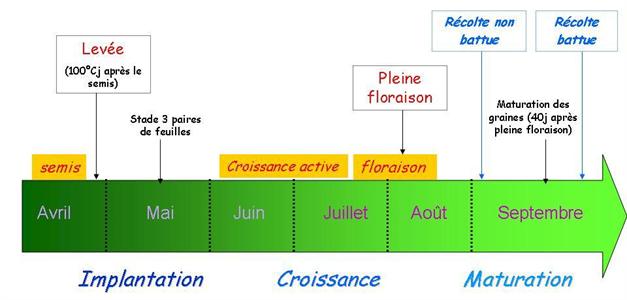
According to the regulation n°1164/89 of the European Community, the hemp cultivation in France is authorized but it must have an extremely low THC content, requiring a level of less than 0.2%. Industrial hemp in Europe requires moist, flat soil to grow properly. It takes 4 months to grow and matures faster than wood. Ploughing is essential to remove all weeds.
Hemp requires potassium and nitrogen. Hemp has a taproot system, i.e. a main root sets out to extract nutrients from deeper layers. What's more, almost no maintenance is required between planting and harvesting.
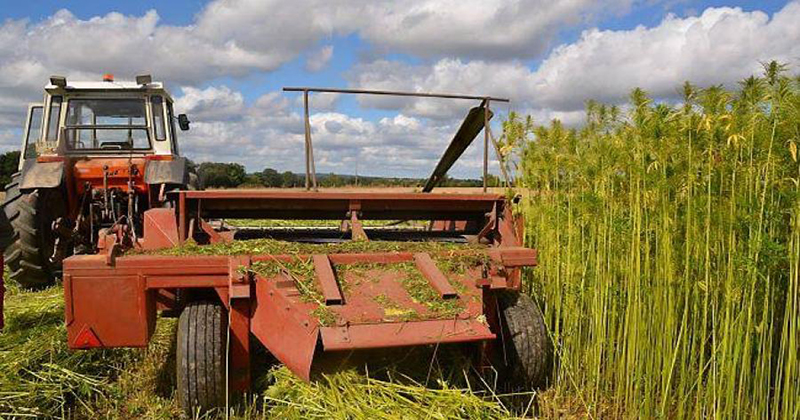
There are three essential stages in hemp harvesting: threshing the seeds with a combine harvester, then mowing and finally pressing the stalks. Hemp does not damage the soil on which it grows, it insulates pollen and absorbs certain radioactive and toxic materials such as heavy metals thanks to its phytoremediation properties. When the first leaves fall, it's time to harvest.
The list below compiles the French hemp varieties authorized for cultivation. Varieties differ in yield, earliness and THC content. All varieties contain less than 03%, and Santhica 27 has a THC content of 0%.
- Carmagnola
- C.S.
- Delta-Llosa
- Delta-405
- Dioïca 88
- Earlina 8 FC
- Epsilon 68
- Fedora 17
- Fedora 19
- Fedrina 74
- Felina 32
- Felina 34
- Ferimon
- Fibranova
- Fibrimon 56
- Fibror 79
- Finola
- Futura
- Futura 75
- Futura 83
- Orion 33
- Santhica 23
- Santhica 27
- Santhica 70
- Uso 31
Hemp processing
When hemp is harvested after 4 months, it can be processed into various forms.
- Hemp stalks : Several types of stalks exist, including filasse, which is used to manufacture textile products such as fabrics, bags and clothing. This transformation is also used in the manufacture of other industrial products such as composite fibers. Chenevotte (also known as hemp wood) is the woody part of the hemp plant that has been stripped of its bark. It is used in the manufacture of paper and cardboard, as well as building materials.
- The whole hemp plant It is used for pyrolysis and as combustion material.
- Hemp seeds: They will be transformed into hempseed oil and can be used for food or hygiene purposes. They can also be used as pressing residues to make flour or cattle feed.
- Hemp leaves Hemp leaves are generally used as an herbal tea. To maximize effectiveness, make a half-water, half-milk infusion (cannabinoids are lipophilic).
- Hemp flowers: This is where things get complicated. France considers hemp flowers to be waste unfit for consumption. Theoretically, the flowers must not be removed from their stalks and must be destroyed when the stalks are processed. In fact, since hemp flowers contain very little THC, their use is limited.
Hemp is one of the most versatile plants. In practice, any plastic product can be obtained from hemp, including biofuels. Despite all these restrictions, France has a wealth of know-how surrounding this plant, both in the breeding, in its cultivation and processing.
Mehdi Bautier











Cannabis Oil and Endometriosis: A Promising Study for Pain Relief

CBD is said to promote athletic recovery, without improving performance

294 cannabis clubs in Chile: a booming movement with uneven distribution

Chronic Sciatica: New York Approves First Clinical Trial of a THC-Based Medication

United States: The DEA is accelerating the integration of medical cannabis at the federal level

Florida is nearing one million patients using medical cannabis

Uruguay Revives Its Plan to Allow Tourists to Legally Access Cannabis

In Brazil, researchers are developing an innovative CBD eye drop

Autism: Medical Cannabis Is Linked to Reduced Anxiety

The $28 billion U.S. hemp market remains under threat
-
 Business7 days ago
The legal cannabis market in New York exceeds 4 billion $ in revenue
-

 Cannabis in France2 weeks ago
Which countries legalized medical cannabis before France?
-
Business2 weeks ago
South Korea is preparing to begin local production of medical cannabis to meet rising demand
-
Cannabis in the Netherlands4 weeks ago
One year after the launch of the Dutch cannabis experiment, the first trends are emerging
-
Cannabis in Thailand2 weeks ago
From the boom in dispensaries to a purely medical approach: Thailand is revising its cannabis policy
-
Cannabis in France4 weeks ago
French medical cannabis remains stalled at the Ministry of Health
-
Cannabis in Argentina3 weeks ago
Argentina Opens Its Market to Hemp Flowers Containing 1% of THC
-
Cannabis and driving2 weeks ago
Medical Cannabis and Driving: New South Wales Ends Automatic Penalties for THC
















sebastien
March 30, 2020 at 9 h 22 min
Hello,
Thank you for your article. It's very useful from the grower's point of view. I hope it will encourage even one person to grow hemp in France. It has many benefits.