In Thailand, still no agreement on the legalization of cannabis

Will Thailand's parliament run out of time to pass its cannabis legalization bill? The country's legislators remain divided on the main provisions of the legislation, leaving Thailand's cannabis industry in a grey area.
Areas of uncertainty and disagreement
The House of Representatives failed to conclude the second reading of the bill, the last session devoted to studying the project to legalize cannabis in Thailand before the parliamentary recess.
The delay was caused by certain factions of legislators who argued that the bill didn't go far enough to disincentivize recreational cannabis use, and called for the plant to be re-listed as a narcotic.
With Prime Minister Prayuth Chan-Ocha planning to dissolve Parliament next month ahead of elections scheduled for May, the fate of the bill will depend on the next government. A bill usually has to be passed by a majority of MPs in three readings, before being submitted to the Senate for approval to become law.
The ransom of the avant-garde
Thailand has become the the first Asian country to decriminalize cannabis in the year last by removing the plant from the list of narcotics. Officially, only medical use is legal, and recreational use cannot be punished, subject to a few conditions (no children present, no unlicensed sales...) and without being legally regulated.
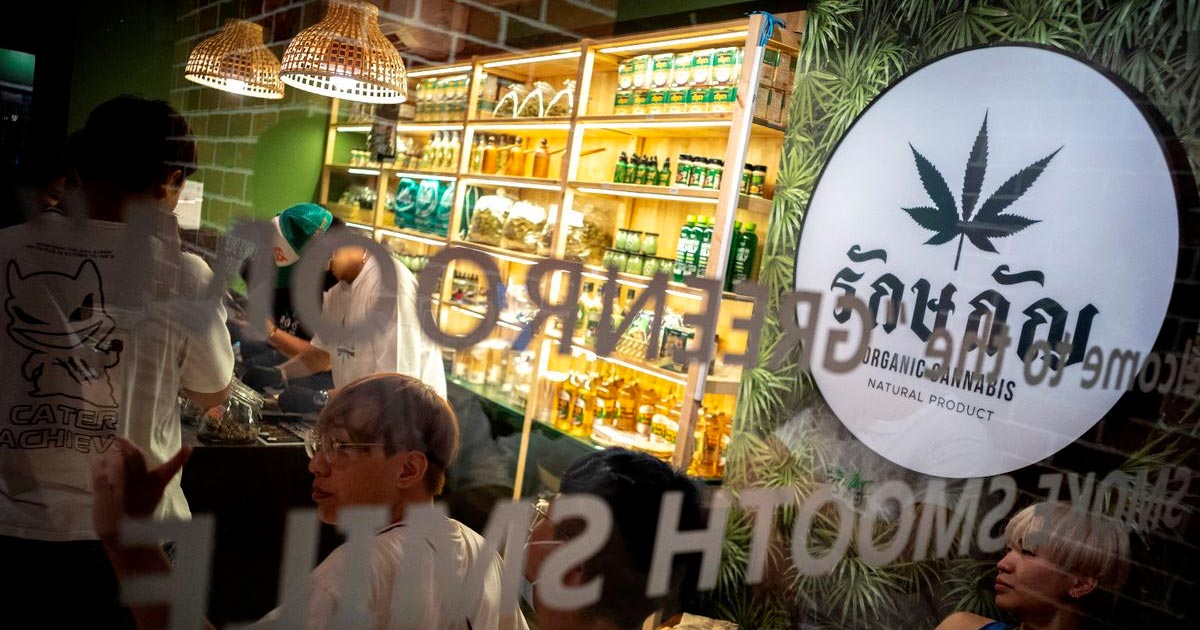
This decriminalization has led to a proliferation of dispensaries selling all kinds of cannabis-based products, giving a glimpse of what was already available on the black market despite the country's firm previous policy.
Growing concerns about the impact of legalization on young people have also threatened to topple an industry estimated to be worth over a billion euros by 2025.
The liberalization of cannabis has divided Thailand's political parties, with the Bhumjaithai Party, led by Health Minister Anutin Charnvirakul, spearheading the widespread use and cultivation of the plant by households. Many opposition parties and the Democrat Party, a member of the ruling coalition, want to reverse the decriminalization.
«It is clear that the bill will not be passed in this session. We will resubmit the cannabis bill to the next parliament,» said Supachai Jaisamut, a legislator from the Bhumjaithai party. «People who don't want cannabis to be criminalized again should vote for Bhumjaithai».
The government has repeatedly stated that June's decriminalization was aimed at the medical and commercial use of cannabis rather than recreational purposes, although the bill did not go so far as to explicitly prohibit smoking for recreational purposes.
According to Mr. Supachai, the rules on cannabis issued by the Ministry of Health are sufficient to control the industry for the time being. These rules include restrictions on unpleasant odors in public, sales to pregnant women or people under 20, and commercial advertising.
























«Vincy Gold»: Humboldt Seed Company on the Hunt for Saint Vincent Sativas

Cronos Completes the Acquisition of CanAdelaar for 57.5 million euros

Cannabis with a "bloody" twist: Discover Sensi True Blood and Sensi Sangria, the two new strains from Sensi Seeds

Hemp: The Council of the EU Takes a Stand on New Production and Marketing Rules

Missouri's legal cannabis market accounts for 93 % of consumer spending

THC Gummies: How to Read a Certificate of Analysis Before Buying

British patients now have access to THCV-rich cannabis flowers

Spain: Medical Cannabis Is Coming to About 50 Hospitals

JIHE 2026: Japan’s Largest Trade Show Dedicated to Hemp and CBD Returns to Tokyo with More Than 100 Industry Players

New Caledonia: The Courts Clear the Way for the Return of CBD
-
 Business3 weeks ago
The legal cannabis market in New York exceeds 4 billion $ in revenue
-

 Cannabis in France4 weeks ago
Which countries legalized medical cannabis before France?
-
Cannabis in France1 week ago
France already has 3,000 cannabis retail outlets. None of them are legal.
-
Cannabis in the U.S.1 week ago
A DEA report confirms that there are no fatal cannabis overdoses
-
Cannabis in Thailand4 weeks ago
From the boom in dispensaries to a purely medical approach: Thailand is revising its cannabis policy
-
Cannabis and driving4 weeks ago
Medical Cannabis and Driving: New South Wales Ends Automatic Penalties for THC
-
Cannabis in France3 weeks ago
France’s Drug Policy Chief Defends Cannabis Prohibition... and Runs Into the Facts
-
Studies on cannabis2 weeks ago
Cannabis Oil and Endometriosis: A Promising Study for Pain Relief
















You must be logged in to post a comment Login