American basketball player convicted of possessing THC candy in Indonesia escapes death penalty


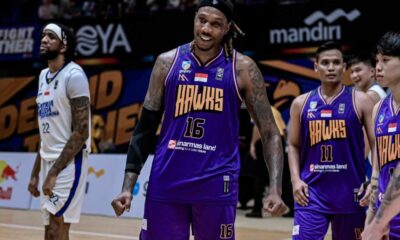
For seven months, American athlete Jarred Shaw remained in the Indonesian prison system, wondering if a package of THC gummies sent from Thailand would cost him his life. On Tuesday, an Indonesian court sentenced the 35-year-old player to 26 months in prison. This decision marks a radical reversal from the death penalty initially sought by police and prosecutors at the start of the case.
According to human rights advocate and international negotiator Donte West, who shared the verdict directly with High Times and El Planteo, this decision reflects an unusual recognition of the medical context within Indonesian courts that specialize in drug cases. Shaw uses products containing THC to treat the symptoms of Crohn's disease, a chronic condition he has spoken about publicly throughout his career.
«This is a significant step forward on a global scale,» Mr. West said. «Jarred was unjustly sentenced to death for consuming THC gummies for medical purposes. Today’s verdict gives him a real chance to go home, receive the care he needs, and be reunited with his family.»
A case that nearly ended in the death penalty
Shaw’s arrest in May followed the delivery of a package that, according to authorities, contained THC gummies. Indonesian authorities initially charged him with drug trafficking, an offense punishable by the country’s most severe penalties. Early reports in the local press portrayed him as a distributor rather than a patient.
Today’s verdict tells a different story. The court did not apply aggravating circumstances for drug trafficking. The change in sentence reflects the weight given to the medical evidence and documentation regarding Shaw’s Crohn’s disease.
High Times and El Planteo reviewed the direct communications between Shaw’s attorney and the defense team, which confirm the court’s decision and the medical findings presented during the trial.
Attorney Richard Siregar told us that the medical examination had been crucial.
«We confirmed Jarred’s health status and assessed the severity of his Crohn’s disease. It was a medical examination. We also contacted the U.S. Embassy, which expressed surprise that Jarred had been transferred to Abdi Waluyo Hospital. They told us it was extraordinary that Donte had managed to secure this transfer. In cases like this, such access is extremely rare.»
An Unusual Diplomatic Intervention
The U.S. Embassy in Jakarta took the unusual step of providing humanitarian support in connection with an ongoing criminal case. According to West, the embassy’s intervention focused on access to medical treatment, compliance with legal procedures, and human rights considerations. High Times reviewed messages confirming that embassy officials were in contact with Shaw's team and were aware of key medical developments.
Shaw also shared a statement approved for publication.
«I am grateful to everyone who is fighting for me. I have used CBD to treat my medical condition. Without Donte, I’m not sure the Indonesian court would have accepted that I am a user—not a distributor—of narcotics. I thank Jolly Roger, my family, Sulius, and the embassy for their support.»
What's next?
Under Indonesian law, Shaw could be eligible for sentence reductions, medical parole, or other avenues for early release. His legal team is preparing new medical evaluations for the next stage of the process.
This case illustrates how quickly a foreigner can go from leading a normal life to facing extreme legal risks in countries with very strict anti-drug laws. It also highlights the growing tension between the medical use of cannabis and deeply restrictive criminal justice systems.
For West, this verdict is a relief and a reminder of the broader context. «Jarred was facing the harshest penalties in a system that rarely shows leniency,» he said. «This sentence gives him a real chance to go home.»
Why is this important?
The Shaw case adds to a growing list of’International cannabis-related arrests involving Americans who cross borders without being aware of the significant legal differences. What is a medicine in one country can be a capital offense in another. This verdict highlights this contrast and raises new questions about how cannabis derivatives are treated under narcotics laws in Southeast Asia.

















Boston will host the 10th annual State of the Cannabis Industry Conference on October 26

A DEA report confirms that there are no fatal cannabis overdoses

A British patient is challenging the NHS's refusal to reimburse medical cannabis

October 2026 CBD Highlights: 10 Strains and Hash to Discover from 5 French Producers

CBD in France: Traceability, Retail Stores, THC and Driving… What the New Bill Proposes

Organigram Enters the Race for Aurora Cannabis

Medical Cannabis: Augur Associates’ latest report provides an update ahead of the publication of the decrees

Golden Buds is relaunching its Nova High vape pens with a cannabinoid formula that’s out of the ordinary

Cannabis is now Canada's fifth-largest commercial crop

Bedrocan Finally Declared Bankrupt
-
 Business1 week ago
The legal cannabis market in New York exceeds 4 billion $ in revenue
-

 Cannabis in France3 weeks ago
Which countries legalized medical cannabis before France?
-
Business3 weeks ago
South Korea is preparing to begin local production of medical cannabis to meet rising demand
-
Cannabis in Thailand3 weeks ago
From the boom in dispensaries to a purely medical approach: Thailand is revising its cannabis policy
-
Cannabis and driving3 weeks ago
Medical Cannabis and Driving: New South Wales Ends Automatic Penalties for THC
-
Cannabis in Argentina4 weeks ago
Argentina Opens Its Market to Hemp Flowers Containing 1% of THC
-
Autism3 weeks ago
Autism and Cannabis: Results from the First Placebo-Controlled Trial of NTI164
-
CBD1 week ago
In Brazil, researchers are developing an innovative CBD eye drop














You must be logged in to post a comment Login