
Morocco announces the production of 15 cannabis-based medicines


Morocco is simultaneously opening its market to dozens of approved products and stepping up inspections to ensure the sector’s sustainable and credible growth. With new product launches, stricter regulations, and international ambitions, 2025 is shaping up to be a pivotal year for the country.
67 cannabis-based products
L’Moroccan Agency for Medicines and Health Products (AMMPS) confirmed that 67 cannabis-derived products had received marketing authorization, including «26 cosmetics and 41 dietary supplements.» The country also plans to begin marketing 15 cannabis-derived medicines by the end of 2025.
A marketing authorization from the Directorate of Medicines and Pharmacy (DMP) is required before any product can be marketed, whether in Morocco or abroad.
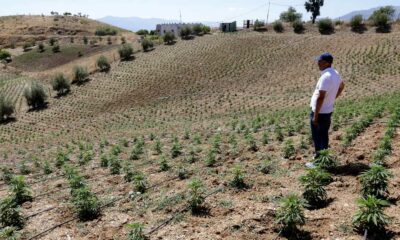
Behind these permits lies a sharp increase in cultivation. The figures published by the’National Regulatory Agency for Cannabis-Related Activities (ANRAC) show that the traditional «Beldia» variety» has experienced spectacular growth.
By 2025, the area devoted to Beldia had tripled to 4,400 hectares, up from 1,400 hectares in 2024. These lands are spread across Taounate, Chefchaouen, and Al Hoceima, with a total of 4,490 farmers organized into 250 cooperatives.
This expansion is not limited to local varieties. Imported seeds have also entered the legal market, as the National Office for Food Safety (ONSSA) has authorized their cultivation on 1,340 hectares.
In total, ANRAC certified 7.6 million imported seeds under 30 import licenses and approved 1,717 quintals of Beldia seeds for 112 cooperatives.
According to available data, legal production in Morocco reached 4,082 metric tons of cannabis, with an average yield of 20 quintals per hectare. While the local variety Beldia yielded about 17 quintals per hectare, the imported varieties achieved higher yields, averaging 28 quintals per hectare.
Strengthen the sector
To ensure the credibility of this new economy, Moroccan authorities have significantly stepped up inspections. ANRAC reported that it had conducted 2,202 inspections through the end of 2024. These included crop inspections, seed import inspections, export inspections, processing audits, and more than 1,200 transportation-related inspections, which accounted for the bulk of the monitoring activity.
But the agency is also sending a clear message to operators who do not follow the rules. In 2025, more than 90 licenses were revoked for noncompliance.
This stricter approach aims to eliminate speculation, ensure that commitments are honored, and strengthen trust between local farmers and international partners. Those who fail to meet their contractual obligations—whether they are cooperatives or investors—are excluded in order to protect the sector’s image and credibility.
Along with tightening controls, Morocco continues to prioritize smallholder farmers, who have historically been part of the’informal economy linked to cannabis cultivation. In 2025 alone, 3,800 new cultivation licenses were issued, in addition to 2,900 renewals. Today, more than 4,000 Moroccan farmers are involved in the legal production sector, working in cooperatives that facilitate compliance and provide access to financing.
ANRAC has clearly defined its objectives: «to strengthen the sector’s organizational structure, better support smallholder farmers, and facilitate access to national and international markets. » Training programs, access to capital, and product value enhancement are at the heart of this initiative, with the goal of making cannabis a driver of rural development rather than an informal subsistence economy.
From Local Fields to Global Markets
The 2025 season also confirmed Morocco's international ambitions. The country officially launched its first legal cannabis exports, with shipments of medical products destined for Australia and the Czech Republic.
At the same time, Morocco is also working toward the nationwide prescription of medical cannabis. In collaboration with the National Medical Association, ANRAC has developed a standardized template for medical prescriptions. According to reports, eight medical specialties are involved in this project, six of which are already ready for approval.


















294 cannabis clubs in Chile: a booming movement with uneven distribution

Chronic Sciatica: New York Approves First Clinical Trial of a THC-Based Medication

United States: The DEA is accelerating the integration of medical cannabis at the federal level

Florida is nearing one million patients using medical cannabis

Uruguay Revives Its Plan to Allow Tourists to Legally Access Cannabis

In Brazil, researchers are developing an innovative CBD eye drop

Autism: Medical Cannabis Is Linked to Reduced Anxiety

The $28 billion U.S. hemp market remains under threat

Jamaica Eases Small Farmers' Access to the Cannabis Market

Faced with resistance from Aurora, Curaleaf raises its offer by 25%
-
 Business5 days ago
The legal cannabis market in New York exceeds 4 billion $ in revenue
-
Cannabis and driving4 weeks ago
Cannabis and CBD: French Drivers Can Now Lose Their License Even Without a Positive Test Result
-

 Cannabis in France2 weeks ago
Which countries legalized medical cannabis before France?
-
Business2 weeks ago
South Korea is preparing to begin local production of medical cannabis to meet rising demand
-
Cannabis in the Netherlands4 weeks ago
One year after the launch of the Dutch cannabis experiment, the first trends are emerging
-
Cannabis in Thailand2 weeks ago
From the boom in dispensaries to a purely medical approach: Thailand is revising its cannabis policy
-
Cannabis in France4 weeks ago
French medical cannabis remains stalled at the Ministry of Health
-
Cannabis in Argentina3 weeks ago
Argentina Opens Its Market to Hemp Flowers Containing 1% of THC

















You must be logged in to post a comment Login