
Former Honduran president accused of receiving millions from drug cartels

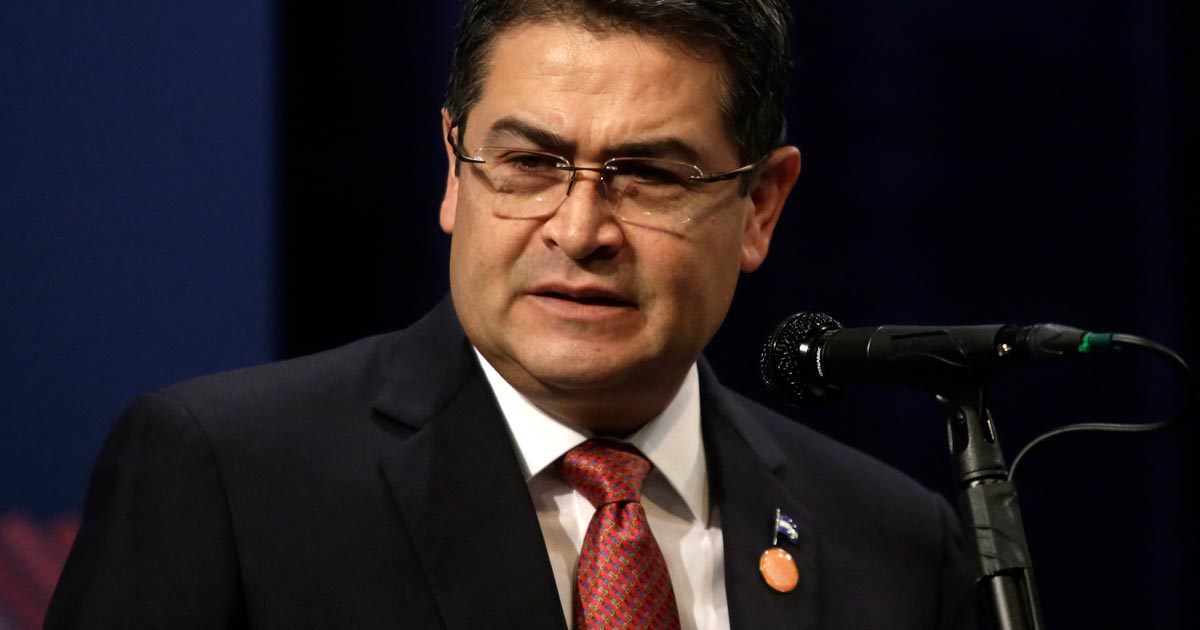
The Trial of the Former Honduran President Juan Orlando Hernández in the United States has drawn the attention of the international community, highlighting the complex web of power and the influence of cartels and the allegations of drug trafficking.
As the trial unfolds in a New York courtroom, the accounts presented by the prosecution and the defense offer a fascinating glimpse into the complexities surrounding Hernandez’s tenure and his alleged involvement in illicit activities.
The Allegations
Prosecutors were quick to paint a damning picture of Hernandez’s reign, asserting that his rise to power was closely linked to powerful cartels.
Hernandez is thus accused of colluding with the cartels for smuggling large quantities of drugs and firearms into the United States. Prosecutor David Robles emphasized the seriousness of the charges, stating that Hernandez operated «hand in hand» with the cartels while giving the impression of cooperating with U.S. authorities.
During his term in office, he received more than $50 million in counter-narcotics aid from the United States and many millions more in security aid, according to Reuters.
Defense and Counterarguments
Conversely, Hernandez’s defense team vehemently refutes these allegations, presenting a narrative of conspiracy and innocence. Renato Stabile, Hernandez’s attorney, argued that the testimonies of convicted criminals should be disregarded, citing personal vendettas or financial incentives on the part of the cartels.
Stabile highlighted Hernandez’s role in enacting strict anti-drug trafficking legislation during his presidency, suggesting that the witnesses’ motivations were rooted in resentment rather than the truth.
Political Context and International Relations
The intertwining of the policy and narcotics "Under Hernandez's administration" is a recurring theme, the implications of which extend beyond national borders. Notably, former U.S. President Donald Trump praised Mr. Hernandez's efforts to combat the drug trafficking and illegal immigration, thereby forging a close alliance despite growing suspicions regarding Mr. Hernandez’s alleged ties to the cartels. This support has drawn criticism at the national level, with accusations that it is exacerbating conditions in Honduras while seeking to curry favor with the U.S. administration.
Extradition and Legal Disputes
Hernandez’s extradition to the United States marked a significant milestone in this saga, symbolizing a recognition of the allegations that have tarnished his legacy.
His defense team has raised concerns about his treatment in prison, citing solitary confinement and psychological distress.
The guilty pleas by Hernandez’s brother and the former national police chief further underscore the seriousness of the charges, paving the way for a lengthy legal battle that will have far-reaching implications for Honduras and beyond.

















CBD is said to promote athletic recovery, without improving performance

294 cannabis clubs in Chile: a booming movement with uneven distribution

Chronic Sciatica: New York Approves First Clinical Trial of a THC-Based Medication

United States: The DEA is accelerating the integration of medical cannabis at the federal level

Florida is nearing one million patients using medical cannabis

Uruguay Revives Its Plan to Allow Tourists to Legally Access Cannabis

In Brazil, researchers are developing an innovative CBD eye drop

Autism: Medical Cannabis Is Linked to Reduced Anxiety

The $28 billion U.S. hemp market remains under threat

Jamaica Eases Small Farmers' Access to the Cannabis Market
-
 Business6 days ago
The legal cannabis market in New York exceeds 4 billion $ in revenue
-

 Cannabis in France2 weeks ago
Which countries legalized medical cannabis before France?
-
Business2 weeks ago
South Korea is preparing to begin local production of medical cannabis to meet rising demand
-
Cannabis in the Netherlands4 weeks ago
One year after the launch of the Dutch cannabis experiment, the first trends are emerging
-
Cannabis in Thailand2 weeks ago
From the boom in dispensaries to a purely medical approach: Thailand is revising its cannabis policy
-
Cannabis in France4 weeks ago
French medical cannabis remains stalled at the Ministry of Health
-
Cannabis in Argentina3 weeks ago
Argentina Opens Its Market to Hemp Flowers Containing 1% of THC
-
Cannabis and driving2 weeks ago
Medical Cannabis and Driving: New South Wales Ends Automatic Penalties for THC
















You must be logged in to post a comment Login