Former Honduran president accused of receiving millions from drug cartels

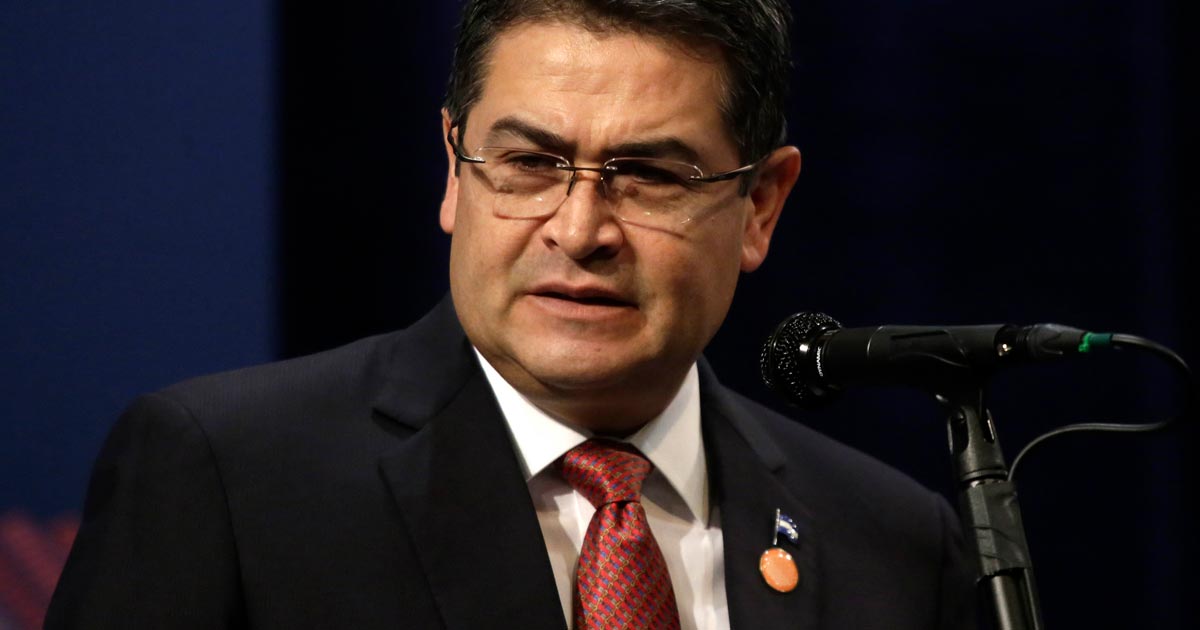
The Trial of the Former Honduran President Juan Orlando Hernández in the United States has drawn the attention of the international community, highlighting the complex web of power and the influence of cartels and the allegations of drug trafficking.
As the trial unfolds in a New York courtroom, the accounts presented by the prosecution and the defense offer a fascinating glimpse into the complexities surrounding Hernandez’s tenure and his alleged involvement in illicit activities.
The Allegations
Prosecutors were quick to paint a damning picture of Hernandez’s reign, asserting that his rise to power was closely linked to powerful cartels.
Hernandez is thus accused of colluding with the cartels for smuggling large quantities of drugs and firearms into the United States. Prosecutor David Robles emphasized the seriousness of the charges, stating that Hernandez operated «hand in hand» with the cartels while giving the impression of cooperating with U.S. authorities.
During his term in office, he received more than $50 million in counter-narcotics aid from the United States and many millions more in security aid, according to Reuters.
Defense and Counterarguments
Conversely, Hernandez’s defense team vehemently refutes these allegations, presenting a narrative of conspiracy and innocence. Renato Stabile, Hernandez’s attorney, argued that the testimonies of convicted criminals should be disregarded, citing personal vendettas or financial incentives on the part of the cartels.
Stabile highlighted Hernandez’s role in enacting strict anti-drug trafficking legislation during his presidency, suggesting that the witnesses’ motivations were rooted in resentment rather than the truth.
Political Context and International Relations
The intertwining of the policy and narcotics "Under Hernandez's administration" is a recurring theme, the implications of which extend beyond national borders. Notably, former U.S. President Donald Trump praised Mr. Hernandez's efforts to combat the drug trafficking and illegal immigration, thereby forging a close alliance despite growing suspicions regarding Mr. Hernandez’s alleged ties to the cartels. This support has drawn criticism at the national level, with accusations that it is exacerbating conditions in Honduras while seeking to curry favor with the U.S. administration.
Extradition and Legal Disputes
Hernandez’s extradition to the United States marked a significant milestone in this saga, symbolizing a recognition of the allegations that have tarnished his legacy.
His defense team has raised concerns about his treatment in prison, citing solitary confinement and psychological distress.
The guilty pleas by Hernandez’s brother and the former national police chief further underscore the seriousness of the charges, paving the way for a lengthy legal battle that will have far-reaching implications for Honduras and beyond.


















Thanksgiving: The «Cousin Walk,» an American cannabis tradition that’s coming out of the shadows

Medical Cannabis in France: Stéphanie Rist Postpones Regulatory Changes Until January 2027

Germany: Pharmacists Propose a Pilot Program to Sell Recreational Cannabis in Pharmacies

France Is More Reluctant to Legalize Cannabis Than the EU Average, According to a New EUDA Survey

Scientists Create Cannabinoid-Free Hemp

MediPharm is preparing to launch its cannabis inhaler in Europe

Sensi Seeds and High Times are teaming up to launch five new cannabis strains

Brains Bioceutical is aiming for the Nasdaq with a valuation of $750 million

CBD in French Polynesia: Sublingual Oils Soon to Be Available Over the Counter

Cannabis legalization in Mexico returns to the Senate after five years of political deadlock
-
 Cannabis in Quebec4 weeks ago
Cannabis: What France Could Learn from Quebec, Eight Years After Legalization
-
Cannabis in New Zealand4 weeks ago
Chronic Pain: New Zealand Is Testing Cannabis to Improve Sleep
-
Cannabis in France4 weeks ago
Dr. Pascal Douek, a tireless advocate for medical cannabis in France, has died
-
Cannabis in France4 weeks ago
Medical cannabis: The Greens introduce two amendments to accelerate its widespread adoption
-
Cannabis in Canada4 weeks ago
A Canadian study reveals the pleasant psychotropic effects of high-dose CBD
-
Studies on cannabis4 weeks ago
More THC, barely any additional effects: A new study challenges common assumptions about the potency of cannabis
-
Cannabis in Argentina4 weeks ago
The Argentine province of Chubut is creating its own framework for medical cannabis
-
Cannabis in France3 weeks ago
Medical Cannabis: Patients Issue a Formal Notice to the Government to Break the Deadlock












You must be logged in to post a comment Login