Hemp to combat PFAS in the port of Ghent

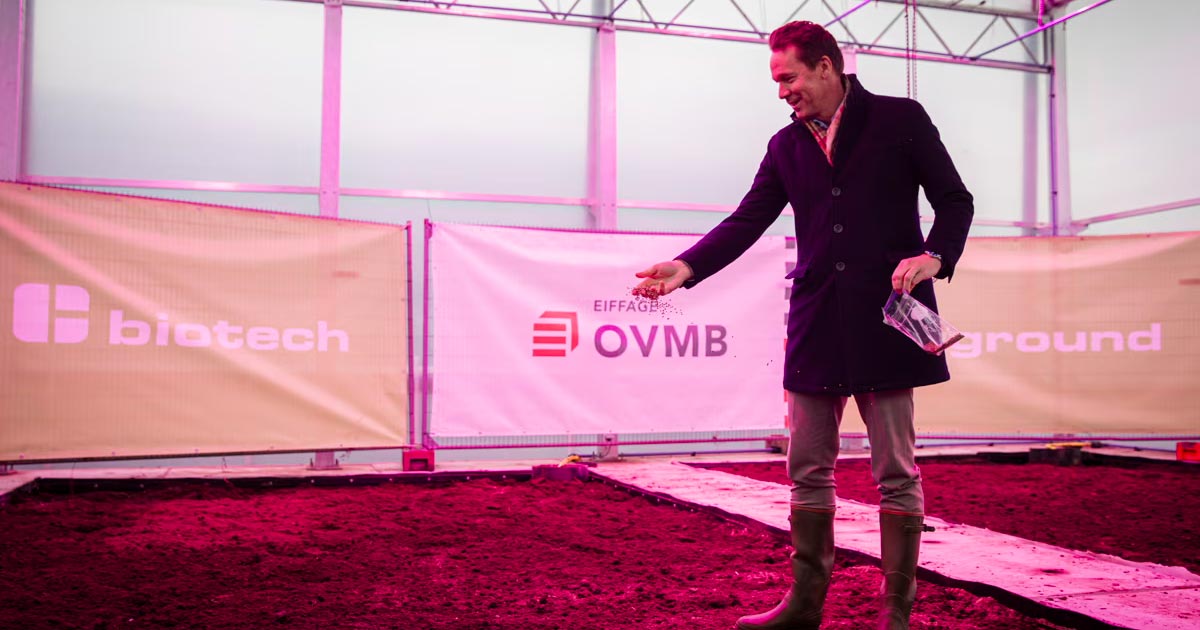
A small 100 m² greenhouse in the port of Ghent is now home to an unusual crop: hemp grown to extract PFAS of highly contaminated soil. Presented as a European first, which is not quite true, This pilot project will test whether phytoremediation can offer a scalable alternative to conventional soil remediation methods.
The PFAS (per- and polyfluoroalkylated substances), often referred to as «eternal chemicals», are persistent compounds linked to diseases such as cancer, obesity and endometriosis. According to a recent report prepared for the European Commission, 100% of the Belgian population live in high-risk PFAS areas, including 20% in very high-risk areas. The estimated cost of clean-up and associated health consequences could reach at least 330 billion euros, even in the most optimistic scenario.
A controlled experiment of phytoremediation
Traditional remediation techniques generally involve excavating and washing contaminated soils. These approaches only partially eliminate the pollution and generate large volumes of unusable waste destined for landfill. The consortium behind the Ghent pilot project aims to overcome this «end-of-pipe» logic.
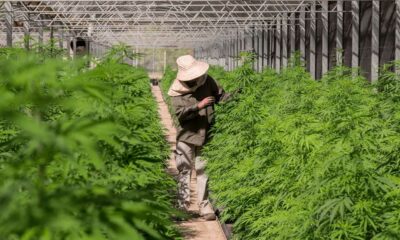
Instead, the project is based on the phytoremediation, which uses plants and micro-organisms to naturally eliminate pollutants. In a fully enclosed, air-conditioned greenhouse, 100 m³ of PFAS-contaminated soil is treated ex situ. The soil is excavated, transferred to the greenhouse and cultivated with industrial hemp combined with specific additives.
These additives are designed to bind or mobilize PFAS, stimulate microbial life and improve soil structure. Hemp, a fast-growing, deep-rooted, non-psychoactive crop, produces biomass while absorbing PFAS from the soil. Only the harvested biomass, containing accumulated pollutants, leaves the closed system for safe disposal.
The greenhouse itself is designed to offer great precision. Irrigation, temperature and lighting are strictly regulated, while an app continuously measures soil moisture and CO₂ levels. Rainwater is collected and reused, preventing any contaminated runoff.
In order to refine the methodology, the greenhouse is divided into two independent but identical compartments. Each section tests different treatment conditions, enabling direct comparison and identification of the most effective sanitation strategy.
Public authorities keep a close eye
Flemish Minister Jo Brouns attended the project presentation and symbolically sowed the first seeds. hemp seeds. «This is a potential solution for the remediation of soils containing PFAS. We know that they are ubiquitous in Flemish soils today, and we are looking for new ways to remediate these soils,» he said.
For the industrial partners, the ambition is clear. «PFAS are one of the biggest challenges in soil remediation today, both in Belgium and abroad. By joining forces with C-ground and C-biotech, we are exploring a sustainable, scalable alternative that offers promising prospects for future projects», said Maarten Taelemans, Managing Director of the OVMB.
Herman Backaert, Head of Innovation at C-ground, emphasized the advantages of a closed system, highlighting its ability to test PFAS remediation «in a controlled, safe and accelerated way, with the ultimate goal of complete soil reuse». Ingmar Nopens, Managing Director of C-biotech, added that no single technique can treat all cases of PFAS contamination, arguing that ex situ approaches are indispensable when excavation is unavoidable.
Industrial hemp beyond traditional uses
For C-biotech, a member of the Cordeel Group, the project also illustrates the industrial hemp's broader environmental potential. Already used in bio-sourced building materials, this plant is the subject of a growing number of studies due to its ability to absorb heavy metals and other contaminants. Its application to PFAS remediation remains experimental, but the Ghent greenhouse provides a closely monitored environment for evaluating its effectiveness and limits.
If successful, the partners intend to extend the process to larger volumes of contaminated soil. At a time when PFAS pollution redefining environmental policy debates across Europe, the Ghent pilot project positions hemp as a technical tool in a high-risk industrial challenge: restoring soils without simply moving contamination from one site to another.
The transition of this model from pilot scale to large-scale deployment will depend on measurable extraction rates, economic viability and regulatory acceptance. For the time being, the Ghent greenhouse serves as a testing ground for future action against one of Europe's most persistent pollutants.





















Medical Cannabis in Germany: THC Prices Vary by a Factor of 12

France already has 3,000 cannabis retail outlets. None of them are legal.

Morocco's exports of legal cannabis have expanded to 15 countries

Aurora Cannabis Doubles Its Production Capacity in Germany

Tilray is accelerating its operations in Europe thanks to a license in Portugal

Boston will host the 10th annual State of the Cannabis Industry Conference on October 26

A DEA report confirms that there are no fatal cannabis overdoses

A British patient is challenging the NHS's refusal to reimburse medical cannabis

October 2026 CBD Highlights: 10 Strains and Hash to Discover from 5 French Producers

CBD in France: Traceability, Retail Stores, THC and Driving… What the New Bill Proposes
-
 Business2 weeks ago
The legal cannabis market in New York exceeds 4 billion $ in revenue
-

 Cannabis in France3 weeks ago
Which countries legalized medical cannabis before France?
-
Business3 weeks ago
South Korea is preparing to begin local production of medical cannabis to meet rising demand
-
Cannabis in Thailand3 weeks ago
From the boom in dispensaries to a purely medical approach: Thailand is revising its cannabis policy
-
Cannabis and driving3 weeks ago
Medical Cannabis and Driving: New South Wales Ends Automatic Penalties for THC
-
Cannabis in Argentina4 weeks ago
Argentina Opens Its Market to Hemp Flowers Containing 1% of THC
-
Autism3 weeks ago
Autism and Cannabis: Results from the First Placebo-Controlled Trial of NTI164
-
Cannabis in France2 weeks ago
France’s Drug Policy Chief Defends Cannabis Prohibition... and Runs Into the Facts
















cbdtech
February 14, 2026 at 10 h 39 min
This is an absolutely fascinating project being carried out by Ghent University. We often talk about hemp for its molecules (CBD, CBG...) or for textiles, but its role in phytoremediation is undoubtedly one of the most crucial issues for the decades to come.
The fact that hemp can ‘mop up’ PFAS - those eternal pollutants that poison our soils and water tables - is further proof that this plant is a first-rate ecological ally. What's particularly interesting here is the double valorization: we're depolluting an industrial zone while at the same time creating useful biomass for sectors such as construction (hemp concrete) or energy, where the food chain wouldn't be safe.
As enthusiasts of the industry, we're delighted to see Belgian science proving that hemp is not just an economic resource, but a genuine regenerative solution for our ecosystems. Thanks to Newsweed for sharing this technological news!