European Union adopts progressive drug policy plan


The European Union has decided to adopt a new action plan for its drug policy, which the European Commission published on July 5. in this document.
Even if drug policy isn't the main concern of the European Union, already busy with the migration crisis and Brexit proceedings, the subject nevertheless remains on the minds of representatives and its member countries.
The emergence of new medicines and synthetic drugs, and the growing number of European countries authorizing the use of cannabis for therapeutic purposes. like Greece, Poland or Cyprus yesterday to adopt new responses.
The representatives of the member states underline their overall concern about drugs in the European Union. Pathologies such as hepatitis C, HIV infections and overdose death rates among injecting drug users such as heroin are on the rise.
The EU's preventive and progressive approach
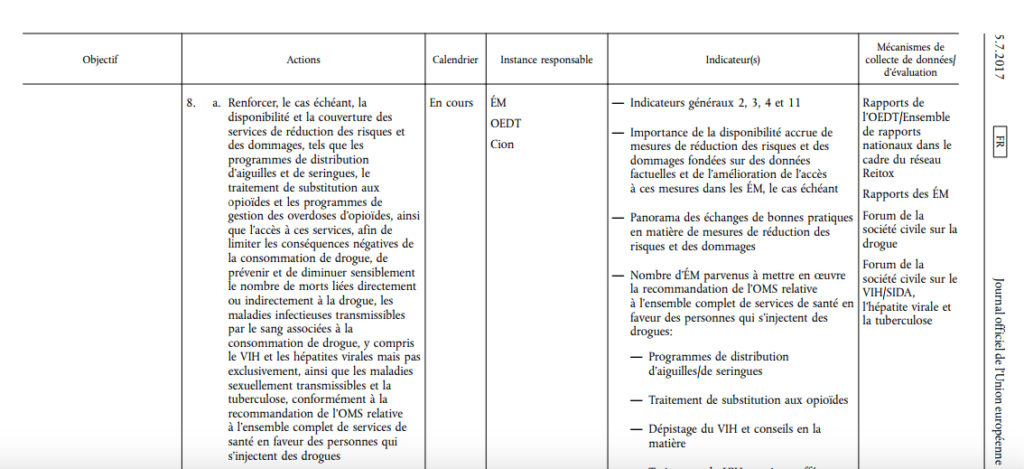
The EU's new drug policy relies on the introduction of prevention programs to limit the dangers associated with taking drugs. To limit the opiate crisis, for example, the EU plans to distribute substitutes, so that people who abuse them reduce, or even stop, their consumption. This is the first time the EU has officially recognized that such programs are innovative and should be implemented.
Drug prevention for young people is also highlighted in the new action plan. «Changing best practice on all types of prevention actions targeting children and young people, parents and educational settings, while taking into account the specific needs of each gender community-based programs or programs using internet and social media» stipulates the text.
The EU's aim is to raise awareness among minors of the dangers of using and selling drugs, particularly cannabis, which can be a major source of addiction. dangerous when used during adolescence.
In addition, on the subject of a decriminalization of drugs, No consensus was reached among member states. The new action plan does, however, call on them to apply coercive measures. These measures must be specific to drugs, and ensure that prison is used as a sanction of last resort. The action plan also states that penal measures should not be applied for simple possession and/or consumption of drugs, whatever it may be.
At the same time, the UN recently called for worldwide decriminalization of all drugs.
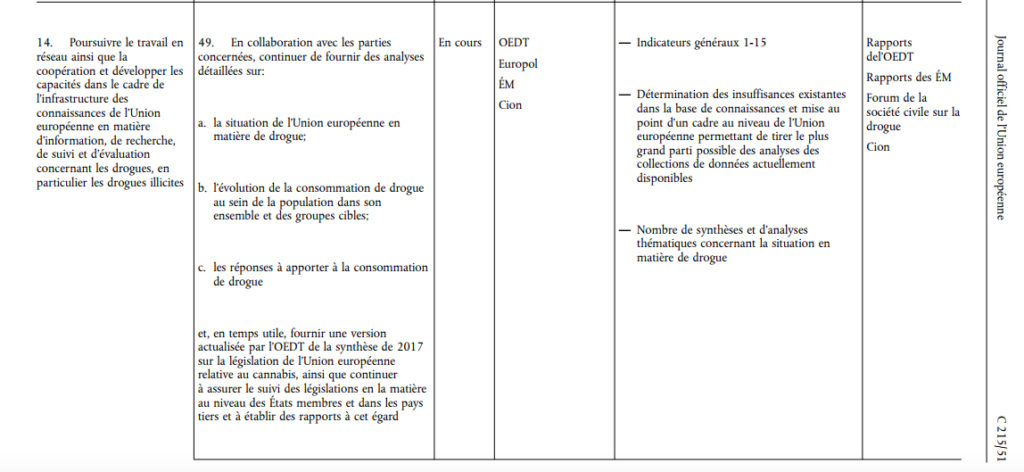
With regard to cannabis, and according to the above report, the European Union is seeking to provide detailed analyses of research into cannabis legislation, particularly in relation to its therapeutic use.
Like the Cannabis Social Clubs Spain or the Netherlands, which have their own cannabis models, future EU representatives must create platforms and organize forums to enable scientists and European citizens in general to organize discussions and find solutions. Member states must then decide for themselves on their own cannabis policy.
The European Union's approach is clearly progressive, but leaves it up to member states to decide their own drug policies, at local and national level.
Mehdi Bautier









JIHE 2026: Japan’s Largest Trade Show Dedicated to Hemp and CBD Returns to Tokyo with More Than 100 Industry Players

New Caledonia: The Courts Clear the Way for the Return of CBD

The Brazilian medical cannabis market continues to grow

Morocco: Three Cannabis-Based Medications Approved for the Treatment of Epilepsy

Canopy Growth Receives New EU-GMP Certification to Strengthen Its Presence in Europe

Three years after legalizing medical cannabis, Albania continues to establish regulations for it

The first plant-based medical THC spray arrives in the United Kingdom

Medical Cannabis in Germany: THC Prices Vary by a Factor of 12

France already has 3,000 cannabis retail outlets. None of them are legal.

Morocco's exports of legal cannabis have expanded to 15 countries
-
 Business2 weeks ago
The legal cannabis market in New York exceeds 4 billion $ in revenue
-

 Cannabis in France4 weeks ago
Which countries legalized medical cannabis before France?
-
Business4 weeks ago
South Korea is preparing to begin local production of medical cannabis to meet rising demand
-
Cannabis in France4 days ago
France already has 3,000 cannabis retail outlets. None of them are legal.
-
Cannabis in Thailand4 weeks ago
From the boom in dispensaries to a purely medical approach: Thailand is revising its cannabis policy
-
Cannabis in the U.S.5 days ago
A DEA report confirms that there are no fatal cannabis overdoses
-
Cannabis and driving3 weeks ago
Medical Cannabis and Driving: New South Wales Ends Automatic Penalties for THC
-
Cannabis in France3 weeks ago
France’s Drug Policy Chief Defends Cannabis Prohibition... and Runs Into the Facts

















You must be logged in to post a comment Login