
European Parliament approves resolution on medical use of cannabis

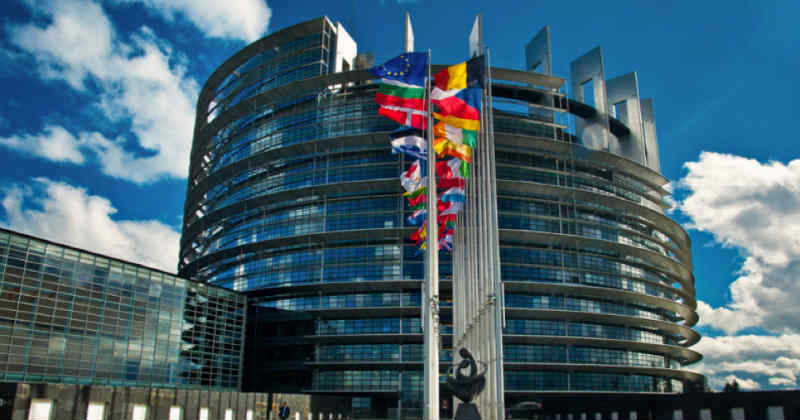
A proposed European resolution on the therapeutic use of cannabis, which has been under discussion since last summer, was voted on and approved yesterday. It does not establish a regulatory framework at the European level but calls on Member States and European institutions to cooperate in making medical cannabis accessible to patients. Specifically, it «urges Member States to revise their legislation » so that healthcare professionals can prescribe cannabis-based treatments in all EU countries and calls for research on medical cannabis as well as appropriate training for the medical profession to be encouraged and funded.
The European Union’s Commitment to Public Health
The initiative comes from members of the European Parliament’s Committee on the Environment, Public Health, and Food Safety, which includes Guillaume Ballas, a French MEP who was present during Cannabis Europe. They had sent a parliamentary question highlighting the existence of scientific literature and international legislation that recognize the therapeutic effects of cannabis and asking what the Commission’s plans were on the matter.
Those same lawmakers then submitted a draft resolution. The resolution highlights the lack of regulations governing medical cannabis, even though evidence of its effectiveness exists. It also notes that, in accordance with the’Article 168 of the Treaty on the Functioning of the European Union, The European Union must ensure the protection of health in the implementation of its policies and must promote cooperation with international organizations responsible for public health. On this point, The WHO recently recognized the therapeutic value of cannabis.
Details of the resolution
A clear legal definition
First, the resolution highlights the ambiguity of the term «medical cannabis,» which appears to refer more to a use than to a specific type of product. It therefore calls on the Commission and national authorities to cooperate in order to establish a clear legal definition. The idea is to distinguish the term «medical cannabis»—which seems to refer to any cannabis-derived product used for medical purposes—from cannabis-derived medicines that have undergone clinical trials and are approved by the relevant health authorities (national authorities and the European Medicines Agency). It is also a matter of legally distinguishing between the different uses of cannabis: medical, recreational, and industrial.
In a press release, Guillaume Ballas notes that some of the amendments he tabled in coordination with the Greens and the GUE were rejected, «thereby limiting the scope of certain paragraphs to cannabis-based medicines.» Indeed, the resolution places a clear emphasis on pharmaceutical products generic drugs approved without regard for the plant itself—a political move, according to the lawmaker: «This is a missed opportunity; the right and the center pushed for this change with the sole aim of protecting the interests of certain manufacturers. It’s a shame, since we know that the extracts »Natural medical cannabis products, for example, offer benefits for certain conditions and allow treatment to be better tailored to patients' individual needs."
The focus on research
The Parliament considers «that research into the potential effects of cannabis-based medicines and cannabis in general has been underfunded and should be given appropriate attention.» Consequently, it calls on the Commission and the Member States «to remove the regulatory, financial, and cultural barriers to research on the use of cannabis for medical purposes »and cannabis research in general.” It also calls for consultation among European stakeholders to define the conditions and priority areas for research on cannabis-based medicines.
Standardization, harmonization
The resolution emphasizes the need for standardization of cannabis-based products and medicines to facilitate their regulation and trade across the Union. It therefore calls on the Commission to «develop a detailed strategy to ensure the highest standards for independent research, development, authorization, marketing, pharmacovigilance, and the prevention of abuse of cannabis-derived products.» A Commission-level strategy would prevent a patchwork of divergent national situations.
To implement this strategy, the resolution suggests that the Commission establish a network bringing together European health organizations (European Medicines Agency, European Monitoring Centre for Drugs and Drug Addiction) and national authorities, as well as «patient associations, civil society, social partners, consumer organizations, healthcare professionals, and nongovernmental organizations.» Coordinating all these bodies and stakeholders will enable effective standardization.
Train medical staff
The Parliament’s resolution calls on Member States to «allow doctors to freely exercise their professional judgment in prescribing approved cannabis-based medicines to patients suffering from the relevant conditions, and to grant pharmacists the right to fill these prescriptions.» To this end, the medical profession must be properly trained. The resolution therefore calls on Member States to «provide medical staff with appropriate medical training and to promote the acquisition of more in-depth knowledge about medical cannabis.» This training must begin in medical school, where students must have access to scientific literature on cannabis.
Justice for Patients
The resolution calls on Member States to ensure effective access to medicines for patients. This involves «ensuring sufficient availability of cannabis-based medicines (…) through production that meets medical standards or through imports.» This access must also be guaranteed for everyone. The resolution calls on the Commission to «work with Member States to improve equal access to cannabis-based medicines and ensure that medicines effective in treating the relevant conditions are covered—where authorized—by health insurance schemes.».
Toward European regulation?
This resolution «calls on» the Commission and the Member States to take action, but it is not binding. It does not impose any obligations, but it does provide a strong argument for lobbyists, nongovernmental organizations, and activists who are advocating for the harmonization of cannabis laws across Europe. For now, action has been taken at the national level—21 European countries have already legalized access to «medical cannabis» in some form—but not at the European level. Only one medication, Sativex, has been authorized through the centralized authorization procedure.
The resolution also highlights the importance of European regulation of the market for cannabis-based medicines. Such regulation would not only «ensure legal certainty for patients and safe access to medical cannabis » but also «curb the black market and ensure product quality and proper labeling» and «monitor points of sale and restrict access to this substance for minors.» The resolution nevertheless specifies that such regulation must be accompanied by strong action in the area of addiction prevention and requires in-depth work to establish a strict regulatory framework.
This resolution is already an initial sign that the European community recognizes the challenges involved in legalizing medical cannabis. Depending on how member states react—and if some prove reluctant to implement legal access to medical cannabis—European institutions could now take up the issue and draft regulations that would be binding across the Union.











One year after the launch of the Dutch cannabis experiment, the first trends are emerging

High Ground: The Crash of a Plane Full of Marijuana That Made History in Yosemite

The United Kingdom Is Moving Closer to a Regulated CBD Market

Mexico's Supreme Court Authorizes Cannabis-Infused Edibles for Personal Use

French medical cannabis remains stalled at the Ministry of Health

Things are heating up between Sherbinski and Doja

Cookies Ordered to Pay $61.5 Million in a Dispute with Its Investors

Frenchfarm is launching its B1G1 clearance sale + free gift

Czech Republic: CBD shops selling synthetic cannabinoids are in the police's crosshairs

Cannabis and CBD: French Drivers Can Now Lose Their License Even Without a Positive Test Result
-
 Cannabis and driving5 days ago
Cannabis and CBD: French Drivers Can Now Lose Their License Even Without a Positive Test Result
-
Cannabis in France1 week ago
Cannabis Legalization: The LFI Bill Has a Major Problem—THC
-
Cannabis in Europe2 weeks ago
Andorra Paves the Way for Medical Cannabis Cultivation
-
Cannabis in France2 weeks ago
Drought: Could Hemp Become the New Hope for French Farmers?
-
Cannabis in France1 day ago
French medical cannabis remains stalled at the Ministry of Health
-
Cannabinoids2 weeks ago
What if CBD enhanced the effects of THC? A comprehensive analysis challenges a common misconception
-
Cannabis in the U.S.2 weeks ago
United States: Congress Rejects Ban on THC Derived from Hemp
-

 Business12 hours ago
The United Kingdom Is Moving Closer to a Regulated CBD Market















You must be logged in to post a comment Login